Mozambique
Top Sights & Landmarks
Ancient Capital of Portuguese East Africa
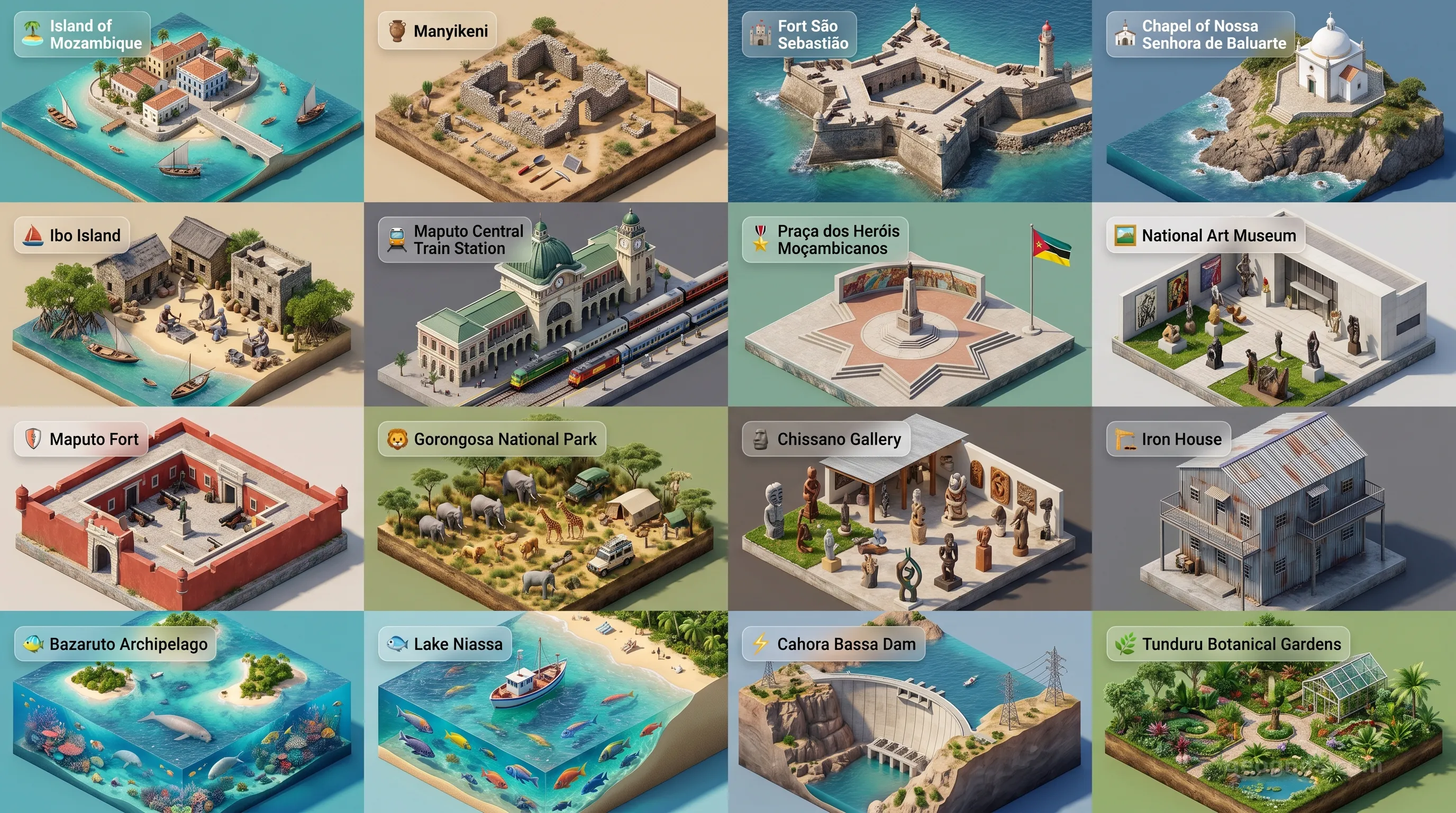
A remarkable island city that served as the capital of Portuguese East Africa for nearly four centuries. It is an essential site for students of history and architecture, showcasing an incredible blend of Swahili, Arab, Indian, and Portuguese colonial influences in its 'Stone Town' and 'Macuti Town'. Visitors can trace the ancient maritime spice routes that connected Europe to the East. The best season to visit is between May and September. Tourist tip: Hire a local guide to fully appreciate the complex history of the crumbling, yet beautiful, coral-stone mansions.
Ancient Stone Enclosure
An invaluable archaeological site dating back to the 12th century, Manyikeni is historically tied to the Great Zimbabwe civilization. It offers students and historians a rare glimpse into the pre-colonial trading networks of Southern Africa, evidenced by its stone-walled enclosures and artifacts like glass beads and Chinese porcelain. The dry season (May to October) is the most practical time to visit. Tourist tip: The site is remote and mostly un-restored; hiring a 4x4 vehicle and going with a specialized local guide is highly recommended.
Oldest Sub-Saharan Fortress
Located on the northern tip of the Island of Mozambique, this massive stone fortress was constructed by the Portuguese beginning in 1558. It is of immense study value for military architecture and colonial history, having withstood Dutch, British, and Omani attacks. Exploring its imposing ramparts offers sweeping views of the Indian Ocean. Visit during the cooler dry season. Tourist tip: Set aside at least half a day to explore its intricate rainwater harvesting systems and underground dungeons.
Oldest European Building in the Southern Hemisphere
Built in 1522 outside the walls of Fort São Sebastião, this small chapel is the only example of Manueline architecture in Mozambique and is considered the oldest surviving European structure in the Southern Hemisphere. It is a critical touchpoint for studying early Portuguese maritime expansion. The weather is best from May to October. Tourist tip: Access is typically gained through the main fort; be prepared for uneven stone walkways.
Historical Gem of the Quirimbas
Part of the Quirimbas Archipelago, Ibo Island was a major trading center for slaves, ivory, and silver. Today, it remains a living museum of crumbling colonial villas and historic forts mixed with Swahili culture. It's a superb destination for studying the dark history of the Indian Ocean slave trade, as well as experiencing local silversmithing traditions. Visit between June and October. Tourist tip: Don't miss a dhow safari to explore the surrounding mangroves and interact with the island's renowned silversmiths.
A Beaux-Arts Masterpiece
Frequently ranked among the world's most beautiful train stations, this early 20th-century building features a stunning mint-green facade, wrought-iron latticework, and a copper dome. Often mistakenly attributed to Gustave Eiffel, it was actually designed by his associates. It is an excellent study in colonial urban planning and public transit history. Open year-round. Tourist tip: Visit on a weekend to see live music performances that often take place on the platforms, and check out the small rail museum inside.
Monument to Mozambique's Independence
This iconic star-shaped monument in Maputo houses the remains of the nation's independence heroes, including the first president, Samora Machel. The site is flanked by a massive, stunningly detailed mural depicting the country's struggle against colonial rule. It is mandatory viewing for anyone studying 20th-century African liberation movements. Can be visited any time of year. Tourist tip: Photography is strictly prohibited without explicit official permission; it is best viewed respectfully from the designated public areas.
Heart of Mozambican Fine Arts
Located in Maputo, the Museu Nacional de Arte holds the finest collection of Mozambican contemporary art, featuring masterpieces by renowned artists such as Malangatana Ngwenya and Alberto Chissano. It provides a profound visual narrative of the nation's cultural psyche, civil war, and rebirth. A perfect indoor activity for any season. Tourist tip: Take time to understand the symbolism in Malangatana's crowded, visceral canvases, which document the trauma and resilience of the Mozambican people.
19th-Century Red-Stone Fortress
This star-shaped fort in the capital is a vital relic of late Portuguese colonial rule. It famously houses the carved wooden coffin containing the remains of Ngungunhane, the last emperor of the Gaza Empire, who rebelled against the Portuguese. It is an important site for understanding the intersection of local resistance and colonial military power. Open year-round. Tourist tip: The courtyard is peaceful and shaded, offering a quiet respite from the bustling city outside.
Africa's Greatest Wildlife Restoration
Once considered one of the most spectacular parks in Africa, Gorongosa was devastated by the Mozambican Civil War. Today, it stands as a globally significant case study in large-scale ecological restoration and community-based conservation. Biologists and eco-tourists visit to witness the dramatic return of lions, elephants, and wild dogs across varied landscapes of savannah and rainforest. Best visited from July to October. Tourist tip: Take an anti-malarial medication and book a guided safari to learn about the park's inspiring scientific research facilities.
Home of Mozambique's Master Sculptor
Set in the former residence of Alberto Chissano, one of Africa's greatest sculptors, this gallery displays his evocative, distorted wooden figures that reflect the suffering of the Mozambican Civil War. It provides an intimate, emotional atmosphere for studying modern African sculpture and the psychological impacts of conflict. Accessible year-round in Maputo. Tourist tip: Call ahead to ensure it is open, as it is managed by his family, who often provide highly personal and informative tours.
Eiffel's Prefabricated Metal House
Designed by Gustave Eiffel in the late 19th century as a prefabricated residence for the governor general, this building is entirely constructed of iron. It is an architectural curiosity and a prime example of inappropriate colonial design—the iron made it far too hot for the tropical climate. It offers a fascinating lesson in architectural adaptability. Open year-round. Tourist tip: Step inside to feel the dramatic temperature difference and check out the small museum artifacts hosted within.
Marine Conservation Paradise
A protected national park consisting of six idyllic islands, Bazaruto is a premier destination for studying marine biodiversity. It is one of the last strongholds for the endangered dugong, alongside thriving populations of sea turtles, manta rays, and dolphins. The towering sand dunes diving into turquoise waters offer unparalleled geographical beauty. The dry season (June to September) offers the best visibility for diving. Tourist tip: Book an eco-conscious diving operator from Vilanculos to minimize your impact on the delicate coral reefs.
Biodiverse Rift Valley Lake
The Mozambican side of this massive African Great Lake offers pristine, untouched shores compared to its neighbors. Formed by the East African Rift, it is an evolutionary marvel, home to hundreds of endemic cichlid fish species—making it a crucial site for evolutionary biologists. The surrounding Manda Wilderness features dramatic granitic mountains. Visit between May and October. Tourist tip: Snorkeling here is like swimming in a giant aquarium; bring your own gear as rental facilities are scarce on the remote Mozambican shores.
Mega-Engineering on the Zambezi
One of the largest dams in the world and a monumental feat of engineering, Cahora Bassa was constructed during the final years of Portuguese rule and was a highly contested strategic asset during the civil war. It is an essential site for engineering and geopolitical studies. The resulting reservoir provides spectacular scenery against steep gorges. The cooler months are best for visiting. Tourist tip: Access to the dam wall itself is restricted and requires prior permission, but the surrounding lake offers excellent tiger-fishing opportunities.
Maputo's Historic Green Oasis
Designed in 1885 by the British horticulturist Thomas Honney, these lush gardens in the center of Maputo offer a shaded retreat featuring indigenous and exotic plant species, including towering cycads and ancient trees. It is a peaceful venue for botanical study and a reflection of 19th-century colonial landscaping trends. Open year-round. Tourist tip: Look out for the beautiful Manueline-style arch at the entrance and the large colony of fruit bats that roost in the taller trees.