Eswatini
Top Sights & Landmarks
The World's Oldest Mine
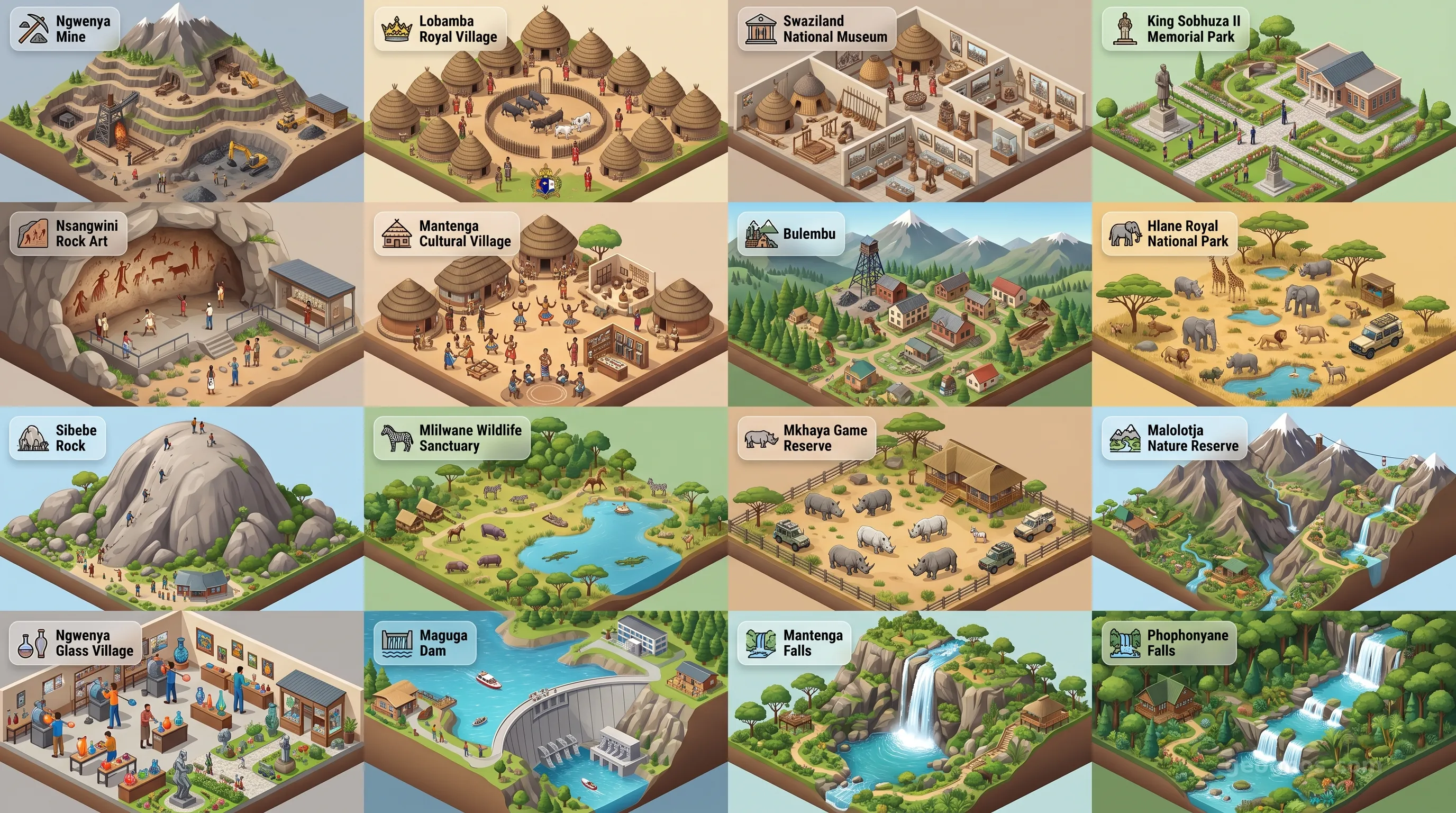
Considered the oldest known mining operation in the world, Ngwenya Mine dates back over 43,000 years. Ancient San communities extracted hematite and specularite here to produce red ochre for cosmetic and ritualistic purposes. For history and archaeology students, it provides unparalleled insight into Middle Stone Age industrial practices. The site features a visitor center detailing the area's incredible timeline. Best visited during the dry winter months (May to September) to avoid muddy trails. Tip: Combine your visit with the nearby Ngwenya Glass factory.
Spiritual and Political Capital
Lobamba is the traditional, spiritual, and legislative heart of Eswatini. It is home to the Parliament, the Queen Mother's royal village, and the Somhlolo National Stadium. This area is culturally critical as it hosts the nation's most important traditional ceremonies: the Reed Dance (Umhlanga) in August/September and the First Fruits ceremony (Incwala) in December/January. Visiting during these festivals offers an incredibly immersive cultural experience, though respect for local customs and strict dress codes is mandatory.
Custodian of Swazi Heritage
Located in Lobamba, this museum (also known as Umsamo) is the premier institution for understanding the deep-rooted history, culture, and natural heritage of the Swazi nation. Exhibits walk visitors through pre-colonial history, the arrival of European settlers, and the rich tapestry of traditional Swazi life, including intricate beadwork and weaponry. It also features a natural history wing showcasing local biodiversity. It is an essential first stop for students and tourists wanting a comprehensive cultural foundation before exploring the rest of the country.
Tribute to a Legendary Monarch
Dedicated to King Sobhuza II, who led the nation to independence and reigned for an astonishing 82 years (the longest verifiable reign of any monarch in history). The park features a striking glass mausoleum, a museum containing the King's personal artifacts—including his vintage cars—and photographic exhibits of his life. It represents a profound journey into 20th-century Swazi history and the transition from a British protectorate to an independent kingdom. The park is serene, beautifully maintained, and offers excellent guided tours.
Ancient Bushmen Canvases
Hidden within the Komati Valley, the Nsangwini rock shelter contains the largest and most diverse collection of San rock art in Eswatini, dating back up to 4,000 years. The ochre paintings depict wildlife, hunters, and rare imagery of shamanic trances, including mythological figures. It provides a profound window into the spiritual and daily lives of Southern Africa's original hunter-gatherers. The hike down to the shelter is steep and rocky, requiring moderate fitness and sturdy footwear. Hiring a community guide is both mandatory and highly enriching.
A Living Museum of Swazi Life
This living museum is a meticulously reconstructed mid-19th-century Swazi village. Visitors are guided through traditional thatched huts (beehive huts) while learning about homestead hierarchy, ancestral beliefs, and indigenous cuisine. The highlight of the visit is the energetic Sibhaca dance performance, showcasing vibrant traditional attire, rhythmic drumming, and powerful singing. It is an absolute must-visit for tourists seeking authentic cultural immersion. Performances usually happen twice a day, so checking the schedule beforehand is highly recommended.
Revitalized 1930s Mining Town
Tucked away in the dramatic northern mountains near the South African border, Bulembu is a former asbestos mining town that was abandoned in 2001 and later transformed into a massive social enterprise supporting local orphans. The town is a time capsule, boasting perfectly preserved 1930s colonial architecture, a vintage cinema, and historical mining infrastructure. Visitors can explore the Bulembu Museum, hike up the highest peak in Eswatini (Mt. Emlembe), and support community-driven craft and honey enterprises. The dirt road to get there can be challenging, so a 4x4 or high-clearance vehicle is advised.
The King's Royal Hunting Grounds
Eswatini's largest protected area, Hlane (meaning 'wilderness' in siSwati), was formerly the exclusive royal hunting ground and is now a thriving wildlife sanctuary. It is the best place in the country to see lions, elephants, and white rhinos. Students of ecology will appreciate the reserve's successful rhino conservation and anti-poaching programs. The park offers self-drive routes and guided open-vehicle safaris. The Ndlovu Camp waterhole is famous for providing incredibly close encounters with rhinos and elephants. Best visited in the dry season when animals congregate around water sources.
The World's Second Largest Monolith
A magnificent 3-billion-year-old volcanic plug, Sibebe Rock is the second-largest exposed granite dome in the world (surpassed only by Uluru in Australia). For geology enthusiasts and adventurous hikers, it presents a steep, thrilling climb that rewards with breathtaking panoramic views of the surrounding valleys. The rock surface supports unique high-altitude flora and rare bird species, including the elusive Blue Swallow. Climbing is incredibly dangerous when wet, so exclusively plan your ascent for dry, clear days and consider hiring a local guide.
The Pioneer of Swazi Conservation
Mlilwane is Eswatini's oldest protected area, established by conservation pioneer Ted Reilly in the 1960s to save the country's dwindling wildlife. Today, it is a serene "Valley of Heaven" featuring grasslands and distinctive granite mountains (like Execution Rock). Because there are no dangerous predators, visitors can explore the park via horseback, mountain bike, or on foot—making it a unique ecological experience. It's an excellent study site for wildlife management and eco-tourism. Keep an eye out for abundant zebras, antelopes, and hippos.
Refuge for the Endangered Rhino
Mkhaya is globally renowned for its exceptional and highly successful conservation efforts, particularly regarding the critically endangered black rhino and the white rhino. For conservation biology students, it serves as a masterclass in anti-poaching strategies and endangered species breeding. Safaris here are exclusive and deeply informative, led by expert local guides. The reserve is characterized by intense bushveld and requires advance booking. Day tours include spectacular game drives and a traditional lunch served under giant sausage trees.
Pristine Mountain Wilderness
Encompassing some of the oldest mountains on the planet, Malolotja is a spectacular highland reserve characterized by dramatic gorges, deep river valleys, and rolling grassy plains. It boasts Eswatini's longest zip-line canopy tour, offering adrenaline junkies a unique perspective of the forested gorge. Botanists and ecology students will marvel at the high-altitude flora, including numerous endemic cycads and rare orchids. The reserve is also crisscrossed by excellent multi-day hiking trails. Weather can change rapidly, so layered clothing is recommended.
Eco-friendly Artisanal Glassblowing
Ngwenya Glass is a world-renowned gallery and workshop that strictly uses 100% recycled glass, much of it collected by local schoolchildren. Visitors can watch master craftsmen skillfully blow and shape molten glass into beautiful animal figurines, tableware, and art pieces from an overhead viewing balcony. It is a fantastic case study in sustainable business models, eco-tourism, and community upliftment. The surrounding village complex also hosts boutique shops selling local textiles, chocolates, and crafts.
Award-Winning Engineering Marvel
Constructed on the Komati River, the Maguga Dam is a spectacular feat of engineering and the largest public works project ever undertaken in Eswatini. The dam wall stands 115 meters high and features impressive cultural carvings depicting Swazi life. It is surrounded by lush mountainous terrain, offering spectacular scenic viewpoints, boat cruises, and tiger fishing. Engineering and infrastructure students will find its joint development (by Eswatini and South Africa) a fascinating study in transnational resource management. Sunsets from the viewpoint are extraordinary.
Eswatini's Most Famous Waterfall
Located within the Mantenga Nature Reserve (just a short walk from the Cultural Village), Mantenga Falls is a striking natural feature where the Usushwana River cascades dramatically over ancient rock formations. The surrounding lush riverine forest is a haven for birdwatchers and nature photographers. It offers an easy, accessible nature walk suitable for all ages. Visitors should be cautious as the rocks near the viewing deck can be quite slippery. Swimming is generally prohibited due to strong currents and conservation rules.
Cascades of Ancient Gneiss
Nestled in the lush, tropical northwest of Eswatini, Phophonyane Falls is a series of beautiful, tiered cascades tumbling over 3-billion-year-old gneiss rock, some of the oldest exposed rock on earth. Set within a private nature reserve, it features a web of magical walking trails cutting through dense riverine forest, rich with birdlife and small mammals. It’s an idyllic retreat for travelers seeking tranquility and a superb site for geology students examining ancient earth crusts. Bring binoculars for spotting the vibrant Narina Trogon bird.