Sao Tome and Principe
Top Sights & Landmarks
National Museum in a 16th-Century Fortress
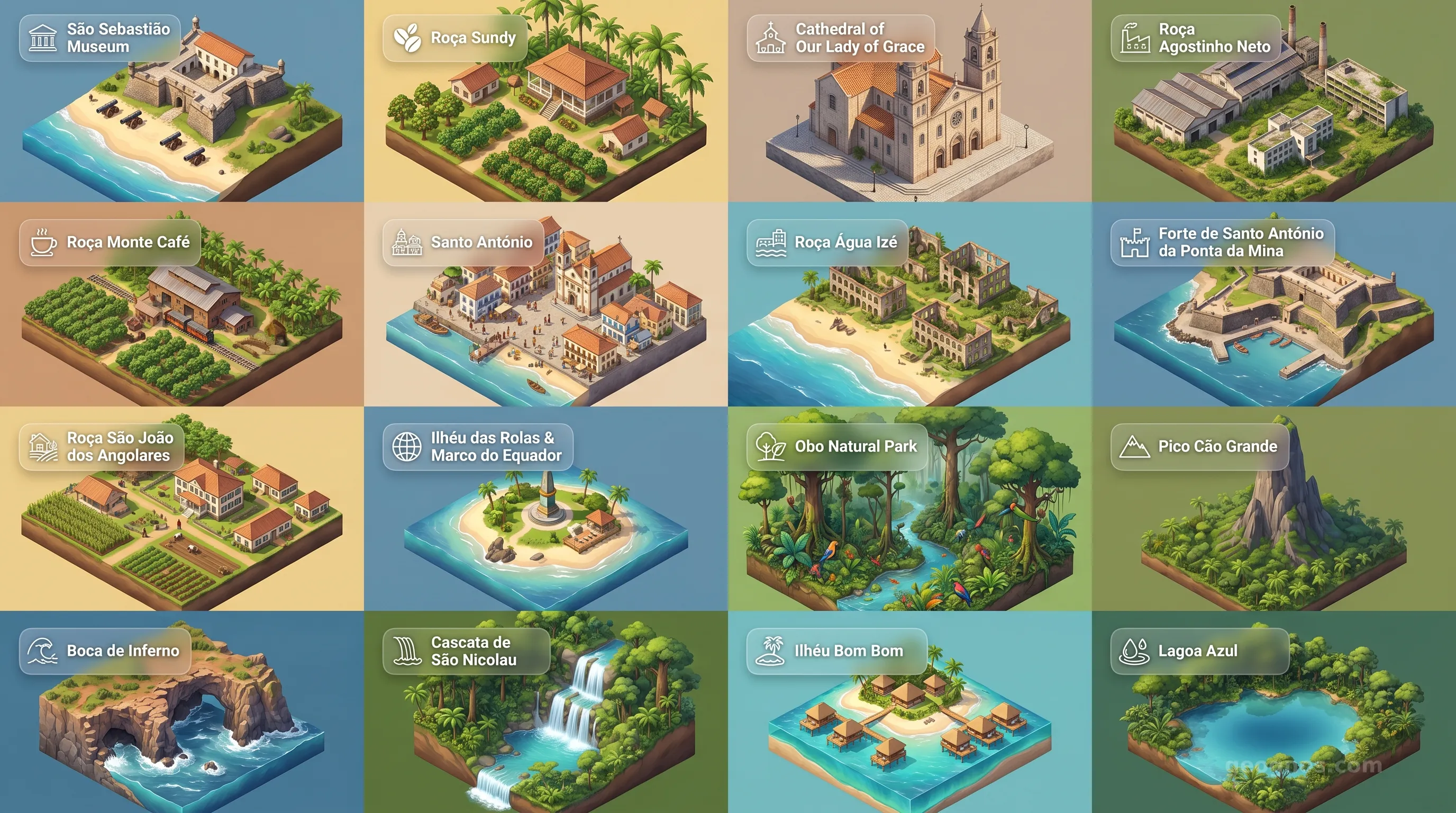
Housed in a 16th-century Portuguese fortress, this museum is the cornerstone of São Tomé and Príncipe's history. It details the island's dark past with the slave trade, the colonial era, and the eventual path to independence. It is an essential stop for history students and culture enthusiasts looking to understand the archipelago's origins. The best time to visit is during the dry season from June to September. Tip: Check out the rooftop for a sweeping view of the ocean and the city's bay, and view the macabre but historically significant collection of colonial-era statues.
Historic Plantation and Birthplace of Relativity Proof
This historic cacao and coffee plantation on Príncipe Island holds immense global scientific importance. It was here in 1919 that British astrophysicist Sir Arthur Eddington successfully tested and proved Albert Einstein’s Theory of General Relativity during a solar eclipse. For students of science and history, it offers an unparalleled intersection of colonial heritage and astrophysics. Visit between June and September for clear skies. Tip: The plantation now houses a boutique eco-hotel; walk the grounds to see the exact coordinates where Eddington set up his groundbreaking telescopes.
16th-Century Colonial Cathedral
Dating back to the 16th century, this towering Catholic church is the most recognizable architectural landmark in the capital. Its pristine, whitewashed colonial facade masks a deep history of Portuguese settlement, religious indoctrination, and local resilience. It serves as a focal point for architectural and theological students studying Luso-African history. Best visited year-round. Tip: Attend a Sunday morning mass to experience the vibrant local choir, which perfectly blends solemn Catholic traditions with dynamic African harmonies.
Grand Colonial Cocoa Plantation
Originally called Roça Rio do Ouro, this is the largest and most impressive historic plantation in the country. The grandiose hospital building, with its imposing classical facade, starkly contrasts with the history of indentured servitude that fueled the cocoa empire. It offers vital context for sociologists and historians studying colonial economics and labor systems. Best visited during the dry season (Gravana). Tip: Hire a local guide from the surrounding community to hear oral histories passed down by the descendants of plantation workers.
Oldest Mountain Coffee Plantation
Founded in 1858, Monte Café is one of the oldest and most significant coffee plantations in São Tomé, perched high in the central mountains. It established the country's historic reputation for high-quality Arabica and Robusta. The on-site coffee museum provides an incredible educational journey from bean to cup. Visit between December and February to see the coffee harvest in action. Tip: Bring a light jacket as the mountain air is noticeably cooler, and don't leave without tasting their freshly roasted, world-class coffee.
The Smallest City in the World
Known affectionately as the smallest city in the world, Santo António is the capital of Príncipe. Its sleepy streets are lined with faded pastel colonial architecture and historic facades that transport visitors to a bygone era. It is a living museum of Luso-African culture and urban planning. Visit in August to witness the lively Auto de Floripes festival, a unique street theater tradition. Tip: Take a slow walking tour to appreciate the crumbling yet beautiful colonial churches and embrace the relaxed 'leve-leve' (easy-going) island lifestyle.
Haunting Ruins of a Cocoa Empire
Once a booming center of cocoa production, this sprawling plantation is an open-air archive of the country's colonial 'roça' system. Its decaying, towering hospital and former worker quarters are hauntingly beautiful, offering a stark reminder of the human cost of the global chocolate trade. It is essential viewing for cultural anthropology students. The dry season (June-September) allows for easier exploration of the overgrown ruins. Tip: Explore carefully as many structures are fragile, and engage respectfully with the locals who now inhabit the repurposed buildings.
17th-Century Coastal Fortress Ruins
Located on a small peninsula in Príncipe, the ruins of this 17th-century fortress offer a fascinating glimpse into the maritime defense of the Portuguese empire against pirates and rival European powers. Overgrown by dense jungle, it feels like a true archaeological discovery. History buffs will love the scattered antique cannons and crumbling stone ramparts. Best explored from June to September to avoid heavy rains. Tip: The hike to the fort involves navigating thick vegetation, so wear sturdy shoes and bring plenty of insect repellent.
Cultural Hub and Culinary Landmark
This restored plantation is the cultural heartland of the Angolares people, descendants of survivors from a 16th-century Angolan shipwreck. Today, it is a renowned culinary and arts hub run by celebrated local chef João Carlos Silva. It beautifully marries historical architecture with modern gastronomy, making it a perfect case study for cultural preservation through food. Visit year-round. Tip: Book ahead for the famous multi-course tasting menu, which offers a masterclass in local ingredients, and stay for the breathtaking views over the bay.
The Center of the World Monument
This tiny islet off the southern tip of São Tomé is famous for sitting exactly on the Equator. The Marco do Equador is a prominent sculptural landmark where visitors can stand with one foot in the Northern Hemisphere and one in the Southern. Geographers and tourists alike flock here for this unique photo opportunity. The boat crossing is best done in calm seas from December to February. Tip: After securing your photo at the monument, hike down to the pristine, untouched beaches that circle the islet for exceptional snorkeling.
Pristine Volcanic Biosphere Reserve
Covering a vast portion of both islands, this UNESCO Biosphere Reserve is a haven of endemic biodiversity. Home to hundreds of rare bird, orchid, and amphibian species, it is a living laboratory for biologists, ecologists, and nature enthusiasts. The dense primary rainforest is a lush testament to the islands' volcanic origins. Visit during the short dry season (January-February) for easier trekking. Tip: Always hire a certified local guide, as the trails are largely unmarked and the dense jungle can be highly disorienting.
Towering Volcanic Needle Peak
Rising dramatically 300 meters above the surrounding jungle canopy, this needle-shaped volcanic plug is São Tomé’s most iconic geological marvel. Formed by magma solidifying in the vent of an active volcano, it is a phenomenal subject for geology students and landscape photographers. The peak is often shrouded in mystical mist, making the dry season (June-September) the best time for clear views. Tip: Climbing is restricted and extremely dangerous due to slick moss and snakes; the best vantage points are from the road near Agostinho Neto.
The Roaring Mouth of Hell Blowhole
The 'Mouth of Hell' is a spectacular blowhole created by ocean waves crashing into a narrow, submerged volcanic cave. The resulting geyser of seawater is accompanied by a thunderous roar. According to local folklore, it was a mythical gateway for colonial governors to travel directly back to Portugal. It provides an excellent live demonstration of coastal erosion for geology students. Best viewed during high tide. Tip: Buy some fresh, locally made coconut water or handmade wooden souvenirs from the small community vendors stationed near the viewing platform.
Lush Jungle Waterfall
Hidden deep in the mountainous interior, this breathtaking waterfall plunges directly out of a lush, vertical jungle wall. Historically, its pristine waters served the surrounding coffee plantations. It is exceptionally accessible, located right next to an old colonial road, making it an easy study site for local hydrology and botany. The wet season (October to May) offers the most powerful and dramatic flow. Tip: The surrounding flora is incredibly diverse; keep an eye out for endemic birds and wild orchids, and bring a swimsuit for a refreshing dip.
Eco-Tourism Pioneer Islet
This tiny, pristine islet off the northern coast of Príncipe is connected to the main island by a long, sweeping wooden walkway. It is a pioneer site for luxury eco-tourism and marine conservation in the country. The surrounding waters are rich with marine life, ideal for marine biology students studying untouched equatorial reefs. Visit between July and October for incredible humpback whale watching. Tip: The wooden bridge is perfect for sunset photography, offering unparalleled panoramic views of the ocean and dense tropical forests.
The Baobab-Fringed Blue Lagoon
The 'Blue Lagoon' is a stunning cove known for its crystal-clear turquoise waters and dramatic surrounding landscape dominated by towering, ancient Baobab trees. It's a striking ecological contrast to the lush rainforests found elsewhere on the island. Historically, it was a landing point for early explorers. Today, it is excellent for snorkeling and studying coastal geomorphology. Visit during the dry season for maximum water clarity. Tip: The beach is made of large, smooth rocks rather than sand, so water shoes are highly recommended.