Cabo Verde
Top Sights & Landmarks
The Cradle of Creole Culture
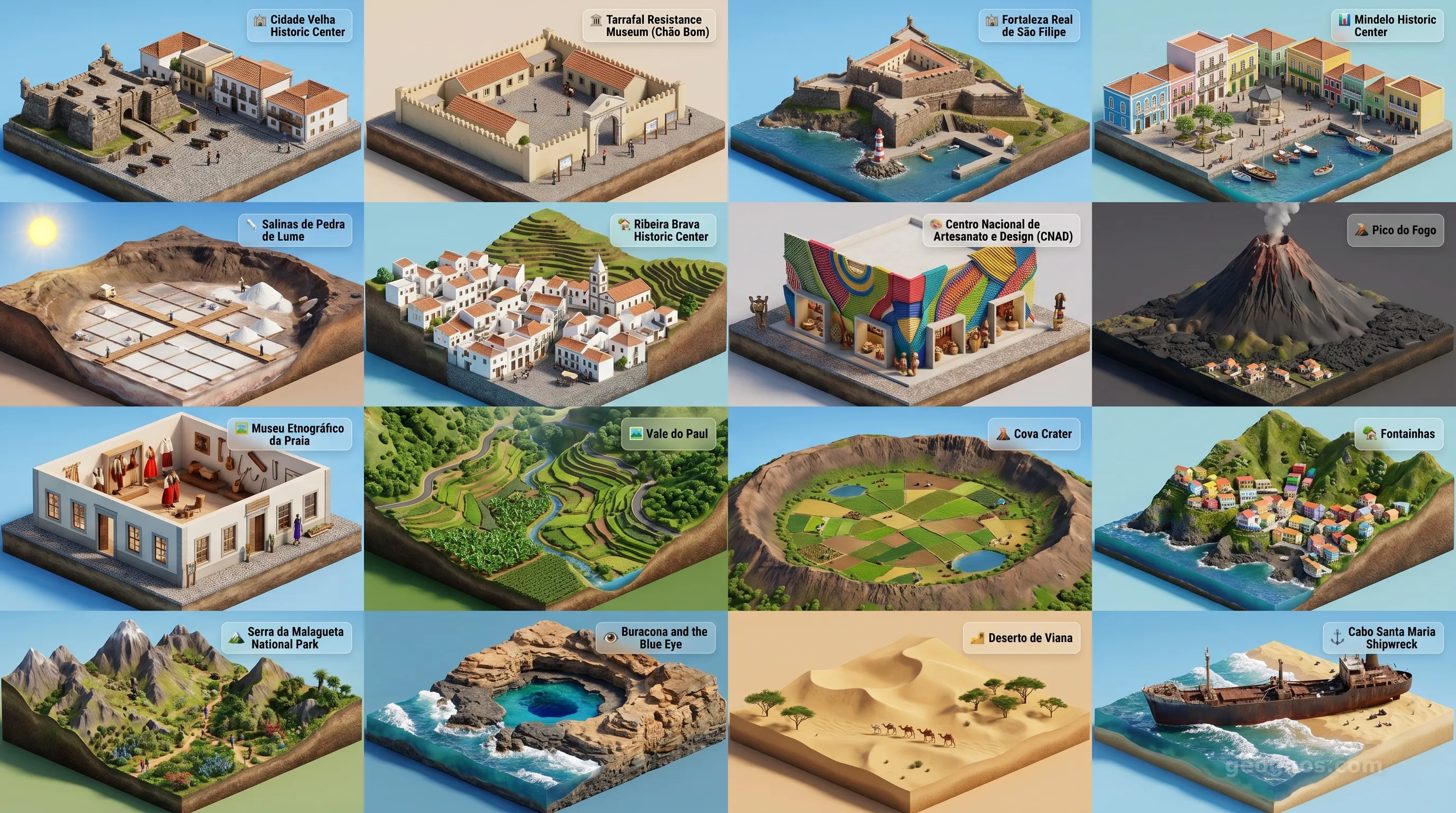
Cidade Velha, originally named Ribeira Grande, is an absolute must-visit for anyone studying the tragic but transformative history of the transatlantic slave trade and colonial expansion. As the first European colonial settlement in the tropics, established in 1462, its historical significance is unparalleled; it served as a pivotal waypoint for navigators like Vasco da Gama and Christopher Columbus. Strolling past the pillory (Pelourinho) and the ruins of the 16th-century cathedral offers profound educational value. The best season to visit is between November and May, when the weather is comfortably dry. Tourist tip: Hire a local guide at the town square to fully grasp the deep historical context hidden within the ruined masonry.
Monument to African Independence
Essential for students of political science and history, the Tarrafal Concentration Camp was established in 1936 by the Portuguese dictator António de Oliveira Salazar. Its historical significance lies in its use to imprison and torture Portuguese anti-fascists and, later, African nationalist leaders from Cabo Verde, Guinea-Bissau, and Angola. Visiting this solemn site provides a visceral understanding of the harsh realities of colonial resistance. The museum is best visited during the cooler months from December to April. Tourist tip: Pair this visit with a trip to the nearby Tarrafal Beach to reflect on the stark contrast between the grim prison walls and the island's natural beauty.
Sentinel of the Atlantic
Perched 120 meters above Cidade Velha, this imposing 16th-century fortress was built in response to devastating pirate attacks, most notably by Sir Francis Drake. It offers incredible insight into Renaissance military architecture and the strategic importance of Cabo Verde in global maritime trade. The fortress is incredibly preserved and provides an exceptional vantage point for landscape photography. The most pleasant weather for exploring the sun-baked ramparts is between November and March. Tourist tip: Visit in the late afternoon to capture the sunset illuminating the fort's stone walls, and bring water as there is little shade.
The Cultural Capital
Mindelo is the beating heart of Cabo Verdean culture, music, and art. Historically, its deep-water harbor made it a bustling transatlantic coaling station for the British in the 19th century, resulting in a rich tapestry of colonial architecture and cosmopolitan flair. Students of music and sociology must visit to understand the origins of Morna and Coladeira, popularized globally by native daughter Cesária Évora. The absolute best time to visit is in February or March to witness the vibrant Mindelo Carnival. Tourist tip: Spend an evening at a local 'Casa de Pasto' to experience authentic live music and the traditional Cachupa dish.
Volcanic Salt Pans
Located inside the crater of an extinct volcano, these dazzling salt evaporation ponds gave the island of 'Sal' its name. Historically, salt exportation to Brazil and West Africa fueled the island's 19th-century economy. Today, it stands as a geological marvel where water salinity is 27 times higher than the ocean, allowing visitors to float effortlessly. It is an excellent field trip for students of geology and industrial history. The site is accessible year-round, though the drier months of November through May are ideal. Tourist tip: Bring old swimwear, as the high salt content can ruin fine fabrics, and don't forget 1 Euro for the freshwater showers afterward.
The Intellectual Hub
Tucked away in the mountains of São Nicolau, Ribeira Brava is a hidden gem of colonial architecture. Historically, it is immensely significant as the site of the Seminário-Liceu, established in 1866, which educated the intellectual elite of West Africa and sparked the Cabo Verdean literary movement 'Claridade'. The town's narrow, winding streets and pastel-colored buildings offer a serene atmosphere for cultural study. The best time to visit is during the post-rainy season (October-December) when the surrounding mountains are lush and green. Tourist tip: Wear sturdy walking shoes, as the town is built on steep, cobblestone inclines.
Showcase of Cabo Verdean Creativity
Located in Mindelo, CNAD is housed in a stunningly restored historical building, newly expanded with a facade made from colorful recycled oil drums. It is the premier institution for studying the country's textile history, specifically the Panu di Téra (traditional woven cloth), and contemporary Cabo Verdean design. The museum is a focal point for understanding how resourcefulness and island isolation birthed unique artistic expressions. Visit any time of year, as the indoor exhibits offer a great respite from the midday sun. Tourist tip: Check their calendar in advance, as they frequently host interactive weaving workshops and live cultural performances.
The Majestic Active Volcano
Dominating the island of Fogo, this stratovolcano rises nearly 3,000 meters above sea level and remains active, with its most recent eruption in 2014. Historically and economically, the mineral-rich volcanic ash supports the unique Chã das Caldeiras viticulture, producing the famous Fogo wine. For volcanologists, ecologists, and hikers, it is a peerless destination. The optimal time to hike the peak is between October and May to avoid the intense summer heat and potential rains. Tourist tip: Hire a guide from the local cooperative to safely navigate the steep, ash-covered ascent, and celebrate your descent with a glass of local 'Manecom' wine.
Window into Insular Life
Situated in the capital city of Praia within a historic 19th-century building, this intimate museum provides a concentrated look into the daily lives, agricultural practices, and ancestral traditions of the Cabo Verdean people. It is highly valuable for anthropology students seeking to understand the synthesis of African and European customs that forged the Creole identity. You can visit year-round. Tourist tip: It is a small museum that takes about an hour to explore; combine it with a walking tour of the nearby Plateau district and the bustling Sucupira Market.
The Green Heart of Santo Antão
The Paul Valley is a spectacular testament to human ingenuity and agricultural adaptation. Characterized by incredibly steep, terraced farming, it produces sugarcane, coffee, and tropical fruits. Historically, this valley has been the center of production for 'Grogue', the national sugarcane spirit, which has deep cultural roots mirroring Caribbean rum histories. It is an extraordinary living laboratory for agronomists and botanists. The hiking is best from November to March when the valley is verdant and the weather is cool. Tourist tip: Hike downhill from the Cova Crater into the valley, stopping at a local 'trapiche' (distillery) for a grogue tasting.
The Fertile Caldera
Located at over 1,000 meters above sea level on Santo Antão, the Cova Crater is an extinct volcanic caldera that has been ingeniously transformed into a patchwork of agricultural fields by local farmers. From an educational standpoint, it offers a dramatic example of microclimates and volcanic soil fertility. The mist that often spills over the crater's edge creates surreal, breathtaking landscapes. Ideal to visit between October and April. Tourist tip: Arrive early in the morning before the dense cloud cover rolls in to secure the best panoramic photographs.
The Cliffside Village
Often cited as one of the most picturesque villages in the world, Fontainhas clings precariously to the edges of a steep ravine on Santo Antão. Its brightly painted houses contrast vividly against the dramatic, jagged green mountains and the deep blue of the Atlantic. It holds architectural significance as a masterclass in vernacular construction in extreme topography. The best season for hiking to Fontainhas is between November and May. Tourist tip: The hike from Ponta do Sol is relatively short but steep; bring plenty of water and support the local economy by dining at the tiny family-run eatery in the village.
Endemic Ecological Haven
Located on Santiago Island, this mountainous national park is a hotspot for biodiversity, harboring numerous endemic plant and bird species, such as the Cape Verde Warbler. Historically, its impenetrable terrain served as a sanctuary for 'Badius'—runaway slaves who escaped coastal plantations to establish free communities. It is a critical site for ecologists and historians alike. The weather is best for hiking from October through March. Tourist tip: Hire a local park guide not just for navigation, but to learn about the medicinal properties of the native flora used by the islanders for centuries.
The Illuminated Underwater Cavern
On the volcanic northwestern coast of Sal lies Buracona, a natural pool and underwater cave system. Its most famous feature, the 'Blue Eye' (Olho Azul), is a geological marvel where sunlight hits the water at a precise angle, illuminating the cave floor in a spectacular, glowing turquoise hue. It offers marine geologists and oceanographers insights into coastal basalt erosion. For the best experience, visit between 11:00 AM and 1:00 PM when the sun is directly overhead. Tourist tip: Avoid visiting on extremely windy days when the ocean is rough, as swimming in the adjacent natural lava pools may be prohibited for safety reasons.
The Miniature Sahara
Formed by pale Saharan sands blown across the Atlantic Ocean by the Harmattan winds over thousands of years, the Viana Desert on Boa Vista is a stunning ecological anomaly. Studying this landscape provides a vivid lesson in global weather patterns, wind erosion, and desertification. The contrast of pristine white sand dunes dotted with sparse acacia trees and dark volcanic rocks is mesmerizing. The cooler months of December through March are best for visiting. Tourist tip: Book a quad bike tour or a sunset sandboarding excursion, and bring a scarf to protect your face from wind-blown sand.
The Rusty Ghost Ship
Stranded on the northern coast of Boa Vista since 1968, the Spanish cargo ship Cabo Santa Maria has been battered by Atlantic waves into a haunting, rusted skeleton. The wreck serves as a powerful testament to the treacherous maritime conditions around the archipelago, providing an interesting case study in modern maritime decay and coastal impact. Visit year-round, ideally during low tide. Tourist tip: The road to the shipwreck is unpaved and bumpy; rent a 4x4 or book a guided tour, and do not attempt to swim to the wreck due to dangerous currents and jagged metal.