Morocco
Top Sights & Landmarks
Ancient Center of Learning
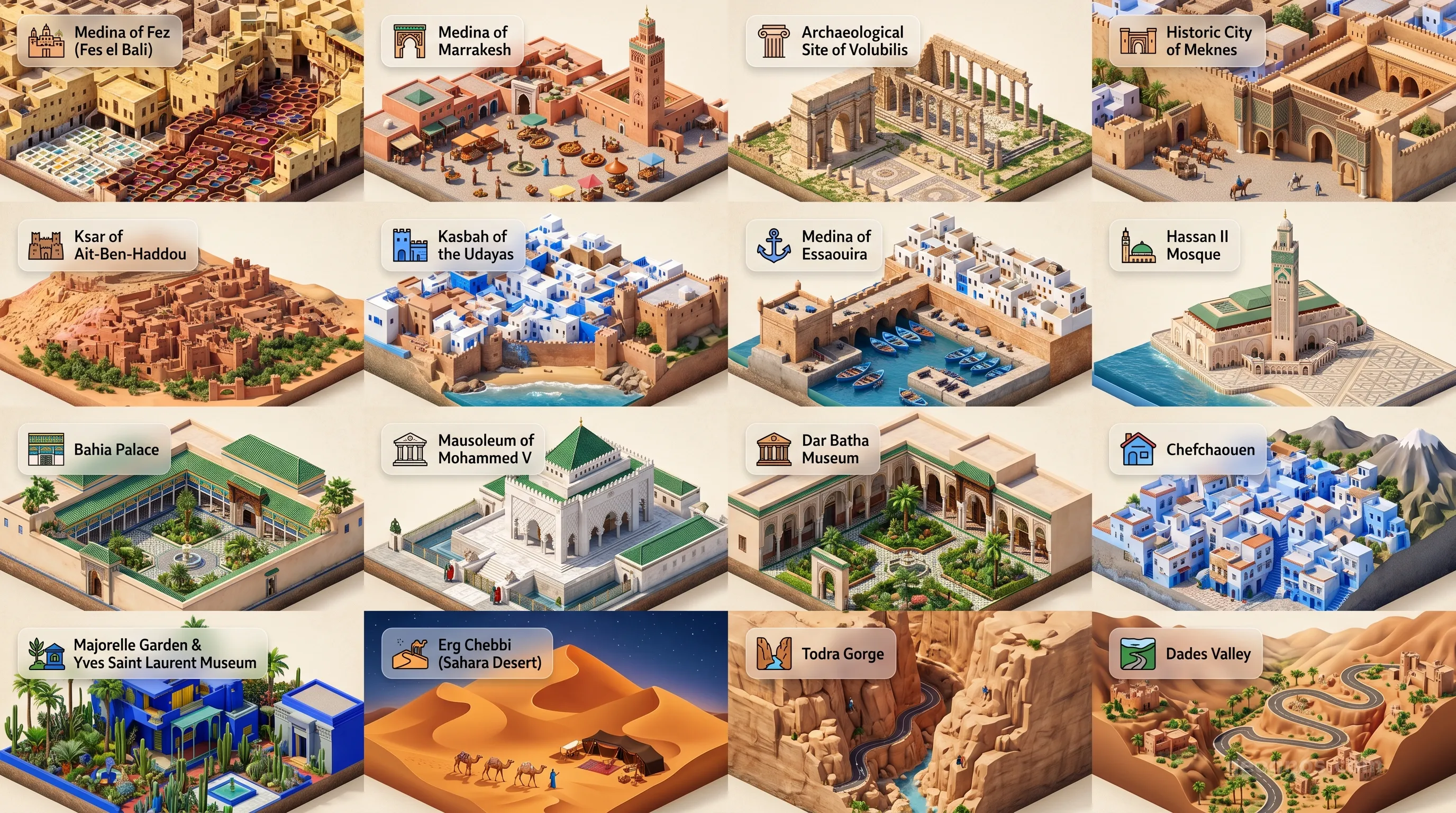
Founded in the 9th century, Fes el Bali is the oldest walled part of Fez and arguably the world's largest car-free urban area. It is home to Al-Qarawiyyin, recognized as the world's oldest continuously functioning university. For history and urban studies students, it offers an unparalleled look into medieval Islamic urban planning. The best time to visit is during spring (April to May) or autumn (September to October). Tourist tip: The medina contains over 9,000 labyrinthine alleys; hiring an official local guide for your first day is highly recommended to avoid getting hopelessly lost.
The Red City's Beating Heart
Founded by the Almoravids in the 11th century, the Medina of Marrakesh is a densely packed historic center defined by the iconic Koutoubia Mosque and the bustling Jemaa el-Fnaa square. It is a vital case study in the evolution of North African trade, architecture, and intangible cultural heritage. The best seasons for a visit are March to May and September to November. Tourist tip: Visit Jemaa el-Fnaa just before sunset to watch the dramatic transition from day-time entertainers to night-time food stalls from a rooftop café.
Roman Ruins in North Africa
Volubilis is a partly excavated Amazigh and Roman city developed from the 3rd century BC onward as an important outpost of the Roman Empire. It is famous for exceptionally well-preserved mosaic floors depicting classical mythology. Classics and archaeology students will find it a fascinating study of Roman provincial life and cultural integration. Spring is the most beautiful time to visit, as the ruins are carpeted in wildflowers. Tourist tip: Arrive early in the morning to beat the intense midday sun, and bring plenty of water as there is little shade.
The Versailles of Morocco
Founded in the 11th century, Meknes became the capital of Morocco under Sultan Moulay Ismail in the 17th century. The city is a unique blend of Islamic and European architectural styles, featuring monumental gates like Bab Mansour and vast royal granaries. It is an essential site for studying the Alaouite dynasty's monumental building programs. Autumn and spring provide the best weather. Tourist tip: Meknes is generally quieter and less aggressive for tourists than Fez or Marrakesh, making it a great place to comfortably shop for silver and damascene crafts.
Iconic Pre-Saharan Fortress
A striking example of traditional southern Moroccan earthen clay architecture, this fortified village (ksar) was historically a key stop on the trans-Saharan caravan route. It is a masterclass for architecture students interested in sustainable, historic rammed-earth construction. The ksar's dramatic aesthetic has also made it a favorite filming location for Hollywood epics. Visit between October and April for pleasant weather. Tourist tip: Cross the Ounila River early in the morning for the best photographic lighting and to avoid the midday tourist bus crowds.
Rabat's Blue and White Fortress
Located at the mouth of the Bou Regreg river, this 12th-century Almohad dynasty fortress features distinct blue-and-white winding streets and stunning Andalusian gardens. It provides deep historical context for the Islamic conquests and subsequent pirate republics (the Republic of Salé). The mild coastal climate makes it a year-round destination, though spring is best for the blooming gardens. Tourist tip: Stop at the iconic Café Maure within the Kasbah for mint tea and traditional Moroccan almond pastries overlooking the river and ocean.
Fortified Coastal Crossroads
Formerly known as Mogador, this late 18th-century fortified seaport is a prime example of European military architecture applied in a North African context. Historically, it was a crucial hub connecting sub-Saharan Africa with Europe. Today, it is famous for its vibrant Gnawa music culture and artisan woodworkers. The best time to visit is late summer to autumn. Tourist tip: Essaouira is notoriously windy (known as the 'Alizés' winds), which makes it perfect for kitesurfing but means you should pack a light jacket even in summer.
Oceanfront Architectural Marvel
Completed in 1993 in Casablanca, this monumental structure is one of the largest mosques in the world, featuring a 210-meter minaret. Built partially over the Atlantic Ocean, it showcases the pinnacle of modern Moroccan artisanship, utilizing vast amounts of zellige tilework, carved stucco, and cedar wood. It is an exceptional site for studying contemporary Islamic architecture. It can be visited year-round. Tourist tip: This is one of the few mosques in Morocco open to non-Muslims; check the specific daily guided tour schedule in advance.
19th-Century Masterpiece of Marrakesh
Built in the late 19th century, Bahia Palace was intended to be the greatest palace of its time. The sprawling complex of courtyards, riads, and gardens is a brilliant study in Moroccan and Islamic decorative arts, perfect for design and art history students. The intricately painted cedarwood ceilings and expansive tilework are breathtaking. The cooler months of November through March are ideal for wandering the grounds. Tourist tip: Hire a guide at the entrance to help explain the labyrinthine layout and the history of the Grand Vizier's harem.
Royal Resting Place in Rabat
Located opposite the Hassan Tower in Rabat, this stunning mausoleum holds the tombs of the Moroccan King Mohammed V and his two sons. It is considered a masterpiece of modern Alaouite architecture, characterized by its classic green tiled roof and intensely detailed interior marble work. It is essential for students understanding modern Moroccan royal history and post-colonial identity. Suitable for visiting year-round. Tourist tip: Royal guards in traditional, colorful attire are stationed outside; remember to dress modestly out of respect.
Fez's Palace of Moroccan Arts
Set in a magnificent 19th-century summer palace in Fez, this museum houses an exquisite collection of historical Moroccan arts and crafts. Its artifacts range from intricate astrolabes and fine carpets to the famous blue-glazed Fassi pottery. It is an invaluable resource for art history students tracing the evolution of Moorish craftsmanship. Spring is ideal due to the beautiful Andalusian garden in the central courtyard. Tourist tip: The tranquil garden is a perfect, quiet retreat from the sensory overload of the Fez medina.
The Blue Pearl of the Rif
Founded in 1471 as a small fortress against Portuguese invasions, Chefchaouen later became a refuge for Andalusian Muslims and Jews escaping the Reconquista. Today, it is world-renowned for its striking, labyrinthine alleys washed in varying shades of blue. It offers rich material for students of cultural anthropology and visual arts. The best time to visit is from April to June. Tourist tip: Hike up to the abandoned Spanish Mosque on the hill opposite the town for a breathtaking, panoramic sunset view of the blue city.
Botanical and Fashion Oasis
Created over 40 years by French painter Jacques Majorelle and later rescued from destruction by fashion designer Yves Saint Laurent, this botanical garden is a surreal blend of vibrant 'Majorelle Blue' architecture and exotic plants. The adjacent museum showcases YSL's haute couture deeply influenced by Moroccan culture. It is a must-visit for botany and fashion students alike. Early spring offers the best blooms and pleasant weather. Tourist tip: Book your combination tickets online well in advance to completely bypass the notoriously long queues.
Towering Golden Sand Dunes
Located near the town of Merzouga, Erg Chebbi features spectacular wind-blown sand dunes that can reach up to 150 meters in height. This immense sea of sand is crucial for students studying desert geomorphology and the traditional, nomadic Amazigh (Berber) way of life. The best season is between November and March, strictly avoiding the dangerous summer heat. Tourist tip: Book an overnight stay in a desert camp; taking a camel trek at sunset and stargazing under zero light pollution is an unforgettable experience.
Dramatic High Atlas Canyons
Carved by the Todra River, these spectacular limestone canyons in the eastern part of the High Atlas Mountains feature vertical rock walls that soar up to 400 meters high. It is an exceptional site for geology students mapping fluvial erosion and rock climbers seeking world-class routes. Spring and autumn are the best times to visit for ideal hiking and climbing conditions. Tourist tip: Visit in the early morning to appreciate the sheer magnitude of the gorge before the narrow passageway fills with tourist buses.
Valley of a Thousand Kasbahs
The Dades Valley is renowned for its dramatic landscapes, winding roads, and unusual geological formations known locally as 'monkey fingers'. Lined with ancient ruined kasbahs, the valley offers excellent tectonic and geographical study opportunities, showcasing millions of years of earth history. The vibrant contrast of red rocks and green oases is best witnessed from March to May. Tourist tip: Drive up the winding switchbacks to the popular café at the top of the gorge for an iconic, dizzying photograph of the road below.