Guinea
Top Sights & Landmarks
Biodiversity Hotspot
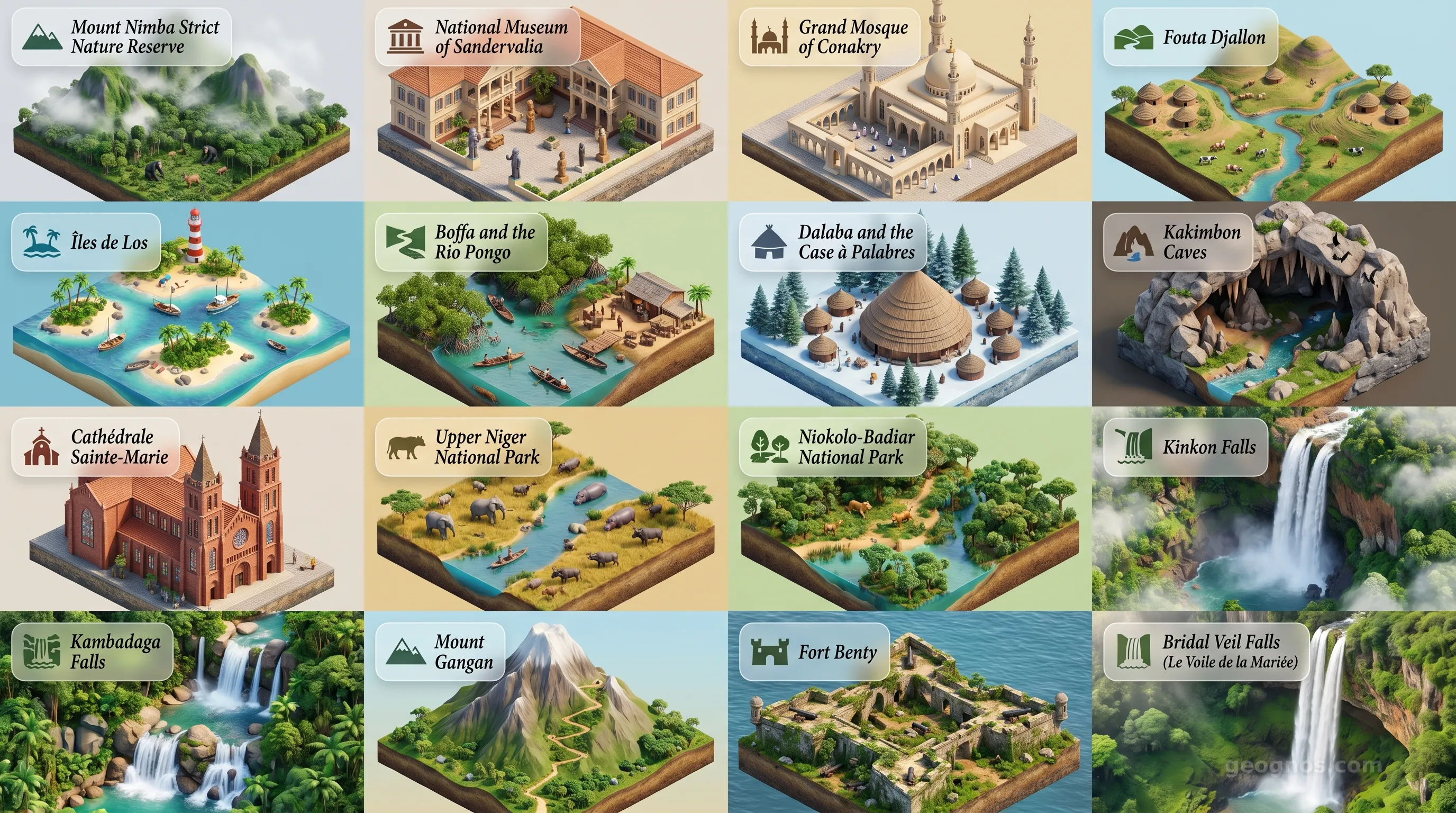
Straddling the borders of Guinea, Ivory Coast, and Liberia, this pristine reserve is a globally recognized UNESCO World Heritage site. It is fiercely protected due to its extraordinary biodiversity, including endemic species like the viviparous toad and wild chimpanzees that use tools. For ecology students and nature enthusiasts, it offers unparalleled insights into West African rainforest ecosystems. The best time to visit is during the dry season from November to February. Tourist tip: Access is strictly regulated to protect the fragile environment, so arranging a guided tour through official environmental authorities is mandatory.
Cultural Heritage Hub
Located in the heart of Conakry, the Sandervalia National Museum is the premier institution for studying Guinean history, ethnography, and traditional arts. The museum houses a rich collection of masks, wooden statues, and historical artifacts from the country's diverse ethnic groups, as well as remnants of the colonial era. The surrounding park features an artisan village where local artists display their gallery works. It is a year-round destination. Tourist tip: Hire a local guide at the entrance to fully contextualize the spiritual and historical significance of the ceremonial masks.
West Africa's Grand Edifice
As one of the largest mosques in Sub-Saharan Africa, this architectural masterpiece can accommodate up to 25,000 worshippers. Built in 1982 with funding from King Fahd of Saudi Arabia, its towering minarets dominate the Conakry skyline. It holds immense national importance, housing the tombs of prominent Guinean figures, including the first president, Ahmed Sékou Touré. It is an excellent site for studying Islamic architecture and post-colonial Guinean history. Tourist tip: Non-Muslim visitors cannot enter the main prayer hall but can admire the stunning exterior and the adjacent botanical gardens; dress modestly.
The Water Tower of West Africa
This spectacular highland region is culturally and geographically the heart of Guinea. Historically, it was the center of the powerful Imamate of Fouta Djallon in the 18th century, making it rich in Fulani heritage. Geologically, it is known as the 'Water Tower of West Africa' because major rivers like the Niger, Senegal, and Gambia originate here. Trekking through its rolling hills, deep canyons, and traditional villages offers a deeply immersive experience. The best season for hiking is November to January. Tourist tip: Base your travels in Labé or Pita and hire a local Fulani guide to explore the remote valleys and cultural sites.
Historically Rich Archipelago
A group of islands just off the coast of Conakry, the Îles de Los (including Tamara, Kassa, and Roume) offer a fascinating mix of dark history and tropical relaxation. Historically, they served as a significant hub for the transatlantic slave trade and later as a British and French colonial outpost. Roume is famously rumored to have inspired Robert Louis Stevenson's 'Treasure Island'. Today, they are popular for their forested interiors and beaches. The dry season (December-April) is optimal for boat trips. Tourist tip: Take a local pirogue from Conakry's Boulbinet port and spend a weekend exploring the old colonial prison ruins on Tamara.
Echoes of the Slave Trade
The Rio Pongo river estuary in the Boffa prefecture is a deeply sobering but crucial historical region. During the 18th and 19th centuries, it was a major artery for the transatlantic slave trade, dotted with European forts and trading posts. Students of history can explore the archaeological remnants of these tragic sites, including old cannons and ruined slave warehouses hidden in the mangroves. Visit between November and May to avoid heavy coastal rains. Tourist tip: Access to the historic ruins often requires navigating the river by boat; coordinate with local historians or guides in Boffa for safe passage.
Historic Highland Retreat
Dalaba, nestled high in the Fouta Djallon, was a favored retreat for French colonial administrators due to its cool, pine-scented climate. The town's historical crown jewel is the 'Case à Palabres', a beautiful traditional building with intricate Fulani carvings where local chiefs and colonial leaders once met. The town also features the former home of anti-apartheid icon Miriam Makeba. It is a fantastic place to study colonial architecture blending with indigenous styles. Tourist tip: Enjoy the locally grown strawberries and cool climate; bring a light jacket as evenings get surprisingly chilly.
Sacred Caverns of the Baga
Located in the Ratoma municipality of Conakry, the Kakimbon Caves are deeply woven into the spiritual history of the Baga people. These extensive caves were historically used as places of worship, initiation ceremonies, and refuges during tribal conflicts. Archaeologically, they hold secrets of early human habitation in the region. They offer excellent insight into pre-colonial Guinean animist traditions. The dry season is necessary for safe exploration. Tourist tip: The site is considered highly sacred; a local elder or guide must accompany you, and certain areas may be off-limits to uninitiated outsiders.
Colonial Architectural Gem
Built in the late 1920s, the Cathédrale Sainte-Marie stands as a vibrant architectural symbol of Conakry. With its striking yellow and red facade and distinct Orthodox-influenced domes, it breaks from typical West African colonial architecture. It serves as the seat of the Roman Catholic Archbishop of Conakry and provides an excellent study of early 20th-century religious architecture in Francophone Africa. Open year-round for visits. Tourist tip: Attend a Sunday morning service to hear the magnificent local choir, which beautifully blends Catholic liturgy with Guinean musical traditions.
Pristine Biosphere Reserve
Covering the Mafou Forest and the upper reaches of the Niger River, this national park is a UNESCO Biosphere Reserve. It protects one of the last remaining significant dry forest ecosystems in West Africa. Biologists and eco-tourists study its populations of West African chimpanzees, hippos, and rare bird species. Historically, the area was part of the expansive Mandinka empires. The best wildlife viewing is late in the dry season (March-May) when animals congregate near the river. Tourist tip: Infrastructure is minimal; visitors must be fully self-sufficient and travel with certified park rangers.
Cross-Border Wilderness
Forming a massive trans-boundary ecological zone with Senegal's Niokolo-Koba, the Badiar National Park is a crucial conservation area characterized by Guinean savanna, woodlands, and the Koulountou River. It is a vital refuge for endangered species like the Derby eland and West African lion. The park offers profound educational value regarding international conservation efforts in West Africa. Visit between December and April. Tourist tip: Access from the Guinean side (Koundara) is off the beaten path; a sturdy 4x4 vehicle and a hired tracker are essential.
Majestic Cascades with a Dark Past
Near the town of Pita in the Fouta Djallon, Kinkon Falls is a breathtaking multi-tiered waterfall plunging into a deep gorge. Beyond its geological splendor and the nearby hydroelectric dam, the site holds deep historical weight; the adjacent Camp Kinkon was a notorious political prison under Sékou Touré's regime. It provides a striking contrast between extreme natural beauty and solemn political history. Best visited just after the rainy season (October-November) when water volume is high. Tourist tip: Photography near the hydroelectric dam is strictly prohibited by military guards; only take photos of the falls themselves.
Wild Waters and Vine Bridges
Also located in the Fouta Djallon region on the Kokoulo River, Kambadaga is famed for its massive volume and the series of spectacular drops surrounded by dense tropical foliage. The area is notable for traditional liana (vine) bridges constructed by local villagers, offering a thrilling and authentic crossing over the roaring river. It is a prime spot for adventurous travelers and structural engineering students fascinated by indigenous bridge-building techniques. Best in late wet season. Tourist tip: Do not cross the vine bridges if you are afraid of heights, and always offer a small customary tip to the bridge's local caretakers.
Kindia's Guardian Peak
Towering over the city of Kindia, Mount Gangan is an impressive geological formation of ancient rock and steep escarpments. The mountain is deeply embedded in the folklore of the Sousou people, who believe spirits inhabit its higher altitudes. Hiking the mountain reveals hidden waterfalls, stunning valleys, and panoramic views of the coastal plains. It's a superb location for geology students and hikers. Early dry season (November) offers the clearest views. Tourist tip: The hike is strenuous and can take a full day; start at dawn and hire a local guide from Kindia city to navigate the unmarked trails.
Forgotten Colonial Outpost
Located south of Conakry near the Sierra Leone border along the Melacoree River, Fort Benty is an evocative ruin of a 19th-century French military and trading post. Originally built to combat the illegal slave trade and establish French dominance over British rivals, nature has heavily reclaimed the site. It is an excellent destination for historians studying the scramble for Africa and the transition from the slave trade to legitimate commerce. Best accessed in the dry season. Tourist tip: Access requires asking permission from the local village chief; be prepared for an overgrown, rugged exploration.
Nature's Delicate Cascade
Situated near Kindia, this famously photogenic waterfall gets its name from the delicate, veil-like pattern the water creates as it cascades down a wide, sheer rock face. Surrounded by lush tropical vegetation, it was highly developed as a tourist resort during the colonial and early post-colonial eras. It is a relaxing natural wonder and a staple of Guinean domestic tourism. Unlike many falls, it must be visited during the rainy season (July to October) as it can dry up completely by March. Tourist tip: The site features old, somewhat faded tourist bungalows; bring a picnic and enjoy the peaceful surrounding forest.