Dominica
Top Sights & Landmarks
Indigenous Carib Cultural Village
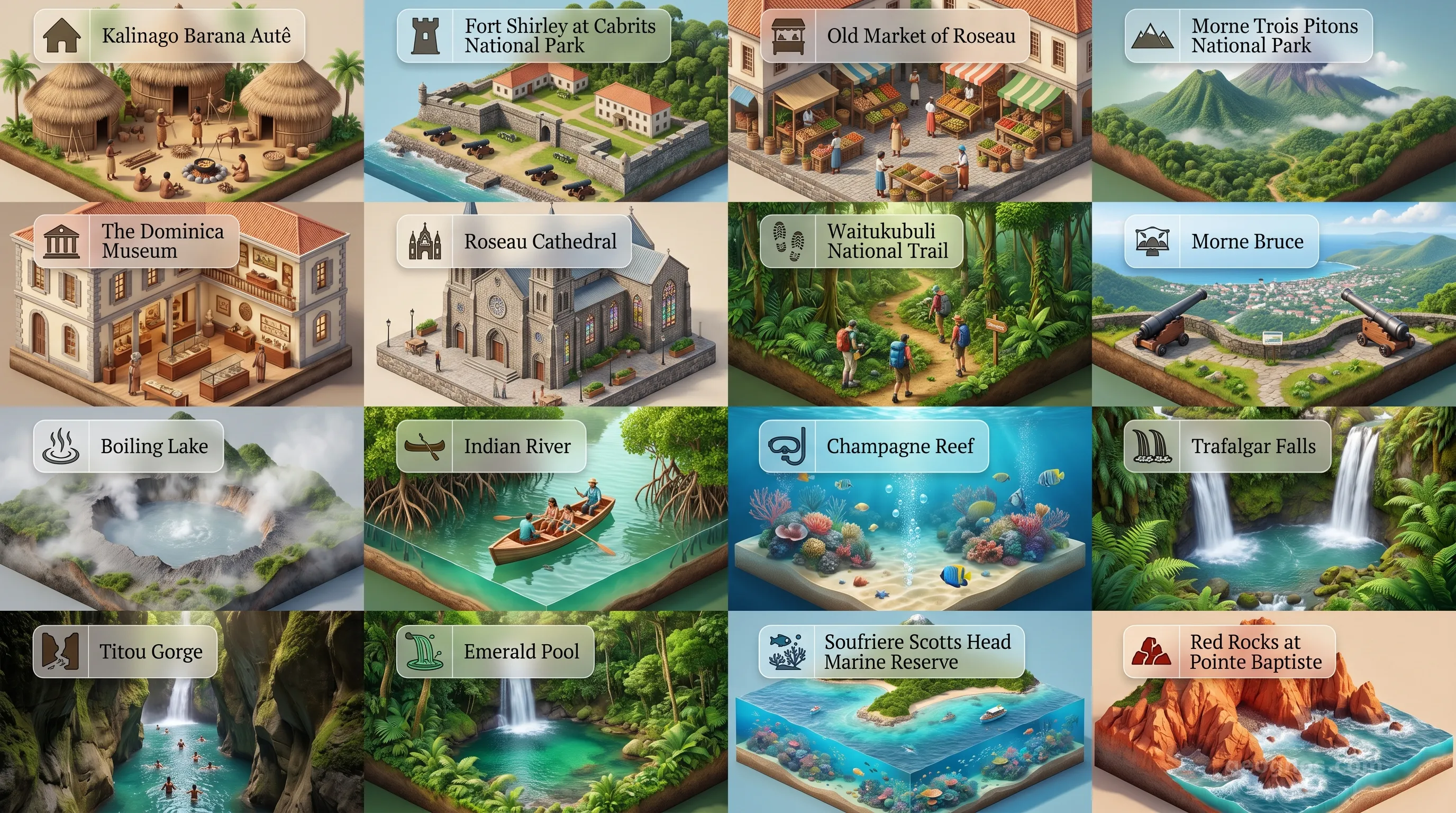
Explore the Kalinago Barana Autê to study the profound pre-Columbian heritage of the Caribbean's last remaining indigenous population. Historically significant as the sanctuary for the Carib people who fiercely resisted European colonization, this living village offers a vivid glimpse into ancient traditions, from canoe building to cassava processing. It is an essential site for anthropological study and cultural immersion. The best season to visit is during the dry months from February to May. Tourist tip: Engage directly with local artisans and purchase genuine handmade larouma reed baskets to support the indigenous community.
Restored 18th-Century Garrison
Fort Shirley stands as a monument to Dominica's turbulent colonial past, alternating between British and French control. It is historically monumental for the 1802 mutiny of the 8th West India Regiment, where enslaved African soldiers revolted against brutal conditions, leading to the emancipation of all slave soldiers in the British Empire. Students of military history and colonial architecture will find the restored ruins fascinating. The optimal time to visit is from December to April. Tourist tip: Hike the surrounding trails of Cabrits National Park for panoramic views of Prince Rupert Bay.
Historic Trading Square
Located in the heart of the capital, the Old Market of Roseau holds immense historical weight. Once a bustling center for the colonial slave trade and later a central hub for agricultural commerce and political meetings, it stands today as a testament to the resilience of the Dominican people. Visitors and students of Caribbean history should reflect upon its cobblestone square to understand the island's economic evolution. It is accessible year-round. Tourist tip: Today, it serves as a vibrant craft market; it is the perfect spot to buy local spices, crafts, and souvenirs while honoring its solemn past.
Primordial Volcanic Rainforest
A must-study for ecologists and geologists, this park was designated a UNESCO World Heritage site in 1997. It encapsulates the island's dramatic volcanic history, featuring deep valleys, freshwater lakes, and incredibly rich biodiversity. Historically, its impenetrable forests provided a safe haven for Maroons (escaped slaves) seeking freedom. The best time to traverse its varied landscapes is during the dry season (January to May) to avoid heavy tropical downpours. Tourist tip: Prepare for rugged, muddy terrain; sturdy hiking boots and a knowledgeable local guide are highly recommended.
National Historical Repository
Housed in a colonial-era building on the Roseau waterfront, the Dominica Museum provides an essential overview of the island's complex history. Exhibits cover everything from the island's unique geology and Kalinago origins to the transatlantic slave trade and Creole cultural developments. It serves as an excellent starting point for students and tourists looking to contextualize their visit. The museum can be visited year-round. Tourist tip: It is small but packed with information, so dedicate at least an hour to read through the well-curated exhibits before exploring the rest of Roseau.
Gothic-Romanesque Landmark
The Cathedral of Our Lady of Fair Haven of Roseau, constructed in the 19th century, is a stunning example of Gothic-Romanesque architecture blended with Caribbean influences. Built by French missionaries, its black volcanic rock exterior is visually striking and tells the story of early Catholic influence on the island's predominantly Creole society. Studying its architecture reveals the intersection of European design and local materials. It is a year-round destination. Tourist tip: The cathedral has undergone extensive restoration after hurricane damage; be respectful of ongoing works and attend a Sunday mass to hear the vibrant local choir.
Longest Hiking Trail in the Caribbean
Spanning 115 miles across the entire island, the Waitukubuli National Trail is not just a natural wonder but a historical corridor. It incorporates ancient Kalinago footpaths and the secret routes used by Maroons. Hiking this trail offers an unparalleled educational journey through Dominica's ecological zones and historical legacy. The prime time for hiking is the dry season from December to May. Tourist tip: Do not attempt the entire trail unless you are an experienced long-distance hiker; break it down into manageable segments like Segment 3 or 4 for a rewarding day trip.
Panoramic Military Outpost
Morne Bruce offers the most iconic panoramic view of Roseau and the Caribbean Sea. Historically, it was a strategic military garrison established in the 18th century to defend against naval attacks. Today, the remnants of the military outpost provide context to the imperial struggles over Caribbean territories. It is an excellent spot for photography and historical reflection. Visit year-round, ideally during sunset. Tourist tip: You can drive to the top, but for a more engaging experience, take the steep, scenic 'Jack's Walk' trail up from the Botanical Gardens.
World's Second-Largest Hot Spring
A geological marvel situated in the Morne Trois Pitons National Park, Boiling Lake is a flooded fumarole emitting steam and sulfur. First recorded by European explorers in 1870, it represents the raw, active volcanic power shaping the Lesser Antilles. Studying this site provides immense value for vulcanologists and nature enthusiasts. The 8-mile roundtrip hike is arduous and best tackled from December to April. Tourist tip: You must hire a certified guide; the trail traverses the treacherous Valley of Desolation, where missteps can lead to severe burns from hidden steam vents.
Mangrove Transport Route
The Indian River is deeply interwoven with Kalinago history, serving as an ancient transport route and base for their settlements. Today, its hauntingly beautiful coastal wetlands, characterized by massive bwa mang (bloodwood) trees, are a haven for birdwatchers and ecologists. The ecosystem demonstrates a pristine Caribbean riparian environment. Year-round visits are possible. Tourist tip: Motorized boats are banned to protect the environment. Take a guided rowboat tour to fully appreciate the tranquility, and enjoy a local rum punch at the bush bar at the end of the river.
Volcanic Underwater Springs
Champagne Reef derives its name from the thousands of bubbles emerging from underwater volcanic vents, creating the sensation of swimming in a glass of champagne. Beyond its geological significance, the reef area is home to historic shipwrecks dating back to colonial naval skirmishes. It is a premier site for marine biology studies and eco-tourism. The calmest waters are generally from November to May. Tourist tip: Bring your own snorkeling gear if possible, and swim towards the shallowest areas to feel the warmest volcanic vents.
Iconic Twin Waterfalls
Trafalgar Falls consists of two majestic adjacent cascades affectionately known as the 'Father' (125 ft) and the 'Mother' (75 ft). Historically harnessed for the island's first hydroelectric power experiments, the area perfectly juxtaposes natural power with human engineering. It is an ideal spot to study rainforest hydrology. Accessible year-round. Tourist tip: A short 10-minute walk takes you to the viewing platform, but the real treat is carefully navigating the boulders to soak in the natural hot springs located at the base of the falls.
Lava-Formed Slot Canyon
Translating to 'Little Throat' in Creole, Titou Gorge was formed by ancient lava flows that cooled and split asunder. Historically, its hidden crevices provided camouflage for Maroons fleeing enslavement. Swimming through the narrow, high-walled canyon to reach a hidden waterfall inside is a thrilling way to experience Dominica's geology firsthand. Best visited from December to May when the water currents are manageable. Tourist tip: The water is surprisingly cold, and wearing a life jacket is mandatory due to deep waters and occasionally strong currents.
Jungle Grotto
Tucked inside the Morne Trois Pitons National Park, the Emerald Pool is fed by a 40-foot waterfall that glows a brilliant green due to the canopy's reflection. Historically, it was a vital freshwater stopover for the indigenous Kalinago people navigating the dense forests. Today, it stands as a prime example of tropical freshwater ecology. It is beautiful year-round. Tourist tip: Since it is easily accessible via a 15-minute paved walk, it can get crowded when cruise ships are in port; try to visit early in the morning or late afternoon for a private swim.
Submerged Volcanic Crater
This dramatic peninsula separates the tempestuous Atlantic Ocean from the calm Caribbean Sea. Formed by a submerged volcanic crater, the area is historically significant for its 18th-century battery ruins atop the headland, which once guarded the southern bay. It is world-renowned for studying coral drop-offs and marine ecosystems. Optimal visiting months are February to June. Tourist tip: Hike to the peak of the Scotts Head peninsula for breathtaking 360-degree views, and snorkel the 'Swiss Cheese' rock formations below.
Coastal Iron Oxide Formations
Located near the village of Calibishie, Red Rocks is an otherworldly landscape of smooth, terracotta-colored earth plunging into the bright blue ocean. These unique formations are the result of mineral-rich volcanic soil (iron oxide) weathered by wind and sea. Historically, this coastline was a lookout point for Carib warriors observing approaching European vessels. Visit year-round to study coastal erosion and geology. Tourist tip: The rocks can be incredibly slippery after a rainstorm, so wear shoes with good grip and visit during the late afternoon for spectacular, fiery-hued photos.