Trinidad and Tobago
Top Sights & Landmarks
Oldest Pre-Columbian Site in the Caribbean
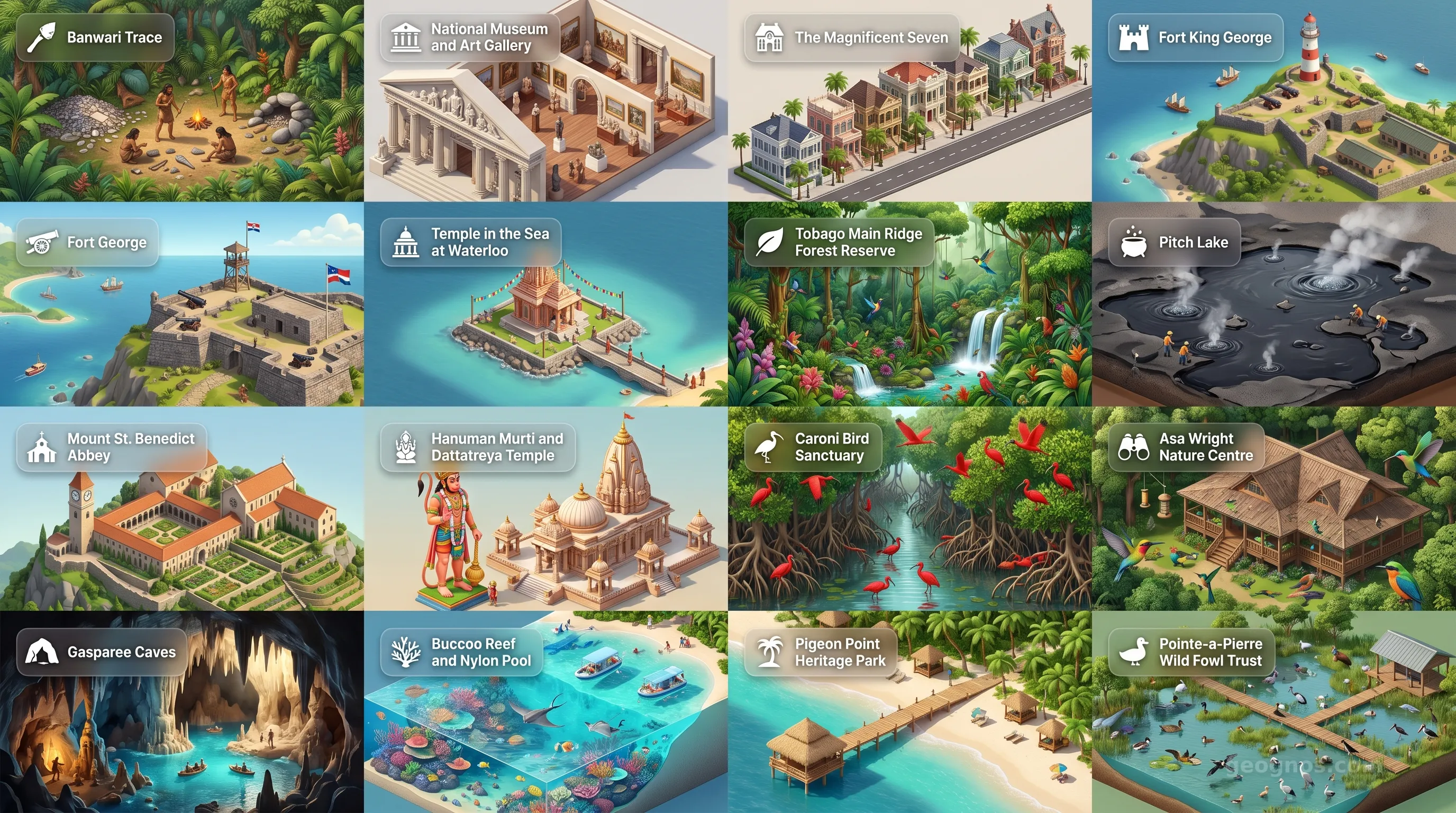
Banwari Trace is the most historically profound archaeological site in the Caribbean, dating back to 5000 BC. It is crucial for anthropology and archaeology students, as it is the discovery site of the 'Banwari Man', the oldest human remains found in the region. Studying this site offers a deep look into the Archaic pre-Columbian era and the early indigenous peoples of the Antilles. The best time to visit is during the dry season (January to May) to avoid muddy terrain. Tourist tip: The site is deeply historical but visually subtle; hiring a local historian or guide will dramatically enhance your understanding of its significance.
Custodian of Trini Heritage
Located in Port of Spain, this museum is the primary repository for Trinidad and Tobago's national heritage. It offers an extensive collection covering early indigenous settlements, the trauma and impact of slavery and indentured servitude, and the joyous evolution of Carnival. Art students will find incredible value in the gallery featuring works by Michel Jean Cazabon, the country's first great 19th-century painter. The museum is a year-round indoor destination. Tourist tip: Allocate at least two hours to fully appreciate the Carnival exhibits and the intricate timeline of the nation's independence.
Colonial Architectural Masterpieces
Overlooking the lush Queen's Park Savannah, the Magnificent Seven is a row of stunning mansions built in the early 1900s. Showcasing an eclectic mix of French Colonial, Scottish Baronial, Indian Empire, and Moorish architectural styles, this stretch is a living textbook for architecture and history students studying colonial wealth and urban development. The dry season provides the best clear skies for photography. Tourist tip: While most are private or government-owned and cannot be entered, taking a walking tour along the Savannah provides fantastic photo opportunities, especially in the late afternoon light.
Tobago's Best-Preserved Colonial Fort
Perched above Scarborough in Tobago, Fort King George was built by the British in the 1770s. It stands as a powerful monument to the violent colonial tug-of-war between the British, French, and Dutch over the island. History students can explore the original cannons, officers' mess, and the onsite Tobago Museum displaying Amerindian artifacts. It is an excellent year-round destination. Tourist tip: Visit an hour before sunset for spectacular panoramic views of Scarborough and the Atlantic Ocean, making it perfect for photography.
Port of Spain's Historic Defense
Constructed in 1804 by the British to protect the island from the Napoleonic fleets, Fort George never actually saw military action. It is now a premier historical site offering a glimpse into 19th-century military architecture. The site features original cannons, dungeons, and an operational signal station designed by an Ashanti prince. It offers unparalleled views over Port of Spain and the Gulf of Paria. The dry season is ideal for a clear line of sight all the way to Venezuela. Tourist tip: The road up is steep and winding; hiring an experienced local driver is recommended.
Monument to Indentured Resilience
This stunning octagonal Hindu temple stands at the end of a pier in the Gulf of Paria. It was originally built single-handedly by Siewdass Sadhu, an Indian indentured laborer who, after being banned from building on colonial land, decided to build in the sea. It is a profound site for sociology and religious studies, symbolizing sheer resilience and faith. Visit between January and May for the most pleasant coastal breeze. Tourist tip: Arrive during high tide for the illusion that the temple is miraculously floating on the water.
Oldest Protected Forest in the West
Established in 1776, this is the oldest legally protected forest reserve in the Western Hemisphere, making it a critical case study for environmental science and conservation biology students. The reserve is a UNESCO tentative site and an ecological goldmine, home to rare flora and fauna, including the White-tailed Sabrewing hummingbird. The best time to visit is the dry season for easier hiking trails. Tourist tip: Hire an officially certified forest guide to spot the incredibly camouflaged wildlife and learn about the medicinal properties of the local plants.
The World's Largest Natural Asphalt Lake
Located in La Brea, Pitch Lake is a fascinating geological anomaly—the largest commercial deposit of natural asphalt in the world. It holds rich indigenous history, as local Amerindian legends claim the lake swallowed a whole village as punishment from the gods. Geologists and chemistry students flock here to study the natural seepage of hydrocarbons. It can be visited year-round, but the dry season makes walking on the semi-solid surface easier. Tourist tip: Wear old, comfortable closed-toe shoes, as the ground is uneven and can sometimes be sticky with fresh tar.
Caribbean's Oldest Benedictine Monastery
Perched 800 feet above the plains in the Northern Range, this abbey was established in 1912 by Brazilian monks escaping religious persecution. It provides a fascinating look at religious sanctuary architecture and theology in the Caribbean context. The crisp mountain air and sweeping views of the central plains make it a serene retreat. The dry season guarantees rain-free panoramic views. Tourist tip: Don't leave without purchasing the famous Pax Yogurt made by the monks, and respect the silent zones intended for prayer and meditation.
Largest Hanuman Statue Outside India
Standing majestically at 85 feet tall, this incredible sculptural landmark is the largest statue of the Hindu god Lord Hanuman outside of India. The adjacent Dattatreya Temple is a marvel of traditional Dravidian architecture, built by artisans brought directly from India. It is a fantastic site for cultural and architectural students exploring the East Indian diaspora's impact on the Caribbean. It can be visited year-round. Tourist tip: Visitors must dress modestly, remove footwear before entering the temple grounds, and vegetarianism is strictly observed on the premises.
Home of the Scarlet Ibis
This vast mangrove swamp is the natural habitat of Trinidad's national bird, the brilliant Scarlet Ibis. Environmental and zoology students will be fascinated by the complex estuarine ecosystem that supports caimans, tree boas, and numerous bird species. The highlight is witnessing thousands of bright red ibises returning to roost at sunset. Visit between November and April for the best migratory bird watching. Tourist tip: Book a flat-bottomed boat tour for late afternoon and pack a powerful zoom lens and insect repellent.
Pioneering Eco-lodge and Birding Paradise
Nestled deep in the Arima Valley, Asa Wright is one of the most successful ecotourism experiments in the world. Originally a cocoa-coffee-citrus plantation, it was transformed into a nature reserve in 1967. It offers unparalleled opportunities for biology students to study tropical rainforest ecosystems, particularly Neotropical birds like toucans and manakins. The dry season ensures the trails are safe and accessible. Tourist tip: Spend time on the main veranda; it overlooks incredible wildlife feeding stations, allowing for spectacular bird watching while sipping local coffee.
Subterranean Limestone Wonder
Located on the island of Gaspar Grande off Trinidad's northwest peninsula, this fascinating limestone cave system features stalactites, stalagmites, and a crystal-clear, shimmering underground pool. Historically used as a pirate hideout and a secret WWII weapons storage, it is rich in both geology and human history. It can be visited year-round, though boat access depends on the weather. Tourist tip: Access requires a boat ride from Chaguaramas and a moderate hike, so wear sturdy footwear and be prepared to navigate steep, damp stairs.
Tobago's Coral Gardens
Buccoo Reef is one of the most accessible and vibrant coral reefs in the Caribbean, praised by Jacques Cousteau. Adjacent is the Nylon Pool, a shallow, crystal-clear sandy bank located right in the middle of the ocean. Marine biology students visit here to study coral bleaching and tropical fish ecosystems. The dry season offers the calmest waters and highest visibility. Tourist tip: Opt for a glass-bottom boat tour, and don't forget reef-safe sunscreen. Legend says swimming in the Nylon Pool takes ten years off your age!
Iconic Caribbean Beauty
Often considered Tobago's most beautiful beach, Pigeon Point is famous for its iconic thatched-roof jetty, an internationally recognized symbol of the island. Beyond leisure, it's an interesting study in coastal management and sustainable tourism in Small Island Developing States (SIDS). The dry season provides postcard-perfect turquoise waters. Tourist tip: It operates as a heritage park with an entrance fee, which pays for excellent amenities, clean facilities, and security. Arrive early to secure a prime spot under the almond trees.
Conservation Amidst Industry
This is one of the most unusual conservation sites in the world—a flourishing wetland reserve located squarely within the bounds of a major petrochemical complex. Founded in 1966, it actively breeds and releases locally endangered waterfowl back into the wild. It stands as a profound case study for environmental students on the coexistence of heavy industry and wildlife conservation. Year-round visits are educational and awe-inspiring. Tourist tip: Because it is located inside an active oil refinery, you must book in advance and carry a valid ID for security clearance.