Austria
Top Sights & Landmarks
The Imperial Capital
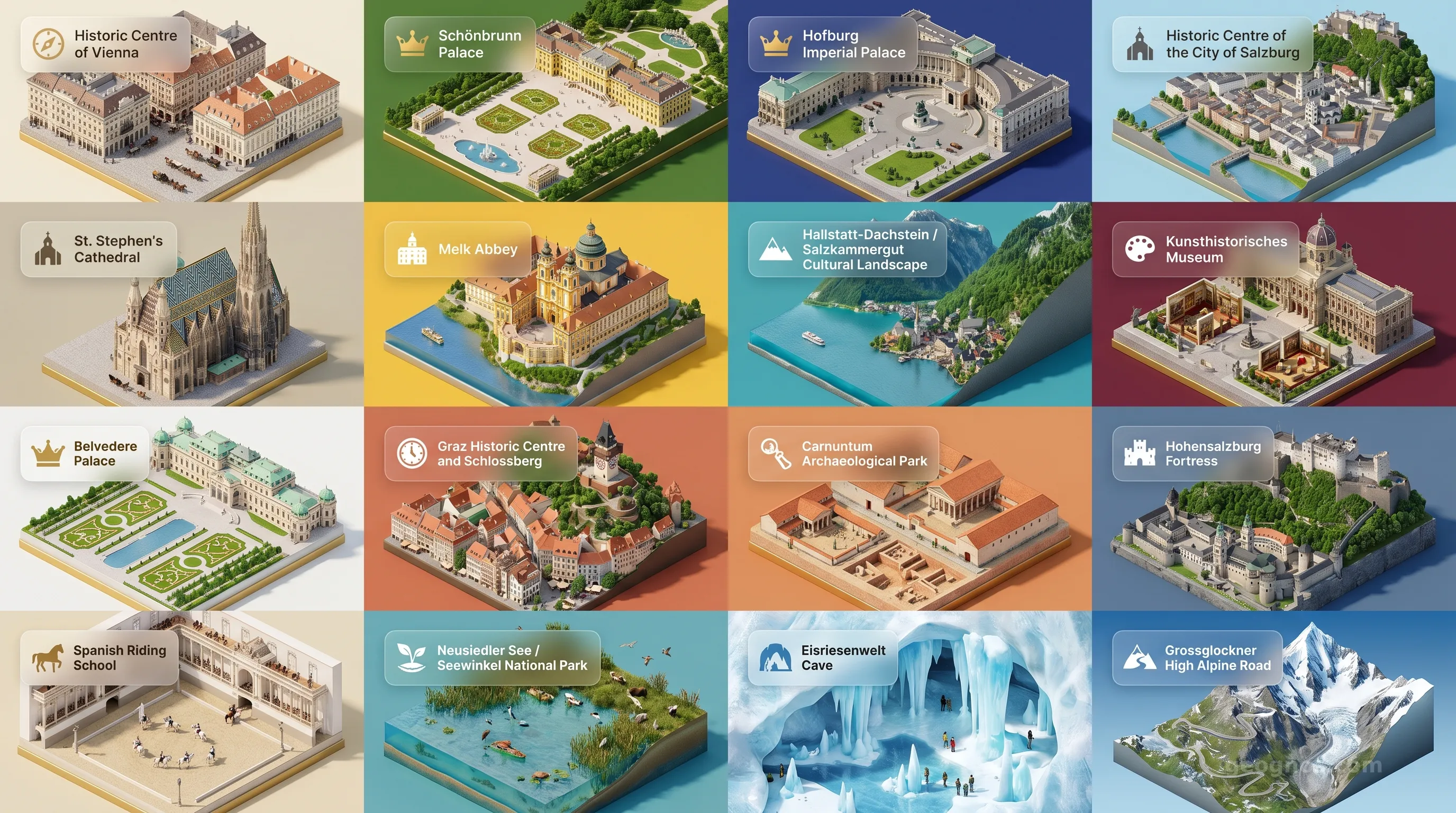
An essential destination for students of urbanism, classical music, and European history, the Historic Centre of Vienna boasts a rich architectural ensemble spanning the Middle Ages to the late 19th-century Ringstrasse. Historically, it served as the political and cultural epicenter of the Habsburg Empire, heavily influencing global arts and politics for centuries. The best season to visit is autumn, when the weather is mild and the summer tourist crowds have thinned out. Tourist tip: Take a walking tour early in the morning to appreciate the intricate historic facades without the heavy foot traffic.
Habsburg Summer Residence
Studying the opulent Rococo architecture and extensive gardens of Schönbrunn offers a masterclass in imperial European design and landscaping. Its historical significance is profound, serving as the main summer residence of the Habsburg rulers, including Empress Maria Theresa and Emperor Franz Joseph, and hosting the Congress of Vienna. The best season to visit is late spring or early summer to see the meticulously curated gardens in full bloom. Tourist tip: Book the Grand Tour ticket online in advance to skip the notoriously long ticket queues and gain access to all 40 state rooms.
Seat of the Habsburg Empire
Visitors and historians come here to study the evolution of European power, as the complex houses multiple museums, the Austrian National Library, and the imperial apartments. For over 600 years, the Hofburg was the absolute center of the Habsburg empire and remains the official residence of the President of Austria today. The best time to visit is during the winter months, offering a warm, culturally enriching indoor escape from the cold. Tourist tip: Dedicate at least half a day for your visit, and do not miss the Imperial Treasury, which houses the crown of the Holy Roman Empire.
Mozart's Birthplace
A prime location for students of musicology and Baroque architecture, Salzburg's well-preserved old town feels like stepping into a living museum. Historically, it was a powerful Prince-Bishopric and is globally celebrated as the birthplace of Wolfgang Amadeus Mozart, deeply shaping classical music heritage. The best season to visit is late summer during the Salzburg Festival for world-class opera and theater performances. Tourist tip: Wander through the Getreidegasse to see the traditional wrought-iron guild signs, but visit early to avoid the dense midday crowds.
Gothic Heart of Vienna
Architectural students will marvel at the multi-colored tile roof and soaring Gothic spires that define this iconic religious structure. Historically, it has stood watch over Vienna since the 12th century, witnessing countless imperial weddings, funerals, and surviving the sieges of the city. The best season to visit is late November to December when the surrounding square transforms into a magical Christmas market. Tourist tip: Climb the 343 steps of the South Tower for an unparalleled panoramic view of the Viennese skyline.
Baroque Masterpiece on the Danube
Melk Abbey is a vital study site for those interested in monastic life and the zenith of Baroque architecture. Established in 1089, this Benedictine abbey has been a major spiritual and cultural center for nearly a millennium, boasting a world-renowned library that preserved crucial medieval texts. The best season to visit is early autumn, coinciding with the grape harvest in the surrounding Wachau Valley. Tourist tip: Combine your visit with a scenic boat cruise along the Danube River from Krems to Melk.
Ancient Salt Mine Village
Geography and anthropology students flock here to study the dramatic alpine topography and the world's oldest known salt mines. Its historical significance spans back to the early Iron Age (the Hallstatt culture), illustrating humanity's long-standing economic relationship with harsh mountain environments. The best season to visit is September, offering clear skies, beautiful foliage, and fewer tourists than peak summer. Tourist tip: Take the funicular up to the Skywalk and the ancient salt mine, but book tickets well in advance due to high daily demand.
Museum of Fine Arts
Art history students will find an unparalleled collection of fine arts, featuring masterpieces by Bruegel, Vermeer, and Raphael. Built by Emperor Franz Joseph to house the imperial collections, the building itself is a late 19th-century masterpiece that reflects the wealth and cultural patronage of the Habsburgs. The best time to visit is winter, providing a magnificent indoor cultural activity. Tourist tip: The museum café in the domed cupola hall is visually stunning; reserve a table in advance for a traditional Viennese coffee experience.
Baroque Art Haven
Studying the Belvedere offers insights into both Baroque palace design and Austrian art, holding the world's largest collection of Gustav Klimt paintings. Historically, it was constructed as a summer residence for Prince Eugene of Savoy, one of the most successful military commanders in modern European history. The best season to visit is spring, when the cascading fountains and symmetrical alpine gardens are fully operational and vibrant. Tourist tip: If you are short on time, prioritize the Upper Belvedere, which houses Klimt's 'The Kiss' and the major art collections.
Styrian Cultural Hub
Urban planning and architecture students will appreciate Graz for its harmonious blend of architectural styles, from Gothic to contemporary. The city historically served as a crucial bulwark against the Ottoman Empire and was heavily influenced by Italian Renaissance architects, making it a unique cultural crossroads. The best season to visit is summer, when the city's Mediterranean vibe comes alive in its many outdoor courtyards and cafes. Tourist tip: Walk up the Schlossberg stairs or take the funicular to see the iconic Uhrturm (Clock Tower) at sunset.
Roman Metropolis Reborn
This site is exceptional for students of classical antiquity, offering experimental archaeology that has fully reconstructed Roman houses, baths, and villas on their original foundations. Historically, Carnuntum was the capital of the Roman province of Pannonia Superior and a major military camp on the Danube Limes, housing up to 50,000 people. The best season to visit is late spring, when the weather is ideal for exploring the expansive outdoor sites. Tourist tip: Check the local calendar for the Roman Festival, which features spectacular gladiator fights and historical reenactments.
Unconquered Medieval Castle
Military history and architecture students visit to analyze one of the largest and best-preserved medieval castles in Europe. Built in 1077 by the Prince-Archbishops of Salzburg, it served as a formidable fortification that was never successfully breached by enemy troops throughout its history. The best season to visit is early autumn for clear, sweeping views of the city and the surrounding Alps. Tourist tip: Use the funicular railway from the Festungsgasse for a quick ascent, and don't miss the luxurious Golden Hall inside.
Classical Dressage Tradition
Equestrian and cultural students come here to observe classical dressage, an art form that has been preserved in its purest form for over four centuries. Historically, the school was founded to cultivate the Lipizzaner horse breed for the Habsburg nobility and remains a living piece of imperial heritage. The best time to visit is during the winter or spring performance seasons. Tourist tip: If performance tickets are sold out or too expensive, purchase a ticket for the Morning Exercise to watch the riders train to classical music.
Europe's Steppe Lake
Biology and ecology students visit this unique endorheic lake to study its high biodiversity, particularly as a resting place for migratory birds. Historically and culturally, the region highlights a centuries-old harmony between human agriculture (especially viticulture) and a delicate wetland ecosystem at the crossroads of Alpine and Pannonian climates. The best season to visit is spring for optimal bird watching and comfortable cycling weather. Tourist tip: Rent a bicycle to explore the well-paved trails around the lake and stop at local Heurigen (wine taverns) for regional specialties.
World's Largest Ice Cave
Geology students and nature lovers are drawn here to explore the dynamic glaciology and subterranean limestone formations. Historically discovered in the late 19th century, this 42-kilometer-long cave system provides vital data on alpine climate history and geological evolution. The best season to visit is high summer, offering a thrilling contrast between the hot outdoor weather and the freezing cave temperatures. Tourist tip: Wear sturdy hiking boots and bring warm winter clothing, as the temperature inside the cave remains below freezing year-round.
The Ultimate Alpine Drive
Civil engineering and geography students study this road as a masterpiece of high-altitude infrastructure connecting distinct alpine ecological zones. Historically completed in 1935, it opened the majestic Hohe Tauern National Park to the public and was a massive state-funded project that revived the Austrian economy post-WWI. The best season to visit is summer, as the road is completely closed due to heavy snow from late autumn to early spring. Tourist tip: Start your drive early in the morning to avoid heavy traffic and to catch the clearest views of Austria's highest peak, the Grossglockner.