Solomon Islands
Top Sights & Landmarks
World's Largest Raised Coral Atoll
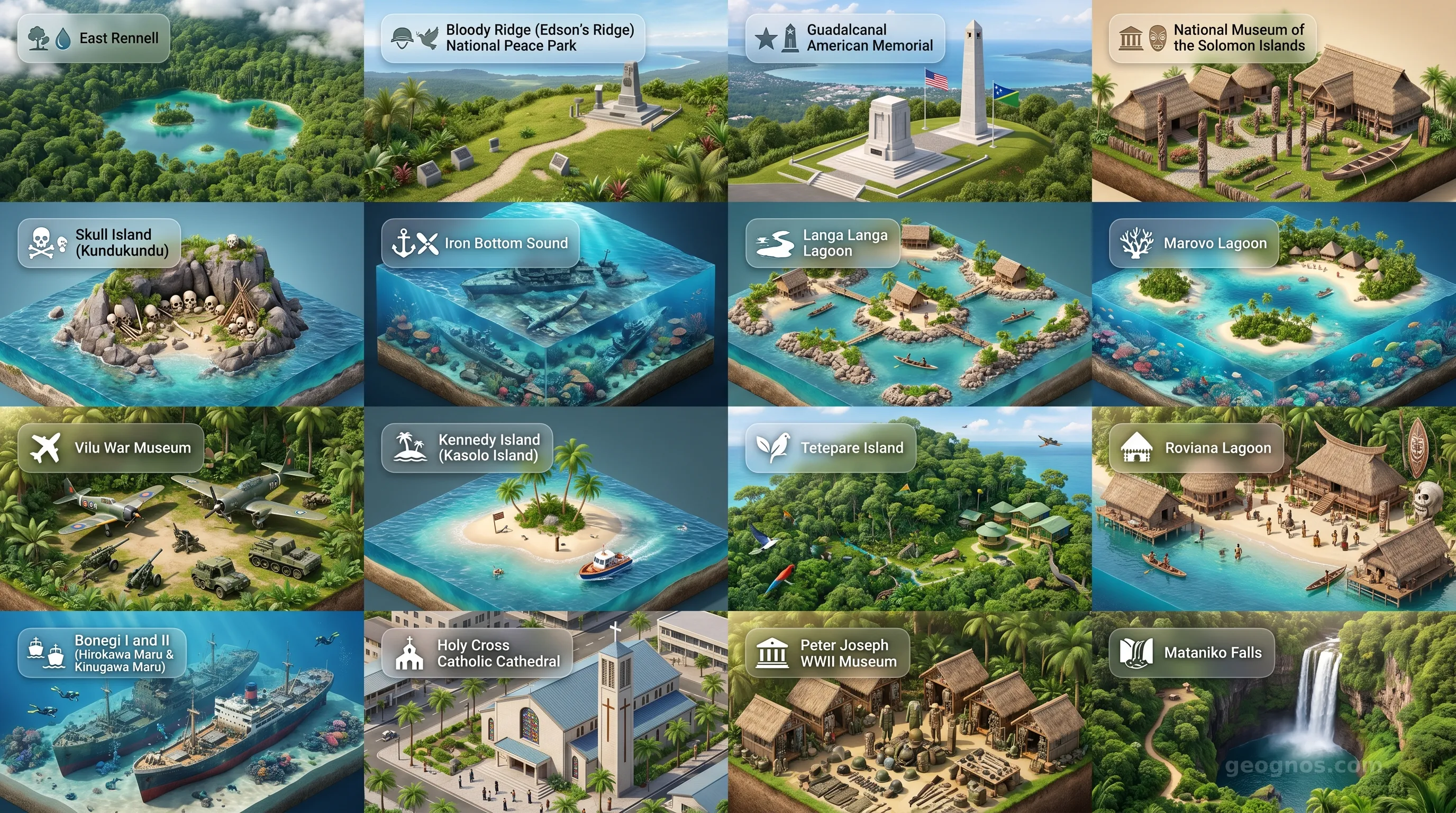
Making up the southern third of Rennell Island, East Rennell is the first natural property inscribed on the World Heritage List with customary ownership and management. Its centerpiece is Lake Tegano, a former lagoon now containing brackish water and rugged limestone islands. Biologists and ecologists study this area for its high number of endemic species and unique evolutionary processes. For tourists, it offers an unparalleled, off-the-grid eco-tourism experience. The best time to visit is during the dry season from May to October. Tourist tip: Bring cash, be prepared for rustic village stays, and always respect the 'kastom' (traditional laws) of the local Polynesian inhabitants.
Pivotal WWII Battlefield
Located just south of Henderson Field, Bloody Ridge was the site of a critical World War II battle in September 1942, where US Marines successfully defended the airfield against fierce Japanese assaults. Declared a National Peace Park, it is an essential site for historians and students of military strategy, offering profound insight into the Pacific Theater's turning points. Visitors can still see foxholes and remnants of the battle. The dry season (May-October) is ideal for exploring the terrain. Tourist tip: Hire a local historian or guide in Honiara to fully comprehend the tactical significance and solemn history of the ridge.
Tribute to the Fallen
Perched on Skyline Drive overlooking Honiara and Iron Bottom Sound, this somber yet beautiful monument was erected to honor the Americans and their Allies who lost their lives during the Guadalcanal Campaign (1942-1943). The marble pylons detail the history of the battles, making it a highly educational stop for WWII history enthusiasts. The panoramic views of the surrounding battlefields and waters are breathtaking. It is accessible year-round, though early morning or late afternoon visits avoid the midday tropical heat. Tourist tip: The site is easily reached by taxi from downtown Honiara; combine it with a visit to the nearby Japanese Memorial.
Guardian of Solomon Culture
Located in the heart of Honiara, this museum is the primary repository of the Solomon Islands' diverse cultural heritage. Students of anthropology will marvel at the extensive displays of traditional currency (like shell money), intricate wood carvings, historic weaponry, and exhibits detailing the nation's pre-colonial and colonial past, as well as WWII artifacts. It provides vital context before traveling to the outer provinces. The museum is indoors and can be visited year-round. Tourist tip: Do not miss the outdoor traditional leaf houses and check the local schedule, as cultural dance performances are sometimes held in the courtyard.
Ancient Headhunting Shrine
Situated in the Vona Vona Lagoon near Munda, Skull Island is a profoundly sacred site that houses the skulls of pre-colonial chiefs and warriors, alongside traditional shell money. It serves as a stark, tangible connection to the region's historical headhunting era, offering incredible anthropological value. Visiting this island provides an unforgettable educational experience regarding the indigenous spiritual practices of the Roviana people. The site is best visited during calm weather between May and October. Tourist tip: You must be accompanied by a recognized local guide or chief who will perform a short blessing or request permission from the spirits before you step ashore.
Massive Submarine Graveyard
The stretch of water between Guadalcanal, Savo Island, and Florida Island is famously known as Iron Bottom Sound due to the dozens of Allied and Japanese ships and aircraft that sank there during the Guadalcanal Campaign. While the wrecks themselves sit deep beneath the surface, the sound remains a poignant historical marine landscape. Deep-sea divers and military historians revere this area. Boat tours often traverse these waters, offering time for reflection. The dry season offers the best boating conditions. Tourist tip: Many wrecks are too deep for recreational diving, but paying respects from the surface or participating in specific tech-diving charters offers a profound experience.
Home of the Shell Money
Located on the western coast of Malaita, Langa Langa Lagoon is famous for its extraordinary artificial islands built of coral stones by early inhabitants seeking refuge from mainland tribes. The lagoon is the traditional center for manufacturing shell money, a currency still used in bride prices and compensation ceremonies today. Anthropologists and cultural tourists will find the ongoing traditional lifestyles here mesmerizing. The region is accessible year-round, though calmer seas in the dry season make for better boat travel. Tourist tip: Arrange a village tour to witness the painstakingly detailed process of cutting, drilling, and polishing shells into currency.
World's Largest Double Barrier Lagoon
Encompassing the New Georgia Islands, Marovo Lagoon is an immense, visually spectacular double barrier reef lagoon nominated for UNESCO World Heritage status. Beyond its breathtaking marine biodiversity, making it a paradise for marine biologists and divers, Marovo is culturally significant for its world-renowned master woodcarvers who inlay intricate designs with nautilus shells. The dry season is best for diving and visibility. Tourist tip: Bring extra cash to purchase the magnificent, sustainably sourced wood carvings directly from the artisans in the lagoon villages.
Open-Air WWII Relics
Located about 25 kilometers west of Honiara, the Vilu War Museum is an extraordinary open-air collection of WWII aircraft, artillery, and memorials nestled within a lush, tropical garden. Curated by locals, it features well-preserved remnants of American, Japanese, and Allied machinery, including Corsairs and Wildcats. It is an excellent educational destination for military historians wanting to see artifacts rusting in the jungle environment where the fighting took place. It is accessible year-round. Tourist tip: Mosquito repellent is an absolute must here due to the dense surrounding vegetation.
JFK's Survival Island
This tiny, picturesque island near Gizo in the Western Province is famous for being the refuge of John F. Kennedy and his crew after their patrol boat, PT-109, was rammed and sunk by a Japanese destroyer in 1943. Historical and political students visit to trace the steps of the future US President's harrowing survival story, heavily aided by Solomon Islander scouts Biuku Gasa and Eroni Kumana. Today, it is a lovely spot for a picnic and snorkeling. Tourist tip: You can easily arrange a quick boat ride from Gizo; there is a small bar on the island, but bringing your own snorkeling gear is advised.
The Last Wild Island
Tetepare is the largest uninhabited island in the South Pacific, renowned for a remarkable grassroots conservation effort led by the descendants of its original inhabitants, who fled headhunting raids over a century ago. Ecologists and environmental studies students will be thrilled by its pristine primary rainforests and protected marine areas, which are vital nesting grounds for leatherback turtles. The best viewing for wildlife is between May and November. Tourist tip: Stays must be booked through the Tetepare Descendants' Association eco-lodge, ensuring your tourist dollars directly support ongoing conservation.
Historic Lagoon and Pristine Waters
Located south of New Georgia island, Roviana Lagoon is stunningly beautiful and rich in history. It was once the center of a powerful headhunting culture that dominated the surrounding islands in the 19th century. Today, it offers a tranquil environment for kayaking, snorkeling, and learning about the complex pre-colonial social structures of the Roviana people. The lagoon features incredibly clear water and diverse coral reefs. Visit during the dry season for the clearest skies. Tourist tip: Base yourself in Munda, which offers excellent access to the lagoon's historical sites and world-class dive spots.
Accessible WWII Shipwrecks
Lying just off the beach west of Honiara, these two Japanese transport ships were beached and sunk during the Guadalcanal Campaign in 1942. They are incredibly significant for both WWII historians and marine enthusiasts. Because the wrecks start in shallow water and drop off into the deep, they are uniquely accessible to both snorkelers and advanced scuba divers, offering an educational glimpse into maritime archaeology and artificial reef ecology. Year-round access is possible, though seas are calmest in the dry season. Tourist tip: Pay the small custom fee to the local landowners at the beach entrance before swimming out.
Spiritual Heart of Honiara
Prominently located on a hill in Honiara, the Holy Cross Catholic Cathedral is an architectural and spiritual landmark. The site holds historical significance as it is purportedly the location where the first Christian cross was planted by Spanish explorer Álvaro de Mendaña in 1568. The building blends traditional Pacific design elements with mid-century ecclesiastical architecture. It serves as a fascinating study of missionary history and modern Solomon Islands faith. Tourist tip: Visitors are welcome to attend the vibrant Sunday services, which feature beautiful harmonious choir singing, but remember to dress modestly.
A Personal Look at the Pacific War
Located in Munda, this incredible private museum is named after an American soldier whose dog tags were found by the museum's proprietor, Barney Paulsen. It houses a massive, meticulously curated collection of personal items, dog tags, helmets, weapons, and mess kits recovered from the jungle around the New Georgia airfield. It offers a deeply humanized, granular perspective on the daily lives of soldiers in the Pacific Theater, making it essential for students of history. Tourist tip: Barney's personal storytelling brings the artifacts to life; be sure to leave a donation to help him maintain the collection.
Cascades and Caves
The Mataniko Falls are a spectacular double-sided cascade dropping into a cave filled with stalactites, located a tough hike inland from Honiara. The river and caves were a major Japanese stronghold and the site of fierce fighting during WWII. Geologists and nature lovers will appreciate the dramatic karst topography, while history buffs can explore the remnants of the conflict. The hike requires a good level of fitness and is safest during the dry season to avoid flash floods. Tourist tip: A local guide from the nearby Lelei village is mandatory to navigate the slippery trails and river crossings safely.