Oman
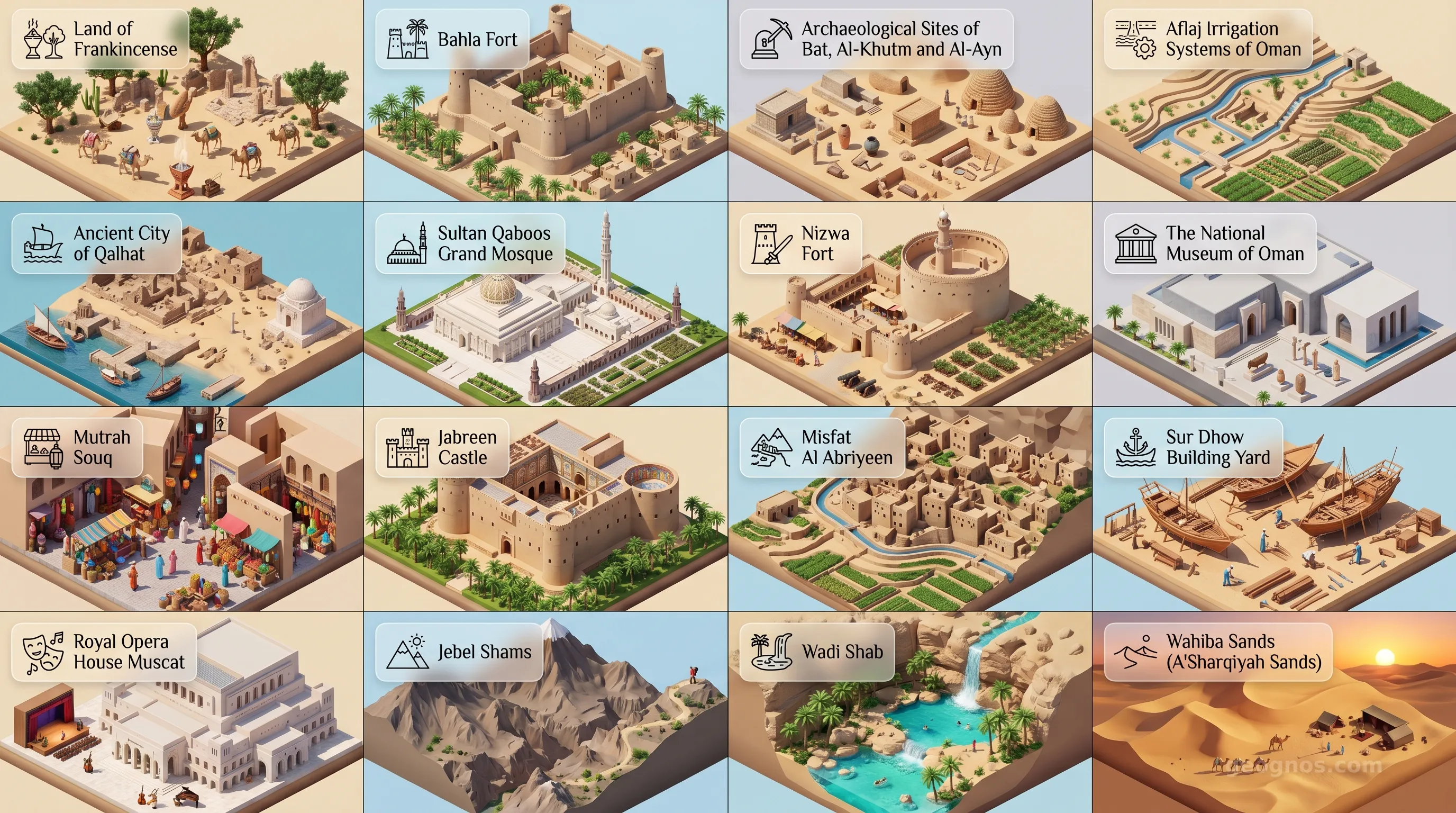
Top Sights & Landmarks
Ancient Center of the Global Frankincense Trade
The Land of Frankincense offers profound insights into the ancient global economy, making it indispensable for students of history and archaeology. Encompassing the ruins of Al Baleed, Khor Rori (Sumhuram), Shisr, and Wadi Dawkah, this region monopolized the incense trade for millennia, supplying empires from Rome to China. Visitors can wander through the preserved ruins of fortified ports and ancient frankincense tree groves. The best time to visit is during the 'Khareef' (monsoon season) from July to September when the area turns lush and green, or from October to April for clear skies. Tip: Visit the Museum of the Frankincense Land in Al Baleed to contextualize the scattered sites before exploring them.
Monumental Oasis Fortress
An immense mud-brick fortress dating back to the 13th and 14th centuries, Bahla Fort was the epicenter of the Banu Nebhan tribe's power. It is an architectural marvel that demonstrates the defensive prowess and societal structure of early Omani civilizations, making it a critical study site for Islamic architecture and military history. The fort features a labyrinth of towers, mosques, and wells surrounded by a 12-kilometer protective wall. Best visited between November and March to avoid the intense summer heat. Tip: Pair your visit with a walk through the neighboring traditional pottery souq, as Bahla is historically famous for its artisans.
Bronze Age Necropolis
Dating back to the 3rd millennium BC, these remarkably well-preserved necropolises provide a window into the mysterious Magan civilization, renowned for copper mining and trade with Mesopotamia. The beehive tombs of Al-Ayn, set against the dramatic backdrop of Jebel Misht, are particularly photogenic and hold immense value for archaeological study regarding early human burial practices and settlement patterns. The ideal season to visit is winter (December to February) when the weather is mild enough for open-air exploration. Tourist tip: The sites lack extensive on-site visitor centers, so hire a knowledgeable local guide to truly appreciate the ancient context.
Ancient Lifelines of the Desert
Representing a 5,000-year-old tradition, the Aflaj (plural of Falaj) are gravity-fed water channels that transformed the arid Omani landscape into thriving agricultural oases. Five specific falaj systems (including Falaj Daris in Nizwa) hold UNESCO status, showcasing extraordinary ancient engineering and communal water-sharing laws that remain active today. Studying these systems provides brilliant insights into sustainable water management in extreme climates. They flow year-round, but visiting in the cooler months is advised for walking along the channels. Tip: Walk the shaded pathways of Falaj Daris in Nizwa to see the system in action amidst verdant date plantations.
Ruins of a Thriving Indian Ocean Port
Once a major medieval hub on the Indian Ocean trade networks, Qalhat was visited by legendary explorers like Marco Polo and Ibn Battuta. Although mostly in ruins today, the surviving Mausoleum of Bibi Maryam stands as a poignant testament to the city's former architectural grandeur and strategic maritime importance. The site is a rich resource for historians studying pre-Portuguese Indian Ocean commerce. Winter months offer the best climate for exploring the exposed ruins. Tip: Access to the site is occasionally restricted due to ongoing archaeological excavations, so check the latest local guidelines from Oman's Ministry of Heritage before planning your trip.
Pinnacle of Modern Islamic Architecture
A breathtaking masterpiece of contemporary Islamic design, this mosque in Muscat took six years to build and accommodates up to 20,000 worshippers. It features an exquisite blend of architectural styles from across the Islamic world, a 14-meter tall Swarovski crystal chandelier, and one of the largest single-piece Persian carpets in the world. It is highly educational for those studying religious architecture and Omani modern cultural identity. Accessible year-round, though mornings are required for non-Muslim visitors. Tip: Strict dress codes apply; women must cover their hair, arms, and legs, and men must wear long trousers.
Iconic 17th-Century Cylindrical Keep
Constructed in the 1650s by Imam Sultan Bin Saif Al Ya'rubi, Nizwa Fort features the largest earth-fill cylindrical tower in Oman. The fortress is a brilliant example of old Omani military architecture, complete with defensive mechanisms like murder holes, false doors, and pitfalls. As the former capital of Oman, Nizwa's fort is fundamental for understanding the country's turbulent interior history. Best visited during the winter months. Tip: Plan your visit for a Friday morning to witness the traditional Nizwa Goat Market just outside the fort's walls, an authentic cultural experience untouched by time.
Oman's Premier Cultural Institution
Located in the heart of Old Muscat, the National Museum is the definitive place to study Oman's heritage, tracing the nation's history from the earliest human settlements to the present day. It boasts over 5,000 artifacts housed in state-of-the-art galleries, covering maritime history, currency, armor, and the aflaj systems. It's an essential starting point for researchers and tourists wanting a comprehensive overview of Omani culture. Air-conditioned and perfect for a visit any time of the year. Tip: Allocate at least three hours here and utilize the highly informative multimedia displays and English-language audio guides.
Traditional Arabian Marketplace
One of the oldest marketplaces in the Arab world, Mutrah Souq retains the chaotic, aromatic charm of historical trade. Its winding, roofed alleys (traditionally called 'Al Dhalam', meaning darkness) are lined with vendors selling frankincense, silver khanjars (traditional daggers), textiles, and antiques. It provides sociologists and anthropologists a live look into the enduring nature of traditional Gulf commerce. Best visited in the late afternoon or evening when the market comes alive. Tip: Haggling is expected, but keep it friendly and respectful; don't miss the gold and silver souq tucked away in the back lanes.
Palace of Arts and Sciences
Built in 1675 by Imam Bil'arab bin Sultan, Jabreen Castle stands out from other Omani forts because it was constructed in times of peace as a center of learning for astrology, medicine, and Islamic law. Its interiors are beautifully decorated with intricate wooden carvings, painted ceiling beams, and stucco work. It is a vital location for studying Omani interior design and scholarly history. Accessible year-round, though best enjoyed in winter. Tip: Don't miss the 'Sun and Moon Room', renowned for its unique windows designed to keep the room cool while providing excellent natural light.
Ancient Terraced Mountain Village
A stunning 300-year-old village carved directly into the mountainside of the Al Hajar range, Misfat Al Abriyeen is famous for its traditional mud-brick houses and lush agricultural terraces fed by an intricate falaj system. Studying the village reveals how Omanis ingeniously adapted to challenging mountainous terrain. The cooler mountain elevation makes it pleasant from autumn to spring. Tip: Stay overnight in one of the restored heritage guesthouses for a deeply authentic Omani hospitality experience, and respect local customs by dressing modestly while walking through the village.
Legacy of Omani Maritime Craftsmanship
The coastal city of Sur has historically been the shipbuilding capital of Oman, crafting the wooden dhows that sailed to India, China, and Africa. At the Dhow Building Yard, artisans still construct these majestic vessels by hand, often using traditional techniques passed down through generations without modern blueprints. It is a living museum of maritime heritage and essential for students of maritime history. Best visited between October and April. Tip: Combine the yard visit with a trip to the nearby Sur Maritime Museum to see the legendary 'Fatah al-Khair' dhow.
Fusion of Modernity and Tradition
A premier venue for musical arts and culture, the Royal Opera House Muscat is a spectacular architectural achievement commissioned by the late Sultan Qaboos. The complex utilizes modern acoustics encased in traditional Omani and Islamic architectural motifs, complete with marble from Italy and teak from Myanmar. It represents Oman's modern cultural renaissance and commitment to global arts. Operas and concerts run primarily from September to May. Tip: Even if you do not attend a performance, take a guided architectural tour in the morning to appreciate the intricate craftsmanship.
The Grand Canyon of Arabia
Jebel Shams, or 'Mountain of the Sun', is Oman's highest peak at over 3,000 meters. The true marvel, however, is the Wadi Ghul gorge, an incredibly deep canyon offering dramatic, sheer drops that rival the American Grand Canyon. It is a paradise for geology students studying tectonic uplift and erosion, as well as thrill-seeking hikers. The altitude means it is much cooler here, making it accessible even during the hot summer months. Tip: Hike the 'Balcony Walk', an abandoned trail offering spectacular views of the gorge, leading to an abandoned stone village hidden in the cliffs.
Emerald Pools and Hidden Caves
Wadi Shab is one of Oman's most popular natural attractions, featuring a dramatic canyon lined with date palms, terraced farms, and a series of crystal-clear emerald pools. It presents an excellent field study in desert hydrology and micro-ecosystems. The hike culminates in a swim through a narrow crevice into a hidden cave boasting a stunning waterfall. Best to visit from October to March when temperatures are favorable for the 45-minute trek. Tip: Wear sturdy water shoes as the rocks can be slippery, and start the hike early in the morning to avoid the midday crowds.
Ocean of Copper Dunes
A vast expanse of towering copper- and amber-colored dunes, the Wahiba Sands offer a quintessential Arabian desert experience. The area is inhabited by the Bedouin (Bedu) tribes, providing invaluable cultural insights into traditional nomadic life, camel breeding, and desert survival. Ecologists are also fascinated by the unique flora and fauna adapted to this harsh environment. Winter is the only safe and comfortable time to visit. Tip: Hire an experienced driver with a 4x4 for dune bashing, and spend a night in a desert camp for unparalleled stargazing.