Grenada
Top Sights & Landmarks
Historic Colonial Fortress
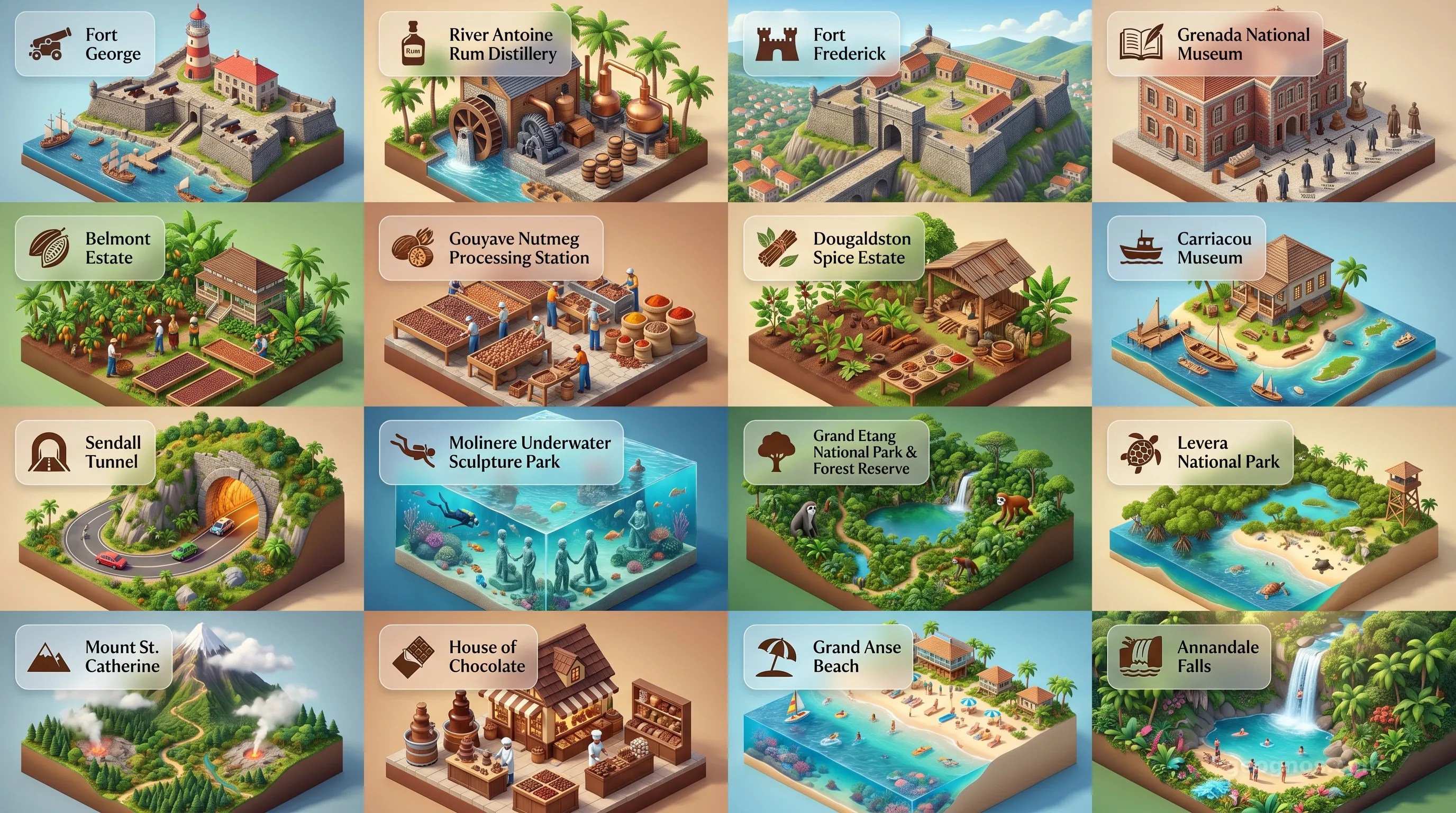
Perched above the capital city of St. George's, Fort George is Grenada's most significant historical landmark. Built by the French in 1705 as Fort Royal, it changed hands between the French and British for decades. It is highly significant to modern history as the site where Prime Minister Maurice Bishop was executed in 1983, triggering the US intervention. Students of Caribbean history will find its layered past fascinating. The best season to visit is the dry season (January to May) for clear, panoramic views of the harbor. Tourist Tip: Don't miss the bullet holes still visible in the inner courtyard walls; wear comfortable walking shoes as the climb up the stone stairs can be steep.
18th-Century Rum Distillery
Operating continuously since 1785, River Antoine is the oldest functioning water-propelled distillery in the Caribbean. A visit here is a literal step back in time, offering an unparalleled look at the industrial history of the West Indies. The cane-crushing water wheel and wood-fired boilers remain unchanged from the 18th century. It is a must-study site for agricultural history and traditional distillation methods. Visit between January and August during the sugarcane harvest for the full experience. Tourist Tip: Sample the overproof rum (75% ABV) during the tasting, but be aware that it is too combustible to take on a commercial flight; opt for the export-strength version instead.
The Backward-Facing Fort
Constructed atop Richmond Hill in 1779 by the French and completed by the British in 1791, Fort Frederick is famously known as the 'backward-facing fort' because its cannons point inland rather than out to sea. This unique design was a strategic response to the French having successfully attacked the island from inland ridges. It offers a crucial lesson in colonial military strategy and commands 360-degree views of the island. Visit during the dry season (December to May) for the best visibility. Tourist Tip: Bring a camera for the stunning panoramic views of both St. George's and the southern coast, and combine your visit with the nearby Matthew's Ridge.
Chronicles of Spice Island
Housed in a complex that served as French barracks in 1704, and later as a British prison and a hotel, the Grenada National Museum is the cultural repository of the island. It features profound collections on indigenous Amerindian culture, the grueling era of plantation slavery, the island's whaling industry, and the political upheaval of the 1970s and 80s. It is an essential stop for students aiming to understand the socio-economic evolution of Grenada. Open year-round, it offers a great indoor activity for rainy days during the wet season (June-November). Tourist Tip: Spend extra time in the Josephine Bonaparte section, and enjoy a local drink at the museum's bistro.
Historic Plantation & Chocolate
Dating back to the 1600s, Belmont Estate is a fully functional 400-acre historic agricultural estate that seamlessly blends agrotourism, history, and sustainability. Originally a coffee and sugar plantation powered by enslaved labor, it is now an authentic showcase of Grenadian spice and cocoa production. Visitors can study the traditional 'dancing of the cocoa' and the bean-to-bar chocolate-making process. The best time to visit is during the cocoa harvesting months from February to May. Tourist Tip: Book the traditional Grenadian three-course lunch in advance; the estate-grown organic chocolate makes the perfect culturally significant souvenir.
Heart of the Spice Trade
Grenada is famously known as the 'Isle of Spice', and the Gouyave Nutmeg Processing Station is the beating heart of this identity. Located in a historic, multi-story wooden factory, workers sort, grade, and package nutmegs using traditional methods. It highlights Grenada's global economic importance in the spice trade during the 20th century. The sensory experience of the intense spice aromas makes it a memorable study of agricultural economics. Visit during the week year-round to see the station in full operation. Tourist Tip: Take the cheap, informative guided tour, and buy customized spice bags directly from the source.
Rustic Spice Heritage
Dougaldston Estate provides a raw, unfiltered look at Grenada's spice heritage. Situated in a rustic, centuries-old wooden 'boucan' (curing house), visitors can see how mace, cloves, cinnamon, and nutmeg are traditionally processed and dried. Unlike modern factories, Dougaldston retains a 19th-century atmosphere, offering incredible insight into historical agricultural practices. It's a fantastic educational experience year-round. Tourist Tip: The presentation by the local guides is free, but it is customary and highly recommended to purchase some fresh spices from them as a tip for their knowledge.
Amerindian & Colonial Artifacts
Located on Grenada's sister island of Carriacou in a beautifully restored old cotton ginnery, this museum holds the most comprehensive collection of Amerindian (Arawak and Carib) artifacts in the country. It also documents the island's unique African heritage, particularly the Big Drum Dance, and the history of Scottish boatbuilding. It's an indispensable resource for anthropological study. The best time to visit is during the Carriacou Maroon & String Band Music Festival in April. Tourist Tip: Take the short ferry ride from the main island to Carriacou; the museum is just a short walk from the Hillsborough dock.
19th-Century Engineering Marvel
Commissioned by Governor Walter Sendall and completed in 1895, this 340-foot-long tunnel was an engineering marvel of its time, hand-dug through the volcanic rock separating the harbor (the Carenage) from the Esplanade side of St. George's. It facilitated trade and movement by bypassing the steep hills of the capital. For students of urban development and colonial engineering, it is a fascinating, still-functioning relic. It can be visited year-round. Tourist Tip: You can walk or drive through, but if walking, be cautious and stick close to the walls, as it is a narrow, active single-lane roadway.
Submerged Art Gallery
Created by sculptor Jason deCaires Taylor in 2006, this was the world's first underwater sculpture park. Born from a need to divert tourists away from fragile natural reefs after Hurricane Ivan, the concrete figures reflect Grenadian culture and folklore, including the haunting 'Vicissitudes'—a ring of children holding hands. Over time, marine life has colonized the statues, creating an artificial reef. This site is brilliant for studying the intersection of eco-art and marine biology. The best time for clear waters is December through May. Tourist Tip: If you don't scuba dive, you can easily view the sculptures via a snorkeling tour or a glass-bottom boat.
Crater Lake & Rainforest
Located in the mountainous interior of the island, Grand Etang revolves around a stunning 36-acre crater lake formed by a dormant volcano. Historically considered sacred by indigenous communities, today it is the ecological heart of Grenada, home to Mona monkeys, tropical birds, and rare orchids. It provides an exceptional field study environment for ecology, volcanology, and botany. The best time to hike is during the dry season (Jan-May) when the trails are less muddy. Tourist Tip: Bring a banana to attract the playful, free-roaming Mona monkeys, and stop by the visitor center for a history of the area's geology.
Coastal Habitat & Turtle Nesting
Levera National Park encompasses a dramatic coastal landscape that features a large mangrove swamp, a pristine beach, and views of the Grenadine islands. Historically a coastal defense and lookout area, it is now globally recognized as a Ramsar Wetland of International Importance. It is one of the Caribbean's most critical nesting sites for the endangered Leatherback sea turtle. A prime site for wildlife conservation studies. Visit between April and July for guided nighttime turtle watching. Tourist Tip: Nighttime access during turtle season is strictly regulated; you must book an official tour guide to witness the turtles.
Highest Volcanic Peak
At 840 meters (2,760 feet), Mount St. Catherine is the highest peak in Grenada and a dormant stratovolcano. Its rugged terrain and surrounding hot springs highlight the turbulent geothermal history that formed the Lesser Antilles island arc. It offers challenging, muddy ascents that reward intrepid hikers and geologists with untouched cloud forest ecosystems and sweeping views of the island. Hike only during the dry season (January to May) as wet season rains make the trails impassable. Tourist Tip: This is a challenging hike requiring high fitness levels; hiring a local guide is highly recommended as trails are unmarked.
Cocoa Museum & Cafe
Situated in the historic capital of St. George's, this boutique museum celebrates Grenada's rich history of cocoa cultivation and the organic chocolate industry. Through interactive exhibits, visitors learn the historical narrative of cocoa's introduction to the island by the French in the 18th century, up through the modern ethical bean-to-bar movement pioneered by the Grenada Chocolate Company. Visit year-round for a sweet educational escape. Tourist Tip: Admission is free; stay to enjoy the phenomenal spiced hot chocolate and organic brownie in their courtyard cafe.
World-Renowned Shoreline
Stretching for two miles along the southwestern coast, Grand Anse is culturally and economically the most famous beach in Grenada. Historically, it was the landing site for various colonial invasions, but today it is the epicenter of Grenadian tourism, boasting powdery white sand and calm turquoise waters. It serves as an excellent case study for sustainable tourism management in small island developing states. Enjoyable year-round, with the water being warmest from June to August. Tourist Tip: Visit the Grand Anse Craft and Spice Market located right on the beach for authentic local souvenirs and food.
Accessible Tropical Cascade
Enclosed by a grotto of lush, flowering tropical vegetation, Annandale Falls is a beautiful 30-foot waterfall just a short drive from the capital. Historically, its accessibility made it a popular retreat for British colonial governors. Today, it showcases the island's verdant ecology and offers an easy introduction to Grenada's many interior waterways. Open year-round, it runs heaviest during the rainy season. Tourist Tip: Watch the local cliff jumpers leap into the pool below (they will ask for a tip), and enjoy a drink at the modern 'Wild Orchid' bar located on-site.