Equatorial Guinea
Top Sights & Landmarks
Iconic Spanish Gothic Cathedral
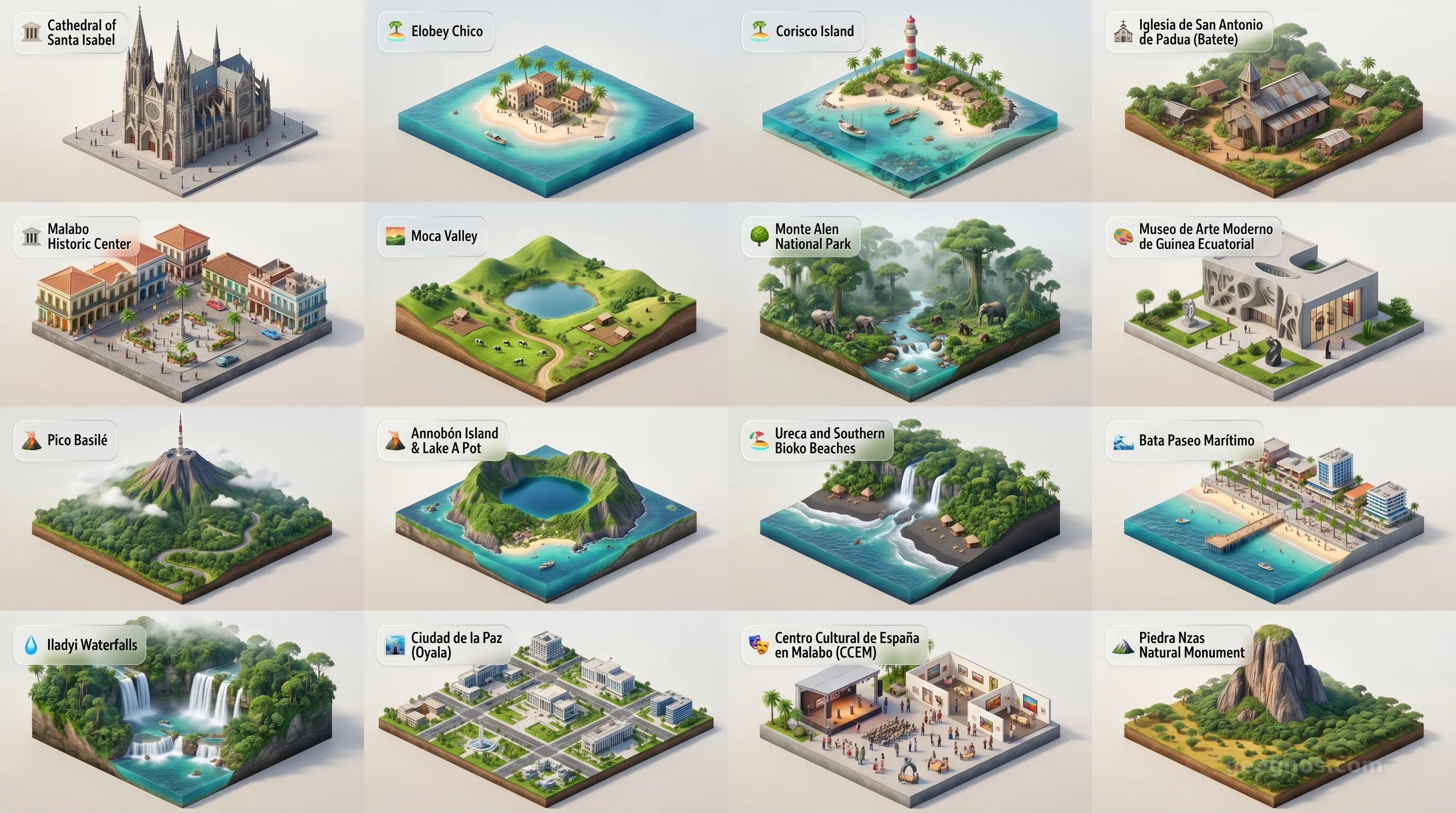
The Cathedral of Santa Isabel in Malabo is the nation's most recognizable architectural landmark. Constructed between 1897 and 1916 by Spanish architect Luis Segarra Llairadó, its neo-Gothic facade stands as a testament to Equatorial Guinea's colonial past. For students of architecture and history, the cathedral offers a glimpse into the European colonial influence in Central Africa. The best time to visit is during the dry season from December to February. Tourist tip: Ensure you dress modestly as it is an active place of worship, and ask permission before taking interior photographs.
Abandoned Colonial Island Capital
Elobey Chico is a small island off the coast of the mainland that once served as the bustling colonial capital for Spanish territories in the Gulf of Guinea. Today, it is an uninhabited ghost town featuring fascinating ruins of colonial administration buildings, merchant factories, and an old graveyard. It is a premier site for historical study regarding the transatlantic trade and Spanish colonial logistics. Visit during the dry season (December to February) to safely navigate the waters. Tourist tip: Access requires hiring a private boat from the mainland town of Kogo; bring all necessary supplies as there are no facilities.
Ancient Mission and Pristine Sands
Corisco Island holds immense historical weight as the site of one of the earliest Catholic missions in the region (established in the mid-19th century) and the ancestral home of the Benga people. The island features both ruins of the old mission and a cemetery of ancient tribal kings. Beyond its history, Corisco is renowned for its strikingly beautiful, untouched white-sand beaches. It provides a unique study of indigenous and colonial intersection. The best time to visit is January to March. Tourist tip: Flights from Bata or Malabo are infrequent; taking a chartered boat from Bata is often the most reliable method of entry.
Historic Wooden Gothic Church
Located in the small mountain village of Batete on Bioko Island, this is one of the only wooden Gothic churches in the world. Built entirely of timber by Claretian missionaries in the 1920s, it is a magnificent architectural anomaly and a monument to the island's religious history. Studying its construction reveals how European Gothic concepts were adapted using local African materials. The climate is cooler here, making it pleasant to visit year-round. Tourist tip: The church is currently undergoing delicate preservation efforts; always respectfully ask the village chief or local priest for permission to explore the grounds.
Spanish Colonial Heart of the Capital
The historic center of Malabo is a living museum of colonial-era architecture, boasting well-preserved buildings like the Casa Verde (Green House) and the Presidential Palace area. It highlights the architectural transition from the 19th century to the modern oil-boom era. Walking through these streets provides students of urban planning and history with a visual timeline of Equatorial Guinea's economic and political evolution. The dry season is ideal for walking tours. Tourist tip: Be highly cautious with photography; taking photos of government buildings, military installations, or the Presidential Palace is strictly prohibited.
Cultural Heartland of the Bubi People
Moca Valley, named after a revered Bubi king, is the cultural epicenter of the indigenous Bubi people of Bioko Island. Situated at a high altitude, the valley offers a temperate climate, rich volcanic soils, and lush, rolling green hills. It is an excellent destination for ethnographic studies and understanding the pre-colonial history of the island. The area is best visited during the dry season for hiking to nearby lakes and waterfalls. Tourist tip: Engage with local guides in the village of Moca to learn about traditional Bubi customs, folklore, and agricultural practices.
Untouched Equatorial Rainforest
Spanning over 1,400 square kilometers on the mainland (Río Muni), Monte Alen is Equatorial Guinea's premier national park. It is a critical conservation area and a biodiversity hotspot, home to lowland gorillas, forest elephants, chimpanzees, and the massive goliath frog. For biology and environmental science students, it represents one of the most intact ecological systems in Central Africa. The dry seasons (December to February and July to September) offer the best trekking conditions. Tourist tip: Infrastructure is rugged; you must hire an official guide from the ECOFAC office to navigate the dense, challenging jungle trails.
Hub of Contemporary Guinean Art
Located in Malabo, the Museum of Modern Art of Equatorial Guinea showcases a vibrant collection of contemporary African art, focusing heavily on local Guinean artists. It serves to preserve the country's modern cultural narrative and provides an excellent educational resource for understanding how traditional African themes blend with contemporary artistic expressions. The museum is a year-round indoor attraction. Tourist tip: Check the local schedule, as the museum frequently hosts temporary exhibitions and cultural workshops that are open to the public.
Sacred Volcanic Summit
At 3,011 meters, Pico Basilé is the highest peak in Equatorial Guinea, dominating the skyline of Bioko Island. The volcano is deeply sacred to the indigenous Bubi people and offers an incredible study in volcanology and high-altitude equatorial botany. On clear days, the summit provides sweeping views all the way to Mount Cameroon. The climb is best attempted in January or February to avoid dense cloud cover. Tourist tip: The mountain is dotted with military communication towers; a permit from the Ministry of Tourism and a passport are required to pass the military checkpoints along the ascent.
Isolated Volcanic Crater Lake
Annobón is a tiny, remote volcanic island located south of the equator. Its crowning geological marvel is Lake A Pot, a serene crater lake nestled in the extinct volcano's caldera. The island's isolation has birthed a unique Afro-Portuguese Creole culture and language (Fá d'Ambô), making it a goldmine for linguistic and anthropological studies. Best visited during the short dry season from June to October. Tourist tip: Flights to Annobón are limited and subject to weather conditions, so flexible travel plans are essential. The island is entirely cash-based.
Turtle Nesting and Untamed Coastlines
Ureca, located on the southern tip of Bioko Island, is one of the wettest places in Africa. Despite the heavy rainfall, its black volcanic sand beaches are globally significant for marine biology, as they serve as vital nesting grounds for endangered leatherback and green sea turtles. Conservation students can witness active patrol programs here. The turtle nesting season runs from November to February, which aligns with slightly drier weather. Tourist tip: Access involves a rugged drive and a hike. Hire local Bioko Biodiversity Protection Program (BBPP) guards to view the turtles ethically at night.
Coastal Promenade of the Economic Capital
Bata, the largest city on the mainland, is defined by its beautiful Paseo Marítimo (promenade) that stretches for miles along the Atlantic coast. It reflects the city's status as the country's economic powerhouse, juxtaposing old colonial remnants with massive modern infrastructure projects. Sociologists and urbanists study Bata to understand the rapid urbanization fueled by oil wealth. The promenade is pleasant year-round. Tourist tip: The promenade is best experienced at sunset, offering fantastic views, sea breezes, and an array of local street food vendors and upscale restaurants.
Bioko's Spectacular Cascades
Hidden deep within the Moca Valley, the Iladyi Waterfalls are the largest cascading falls in Equatorial Guinea, plunging over 250 meters into a lush jungle canyon. They are created by three distinct branches of the Iladyi River merging at the cliff's edge. Geographers and nature enthusiasts will find the area's hydrology and endemic flora fascinating. The hike is challenging but rewarding, best tackled during the dry season (December-February) when trails are less muddy. Tourist tip: A local guide from Moca is mandatory as the trail is unmarked, steep, and crosses several slippery riverbeds.
The Futuristic Jungle Capital
Ciudad de la Paz, formerly known as Oyala, is an ongoing megaproject to build a new, highly secure capital city deep within the mainland jungle. It represents a fascinating, albeit controversial, case study in modern political geography, extreme urban planning, and architecture in Africa. Students can analyze the contrast between the high-tech government buildings and the surrounding untouched rainforest. Tourist tip: As a city still under construction with heavy government presence, keep a low profile, carry identification at all times, and strictly avoid photographing military or police zones.
Epicenter of Guinean-Spanish Culture
The Spanish Cultural Center in Malabo is a vital hub for literature, art, and performance, deeply supporting the local cultural scene. It hosts regular concerts, art exhibitions, theater performances, and an extensive library. For students and travelers, it is the best place to engage with local artists and intellectuals, offering profound insights into the post-colonial relationship between Spain and its only former sub-Saharan colony. Open year-round. Tourist tip: Check their monthly calendar upon arrival for free concerts, movie screenings, and art workshops.
Sacred Monolithic Rock Formation
Located in the remote Wele-Nzas province on the mainland, Piedra Nzas is a spectacular natural geological formation. This massive monolithic rock holds deep spiritual significance for the local Fang people and features prominently in their folklore. The site offers wonderful opportunities for geological study and understanding indigenous spiritual geography. The dry season is the best time for exploration. Tourist tip: Reaching the rock requires a 4x4 vehicle and a willingness to hike through dense brush. Hiring a local Fang guide from a nearby village will greatly enrich the cultural context of your visit.