El Salvador
Top Sights & Landmarks
The Pompeii of the Americas
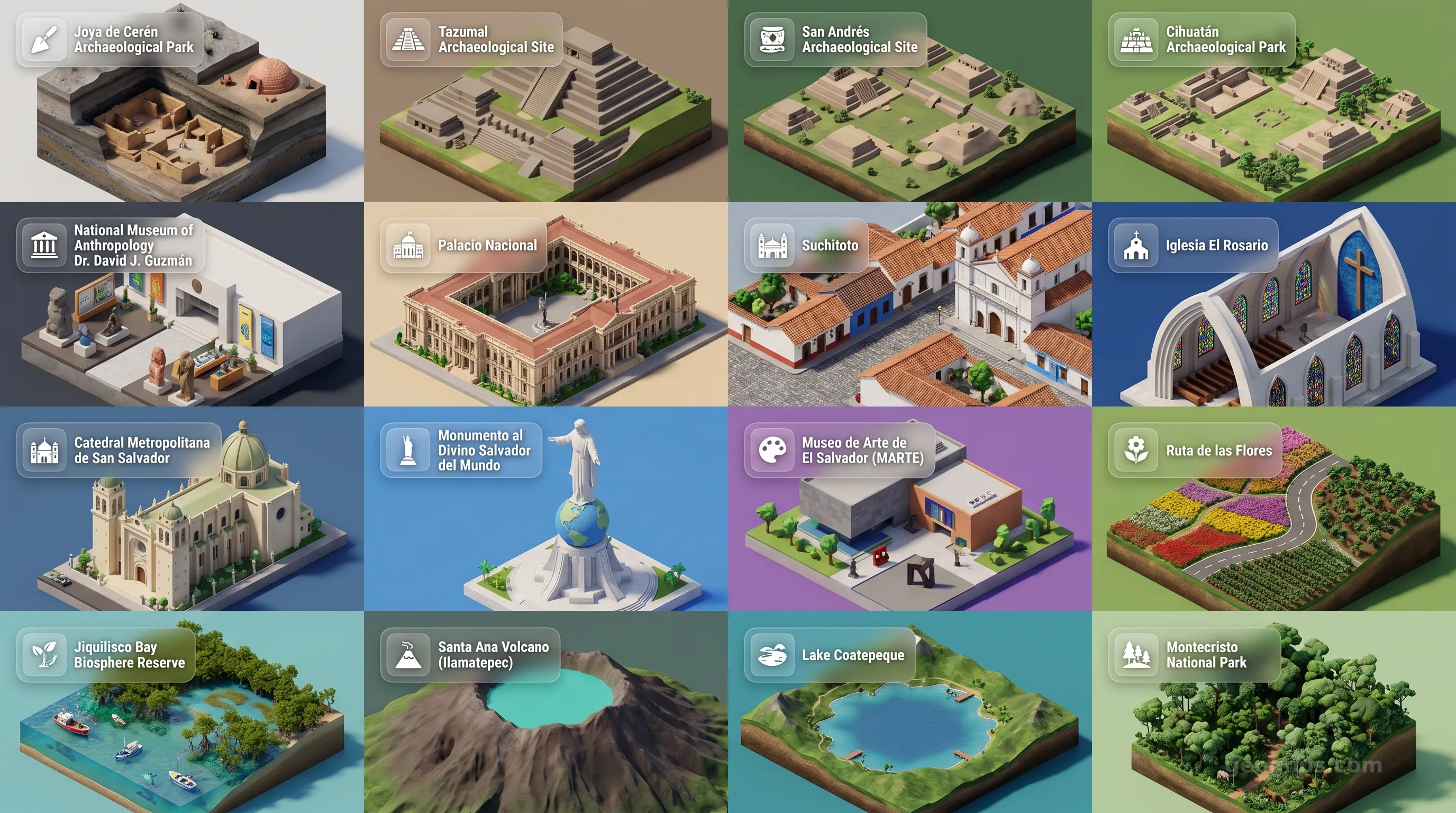
Known as the 'Pompeii of the Americas', Joya de Cerén offers an unprecedented glimpse into the daily lives of everyday Mayan agriculturalists. Buried by a volcanic eruption around 600 AD, this UNESCO World Heritage site preserved homes, crops, and artifacts in stunning detail. It is an essential site for anthropology and history students seeking to understand commoners rather than royalty. The dry season from November to April is the best time to visit to avoid heavy rains. Tip: Hire a local guide at the entrance to fully grasp the nuances of the ancient agricultural methods and daily routines showcased.
El Salvador's Most Majestic Mayan Ruins
Tazumal stands as the most important and extensively restored Mayan ruin in El Salvador. Settled around 1200 BC, it was a sophisticated settlement that featured intricate drainage systems, tombs, and pyramids. Its historical significance lies in its long period of occupation and evidence of trade reaching as far as Mexico and Panama. Ideal for a visit between November and March. Tip: Explore the on-site Stanley H. Boggs Museum to see the 'Estela de Tazumal' and other excavated artifacts that offer a window into pre-Columbian trade networks.
Ancient Mayan Regional Center
Once a capital of a Mayan lordship with supremacy over the Zapotitán Valley, San Andrés was a major political and ceremonial center buried by the eruption of the Playón volcano in 1658. This site is pivotal for studying the political hierarchy and indigo production of ancient Mesoamerica. The ruins are easily accessible year-round, though the dry season is most comfortable. Tip: Combine your visit with nearby Joya de Cerén, as the two sites are historically linked and just a short drive apart.
The Largest Pre-Columbian City
Cihuatán is the largest archaeological park in El Salvador, representing a massive urban center from the Early Postclassic period (900-1200 AD). It is highly significant for understanding the sudden rise and violent fall of post-Mayan civilizations in the region. Visitors can explore ball courts, temples, and palaces. Visit during the early morning in the dry season to avoid the intense midday heat. Tip: Look out for the resident wildlife, including iguanas and diverse bird species, that roam the expansive ceremonial grounds.
The Vault of Salvadoran Heritage
MUNA is the premier institution for anyone looking to understand El Salvador's complex history, from pre-Columbian eras through the colonial period to modern society. It houses extensive collections of indigenous artifacts, historical documents, and cultural exhibits. It is a critical stop for students and cultural tourists. The museum is indoors and perfect for a rainy season (May to October) visit. Tip: Don't miss the exhibit on the country's historic reliance on indigo and coffee, which deeply shaped its modern economic and social structure.
The Political Heart of Yesteryear
The Palacio Nacional, located in the historic center of San Salvador, is a magnificent neoclassical and Renaissance architectural masterpiece. Built in the early 20th century to replace the original destroyed by fire, it housed the country's government branches. Its beautifully preserved rooms, including the Red, Blue, Pink, and Yellow rooms, are steeped in political history. Visit year-round. Tip: Stroll through the adjacent Plaza Gerardo Barrios and enjoy a locally brewed coffee to soak in the revitalized downtown atmosphere.
The Colonial Cultural Capital
Suchitoto is arguably El Salvador's most picturesque town, famous for its impeccably preserved cobblestone streets, colonial architecture, and the stunning Santa Lucía Church. Historically, it was the site of the original capital of El Salvador and a hub for the indigo trade. Today, it is a bustling center for arts and culture. The town is vibrant year-round, particularly during the arts and film festivals in February. Tip: Take an indigo dyeing workshop to learn about the 'blue gold' that once drove the local economy.
A Masterpiece of Modern Religious Art
From the outside, Iglesia El Rosario looks like a somber concrete hangar, but step inside to witness one of the most breathtaking modern churches in the Americas. Designed by sculptor Rubén Martínez in the 1970s, its cascading rainbow stained glass illuminates the sanctuary in vivid colors. It is also the resting place of Father José Matías Delgado, a key figure in Central American independence. Visit on a sunny afternoon to see the light play at its best. Tip: Speak softly and respect worshippers; the arched concrete design amplifies sound significantly.
The Spiritual Center of San Salvador
The Metropolitan Cathedral is a site of immense religious and historical importance. It is most famous as the final resting place of Saint Óscar Romero, the revered archbishop who was assassinated in 1980 for speaking out against poverty and social injustice. The crypt where he is buried is a profound pilgrimage site for studying modern Latin American history and theology. Accessible year-round. Tip: Take time to view the crypt's modern artistic redesign, which beautifully commemorates Romero's enduring legacy.
The Defining Icon of El Salvador
This iconic monument features Jesus Christ standing on a globe, representing the country's patron saint, the Divine Savior of the World. It is the most recognizable landmark in El Salvador and serves as a symbol of national identity, frequently depicted on currency and license plates. Historically, the plaza has been a site for national celebrations and protests. Any time of year is suitable, but sunset offers beautiful lighting for photos. Tip: Visit in early August during the 'Fiestas Agostinas' to witness vibrant parades culminating at this plaza.
The Premier Salvadoran Art Gallery
MARTE hosts an exceptional collection of Salvadoran art dating from the mid-19th century to contemporary works. It provides vital visual context to the country's tumultuous history, social shifts, and cultural resilience. Students of art and history will find the curated exhibitions highly thought-provoking. The museum is a great escape during the hotter parts of the day. Tip: Check their calendar for guided tours and outdoor concerts often held by the magnificent Monument to the Revolution adjacent to the museum.
A Scenic Journey Through Coffee Culture
The 'Route of Flowers' is a winding road through the Apaneca-Ilamatepec mountain range, connecting a series of colorful colonial towns like Juayúa, Ataco, and Apaneca. This region is the heart of El Salvador's coffee heritage and offers a deep dive into local indigenous traditions, gastronomy, and vibrant street art. The best time to visit is from October to February when the wildflowers bloom. Tip: Plan to be in Juayúa on the weekend for its famous 'Feria Gastronómica' (Food Festival) to sample a wide array of local dishes.
El Salvador's Largest Coastal Estuary
Designated as a UNESCO Biosphere Reserve and a Ramsar wetland, Jiquilisco Bay is a critical ecological haven. It holds the largest abundance of coastal marine birds in the country and is a primary nesting ground for the endangered hawksbill turtle. Its historical importance includes ancient indigenous settlements hidden in the mangroves. Visit between August and December to witness turtle conservation in action. Tip: Hire a local cooperative guide for a boat tour to support community-based eco-tourism.
The Highest Peak with an Emerald Crater
At 2,381 meters, Ilamatepec is El Salvador's highest and most voluminous volcano. The hike up offers breathtaking views of the surrounding Coatepeque Caldera, but the real marvel is the bubbling, neon-green sulfur lake sitting deep within its active crater. It presents a fascinating study in volcanology and geology. The dry season (November-April) provides the clearest visibility. Tip: The hike takes about 1.5 to 2 hours up. Start early in the morning and bring plenty of water, as the trail offers little shade.
A Pristine Volcanic Caldera
Formed by a massive volcanic eruption thousands of years ago, Lake Coatepeque is a stunning crater lake renowned for its deep blue, sometimes turquoise, waters. Historically a sacred site for the indigenous Maya, it is now a top destination for relaxation and water sports. Geologists study the lake for its occasional, mysterious shifts to a bright turquoise color. Visit year-round. Tip: Enjoy a traditional lunch of freshly caught 'pescadetas' at one of the floating restaurants while taking in the caldera's panoramic views.
The Trifinio Cloud Forest
Part of the Trifinio Fraternidad Biosphere Reserve shared with Guatemala and Honduras, Montecristo is a pristine cloud forest protecting El Salvador's most diverse flora and fauna, including pumas and quetzals. Its historical 'Garden of 100 Years' and ancient oak trees make it an ecological sanctuary for biological studies. The park is best visited between November and March. Tip: Access requires a 4x4 vehicle and prior permission from the Ministry of Environment, so plan your visit well in advance.