Benin
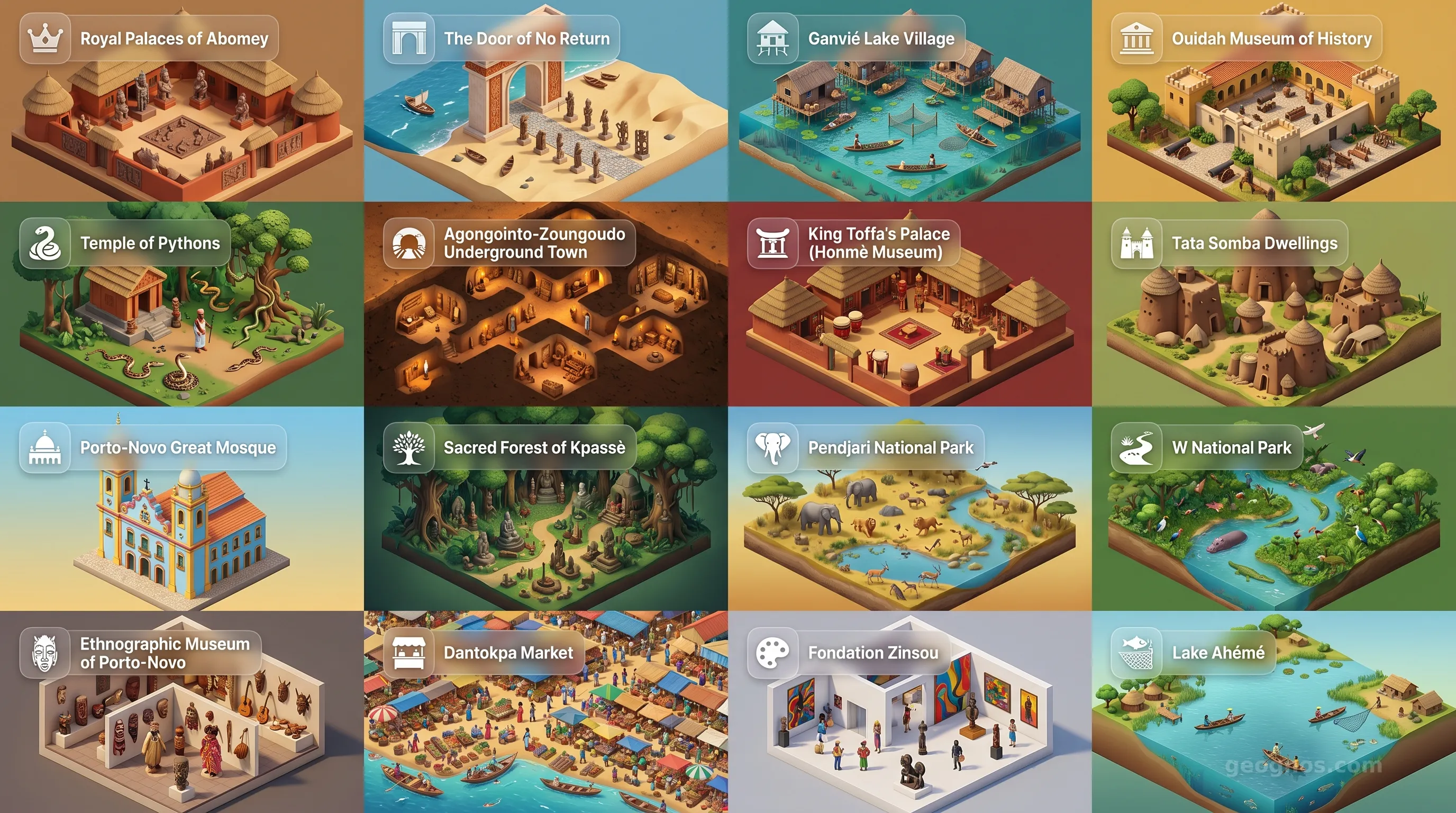
Top Sights & Landmarks
Heart of the Dahomey Kingdom
Once the capital of the powerful Kingdom of Dahomey, the Royal Palaces of Abomey stand as a breathtaking testament to West Africa's pre-colonial military and cultural might. Visiting this UNESCO World Heritage site offers a profound look into a kingdom that thrived from the 17th to the 19th centuries, famous for its formidable female warriors (the 'Dahomey Amazons'). The complex features unique bas-reliefs detailing royal history and conquests. It is an unparalleled study site for African history. The best time to visit is during the dry season (November to February). Tourist tip: Hire a local guide at the entrance to fully decode the complex symbolism and royal lineages etched into the remaining structures.
Monument to the Transatlantic Slave Trade
Located on the beaches of Ouidah, The Door of No Return is a towering bronze and concrete archway memorializing the millions of enslaved Africans who were forced onto ships bound for the Americas. The monument marks the final steps taken on African soil. It is a deeply moving pilgrimage site essential for anyone studying the history of the transatlantic slave trade. The surrounding Route des Esclaves (Slave Route) provides context and reflection. Best visited between November and March for pleasant coastal weather. Tourist tip: Walk the final two miles of the Slave Route to the monument to fully experience the solemnity and historical gravity of the area.
The Venice of Africa
Ganvié is an extraordinary stilt village sitting atop Lake Nokoué. Founded in the 16th or 17th century by the Tofinu people to escape Fon warriors capturing people for the slave trade, it has grown into a bustling town of over 20,000 residents living entirely on the water. It is a stunning study of human resilience and unique architectural adaptation. Visitors can explore floating markets and observe traditional fishing techniques. The dry season (December to April) is optimal for visiting. Tourist tip: Book an early morning pirogue (canoe) tour to witness the magical sunrise over the lake and see the floating market at its busiest.
Former Portuguese Fort
Housed within the Portuguese Fort of São João Baptista de Ajudá, built in 1721, this museum is a pivotal educational institution detailing the history of Ouidah, the Dahomey Kingdom, and the harrowing transatlantic slave trade. The exhibits display maps, chains, and historical artifacts that provide a stark narrative of the era. The architecture itself is an artifact of European colonial presence in West Africa. Year-round visits are possible, but November through February offers the most comfortable climate. Tourist tip: The museum is relatively small but information-dense; allocate at least two hours for reading and reflection.
Sacred Voodoo Sanctuary
The Temple of Pythons in Ouidah is a legendary site central to the practice of Vodun (Voodoo), which is an official religion in Benin. The temple houses dozens of royal pythons, which are completely harmless and revered as sacred deities symbolizing wisdom and earthly connection. For students of comparative religion or anthropology, it is an invaluable glimpse into living, practicing animist traditions. The dry season is ideal for a visit. Tourist tip: For a small donation, you can take a photograph with a python around your neck—be respectful, as these animals are treated as highly sacred by the locals.
Subterranean Dahomey Bunkers
Discovered relatively recently during road construction in 1998, this fascinating archaeological site near Bohicon features a network of underground dwellings built by King Dakodonou in the 16th century. These subterranean bunkers served as living quarters and hiding places for Dahomey warriors. It represents remarkable pre-colonial engineering and military strategy, offering unique insights for historians and archaeology students. The cooler dry months (December to February) are best for exploring the humid subterranean depths. Tourist tip: Wear comfortable shoes and be prepared for some tight spaces when descending into the excavated rooms.
Royal Residence of Porto-Novo
Located in the capital city of Porto-Novo, this former royal palace was home to King Toffa, who famously signed a treaty with the French in the late 19th century. Now operating as the Honmè Museum, the complex is a superb example of traditional royal architecture fused with colonial influences. It contains fascinating artifacts, including royal instruments, clothing, and photographs. The site is a treasure trove for political and colonial history studies. Best visited from November to March. Tourist tip: Explore the nearby artisan markets after your museum visit for authentic Porto-Novo crafts.
Fortress Houses of the Atacora
In the northwestern Atacora region near Boukoumbé, the Somba people build remarkable two-story, fortress-like mud houses known as Tata Somba. These structures were designed historically to protect against wild animals and slave raiders. Ground floors house livestock, while the upper terraces are for sleeping and grain storage. They are globally recognized as masterpieces of vernacular architecture, essential for architecture and anthropology students. The dry season (November to March) provides the best road access. Tourist tip: Always ask permission and preferably travel with a local guide before approaching or photographing a family's Tata.
Afro-Brazilian Architectural Marvel
The Great Mosque of Porto-Novo is one of the most visually striking religious buildings in West Africa. It was built in the early 20th century by Afro-Brazilians—descendants of freed slaves who returned to Benin. Unlike typical mosques, it closely resembles a brightly colored, baroque Portuguese church, a testament to the complex cultural syncretism resulting from the transatlantic slave trade. A highly worthwhile stop for students of architecture and diaspora history. Visit year-round. Tourist tip: While non-Muslims cannot always enter the main prayer halls, the brilliantly decorated exterior offers exceptional photography opportunities.
Mythical Voodoo Forest
This sacred grove in Ouidah is dedicated to King Kpassè, the founder of the city. According to legend, rather than dying, he transformed into a large Iroko tree, which remains in the forest today. The area is dotted with impressive wooden sculptures representing various Vodun deities and historical figures. It is a tranquil yet deeply spiritual site for studying West African mythology and nature worship. December and January are excellent times for a visit, particularly near the Voodoo Festival (January 10). Tourist tip: Follow your guide's instructions carefully, as certain areas and trees are strictly off-limits to uninitiated visitors.
Premier West African Safari
Part of the vast W-Arly-Pendjari (WAP) complex, Pendjari National Park is arguably the best wildlife reserve in West Africa. It offers crucial refuge to West African lions, elephants, hippos, buffalos, and numerous antelope species. It is a critically important site for ecological and conservation studies due to its status as one of the last major intact ecosystems in the region. The best time for game viewing is the height of the dry season (December to April) when animals congregate around waterholes. Tourist tip: Book accommodations inside the park in advance and hire a certified local eco-guide to maximize your chances of spotting the elusive cheetah or lion.
Transnational Biosphere Reserve
Named for a 'W' shaped bend in the Niger River, this massive transnational park spans Benin, Niger, and Burkina Faso. It is a UNESCO World Heritage site known for its immense biodiversity, transitional landscapes bridging the savanna and Sahel, and large populations of elephants and African wild dogs. It provides unparalleled opportunities for biodiversity and geology research. The dry season (January to May) is highly recommended. Tourist tip: The park is remote and rugged; 4x4 vehicles are mandatory, and multi-day guided expeditions are required to truly appreciate its vastness.
Preserver of Beninese Culture
Located in a beautiful colonial building in the capital, this museum boasts one of the most comprehensive collections of Beninese cultural artifacts. Displays are meticulously organized around themes of birth, life, and death, featuring intricate Gelede masks, weaponry, and traditional musical instruments. It is an indispensable resource for students of African ethnology and artistry. Accessible year-round, though the drier months make walking the capital easier. Tourist tip: Do not miss the extensive collection of Yoruba masks; read the accompanying folklore texts to understand their use in modern-day ceremonies.
West Africa's Largest Open-Air Market
Situated in Cotonou along the Nokoué lake, Dantokpa is a sprawling, sensory-overloading commercial hub covering over 20 hectares. It drives the national economy and offers everything from vibrant wax-print fabrics and fresh produce to an extensive 'fetish market' selling animal skulls and herbs for Voodoo practices. For students of economics, sociology, or cultural studies, Dantokpa is a masterclass in informal African commerce. Any time of year is active. Tourist tip: The market is chaotic and crowded; go with a local guide, keep valuables secure, and ask before taking photos, especially in the fetish sections.
Contemporary African Art Hub
Operating spaces in both Cotonou and Ouidah, Fondation Zinsou is Benin's premier institution for contemporary African art. The foundation has been instrumental in placing African artists on the global map and preserving local artistic heritage. It provides free access to magnificent exhibitions ranging from painting and sculpture to photography. A must-visit for art students and culture lovers. Accessible comfortably year-round. Tourist tip: Check their schedule before visiting, as they frequently host interactive workshops, book readings, and temporary exhibitions featuring renowned international artists.
Spiritual and Serene Waters
Lake Ahémé is the second-largest lake in Benin, renowned for its serene beauty and deep cultural significance to the local Mina and Pedah communities. The lake shores are dotted with sacred Voodoo shrines, and the waters are vital for local fishing economies. Eco-tourism here is flourishing, making it an excellent case study for sustainable community-based tourism. The dry season (December-March) offers sunny skies and calm waters. Tourist tip: Rent a traditional boat for a sunset cruise, and enjoy a meal of freshly caught tilapia with local 'akassa' (fermented corn paste) on the shores of Possotomè.