Uruguay
Top Sights & Landmarks
Colonial Gem on the Río de la Plata
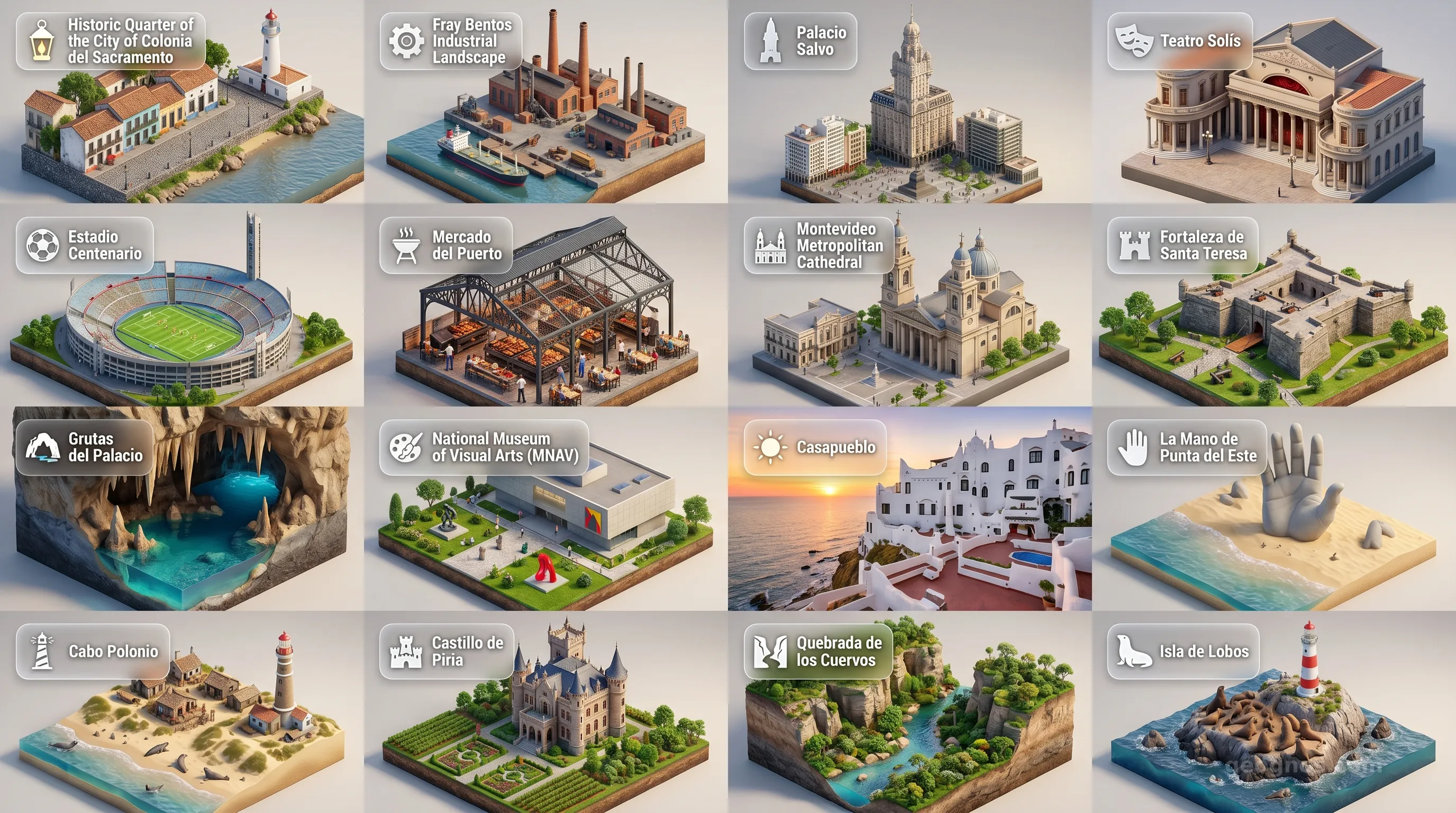
Founded by the Portuguese in 1680, this historic smuggling port changed hands between Spain and Portugal numerous times, resulting in a unique fusion of colonial architectural styles. Students of history and urban planning will find the intact cobblestone street plans and ruins an unparalleled case study of colonial contestation. The area is a living museum filled with quaint cafes, vintage cars, and bougainvillea-draped walls. The best season to visit is Autumn (March to May) or Spring (September to November) for pleasant walking weather. Tourist tip: The authentic cobblestone streets (especially the famous 'Street of Sighs') are highly uneven, so wearing comfortable, flat walking shoes is absolutely essential.
The Kitchen of the World
This monumental former meat-packing plant illustrates the massive scale of the global food industry from the late 19th to the mid-20th century. During both World Wars, Fray Bentos exported millions of cans of corned beef to feed Allied soldiers, making it a critical historical asset for understanding global supply chains and the Industrial Revolution in South America. Today, its rusted machinery and vast industrial halls serve as a breathtaking museum. The best season to visit is Spring, avoiding the extreme heat of the inland summer. Tourist tip: Take the official guided tour; the expert context transforms seemingly mundane industrial relics into a fascinating narrative of global economic history.
Montevideo's Iconic Skyscraper
Designed by Italian architect Mario Palanti and completed in 1928, Palacio Salvo was briefly the tallest building in South America. Its eclectic design fuses Gothic, Art Deco, and Neoclassical elements, heavily inspired by Dante's Divine Comedy. Culturally, it stands on the exact spot where the most famous tango in history, 'La Cumparsita', was first performed. Architecture and cultural history students will find its design and legacy invaluable. The best season to visit is year-round. Tourist tip: Book an evening guided tour to access the rooftop cupola for stunning city views and to hear the local legends about the building's resident ghosts.
Uruguay's Premier Opera House
Opening its doors in 1856, Teatro Solís is Uruguay’s most important and oldest theater. Its majestic neoclassical facade and richly decorated interior rival the great opera houses of Europe. Historically, it has been the epicenter of Montevideo's performing arts and high society. It is an essential stop for students of performing arts and architecture. The best season to visit is Winter (June to August), which aligns with the peak of the opera and ballet seasons. Tourist tip: If you cannot catch a live performance, the highly affordable daytime guided tours offer an intimate look at the theater's backstage secrets and majestic acoustics.
The Birthplace of the World Cup
Built in a record-breaking nine months to host the inaugural 1930 FIFA World Cup, Estadio Centenario is a pilgrimage site for sports enthusiasts and historians. It is the only stadium in the world declared a 'Historical Monument of World Football' by FIFA. Students of sports history and early 20th-century concrete architecture will find it deeply significant. The best season to visit is Autumn or Spring, to catch a local derby match in mild weather. Tourist tip: Visit the onsite 'Museo del Fútbol' below the Olympic Tribune, which houses an incredible array of memorabilia, including artifacts from the 1930 World Cup final.
A Culinary and Ironwork Marvel
Erected in 1868, this former produce market boasts a stunning wrought-iron structure that was originally forged in Liverpool, England. Today, it is the beating heart of traditional Uruguayan culinary culture, packed with 'parrillas' (steakhouses) serving world-class meats. Historically, it highlights the heavy British influence on Uruguay's 19th-century infrastructure. It is perfect for culinary and cultural studies. The best time to visit is year-round, specifically on Saturday afternoons. Tourist tip: Arrive hungry around 1 PM on a weekend to experience the bustling, smoky atmosphere, and be sure to order a 'Medio y Medio', the market's signature half-white-wine, half-sparkling-wine beverage.
The Mother Church of Montevideo
Located in the historic Plaza Constitución, the Metropolitan Cathedral (Iglesia Matriz) is the main Roman Catholic church in Montevideo. Consecrated in 1804, its neoclassical design holds the tombs of major historical figures, including secular leaders and clerics who shaped early Uruguay. It is an excellent site for students researching early South American religious history and colonial architecture. The best season to visit is year-round. Tourist tip: Take a moment to admire the ornate side chapels and the beautiful stained glass, and combine your visit with a stroll through the adjacent plaza's antique market on Saturdays.
A Monument to Imperial Rivalry
Begun by the Portuguese in 1762 and captured by the Spanish shortly thereafter, this colossal military fortress is a testament to the fierce territorial disputes in the region. Restored in the 20th century, its massive stone walls and historic armaments provide military history students with a tangible look at 18th-century siege warfare and strategic border defense. The best season to visit is Summer (December to February), as the fort is surrounded by a spectacular national park and pristine beaches. Tourist tip: After exploring the extensive battlements, hike down to Playa del Barco, a nearby beach known for a historic shipwreck.
Prehistoric Rock Formations
A recognized UNESCO Global Geopark, Grutas del Palacio features a unique network of cave-like formations supported by dozens of natural rock pillars dating back to the Late Cretaceous period. It offers a rare window into the region's ancient geological past and is an essential field trip for earth science, geology, and paleontology students. The best season to visit is Spring or Autumn for pleasant outdoor exploration. Tourist tip: Start your visit at the interactive visitor center to grasp the immense timeline of the site, and keep an eye out for ancient fossil traces within the sedimentary rock layers.
The Heart of Uruguayan Art
Situated in Parque Rodó, MNAV holds the most comprehensive collection of Uruguayan art in the world. It features pivotal works by masters like Juan Manuel Blanes, Pedro Figari, and Joaquín Torres García. Art history students must visit to understand how these artists shaped the visual identity of the nation and interpreted the gaucho lifestyle and post-colonial society. The best season to visit is year-round. Tourist tip: Admission is completely free, making it an excellent cultural retreat for a rainy afternoon. Don't miss the beautiful sculpture garden located right outside the museum.
A Livable Sculpture by the Sea
Originally a summer home and workshop for the acclaimed Uruguayan abstract artist Carlos Páez Vilaró, Casapueblo is a sprawling, whitewashed architectural marvel resembling a Mediterranean villa or a massive sandcastle. Built without a blueprint over 36 years, it serves as a testament to organic architecture and artistic dedication. It is highly engaging for art and architecture students. The best season to visit is Summer, to enjoy the vibrant coastal atmosphere. Tourist tip: Arrive at least an hour before sunset to secure a viewing spot for the daily 'Sun Ceremony', where Vilaró's recorded poetry is played as the sun dips below the horizon.
The Hand Emerging from the Sand
Created by Chilean artist Mario Irarrázabal during the first International Meeting of Modern Sculpture in 1982, this iconic sculpture of five giant fingers emerging from the sand of Playa Brava warns swimmers of the rough waves. It has become the definitive symbol of Punta del Este. For art students, it is a brilliant example of environmental art interacting directly with its natural surroundings. The best season to visit is Summer, though off-season offers unhindered views. Tourist tip: This is the most photographed spot in the city. Arrive at sunrise to get a stunning, crowd-free photo with the dramatic morning light hitting the fingertips.
An Off-Grid Coastal Hamlet
Cabo Polonio is a remote, bohemian village situated on a peninsula bordered by massive, shifting sand dunes. Lacking a grid for electricity or running water, it offers an extreme departure from modern life. It is historically significant for its iconic 19th-century lighthouse and a massive colony of sea lions. Environmental and sociology students will find its sustainable, isolated community fascinating. The best season to visit is Summer for a lively atmosphere, or Winter for solitary whale watching. Tourist tip: You cannot drive your own car here. You must park at the entrance terminal and take the designated 4x4 safari trucks across the dunes, which is an adventure in itself.
The Alchemist's Castle
Completed in 1897, this eccentric castle was the personal residence of Francisco Piria, an entrepreneur, visionary, and practicing alchemist who founded the resort city of Piriápolis. The architecture blends medieval styles with Renaissance touches. For history and esoteric students, the building is laden with secret Masonic and alchemical symbols. The best season to visit is Spring or Autumn. Tourist tip: Pay close attention to the intricate details on the gates, fireplaces, and garden statues—many were deliberately placed by Piria to reflect his esoteric beliefs and astrological alignments.
The Gorge of the Crows
This stunning V-shaped gorge is a hidden subtropical microclimate nestled in Uruguay's rolling plains. Named after the turkey vultures (cuervos) that ride its thermal currents, it was Uruguay's first officially protected natural area. Biology and geology students will marvel at the high biodiversity, distinct rock formations, and dense gallery forests. The best season to visit is Spring or Autumn, as summer hikes can be incredibly hot and humid. Tourist tip: The trails involve steep ascents and descents with fixed ropes for assistance; wear high-quality hiking boots and bring plenty of water, as there are no amenities on the trail.
Hemisphere's Largest Sea Lion Colony
Located a few miles off the coast of Punta del Este, this small rocky island holds a massive ecological significance: it is home to the largest colony of South American sea lions and fur seals in the Western Hemisphere. Historically exploited for oil, the island is now a strict nature reserve. Marine biology students consider this a prime observation point for pinniped behavior. The best season to visit is Summer, when pups are most active. Tourist tip: Visitors are not allowed to step onto the island to protect the wildlife, but specialized boat tours from the Punta del Este port get you close enough to hear, smell, and photograph thousands of seals.