Saint Vincent and the Grenadines
Top Sights & Landmarks
Colonial Fortress of Kingstown
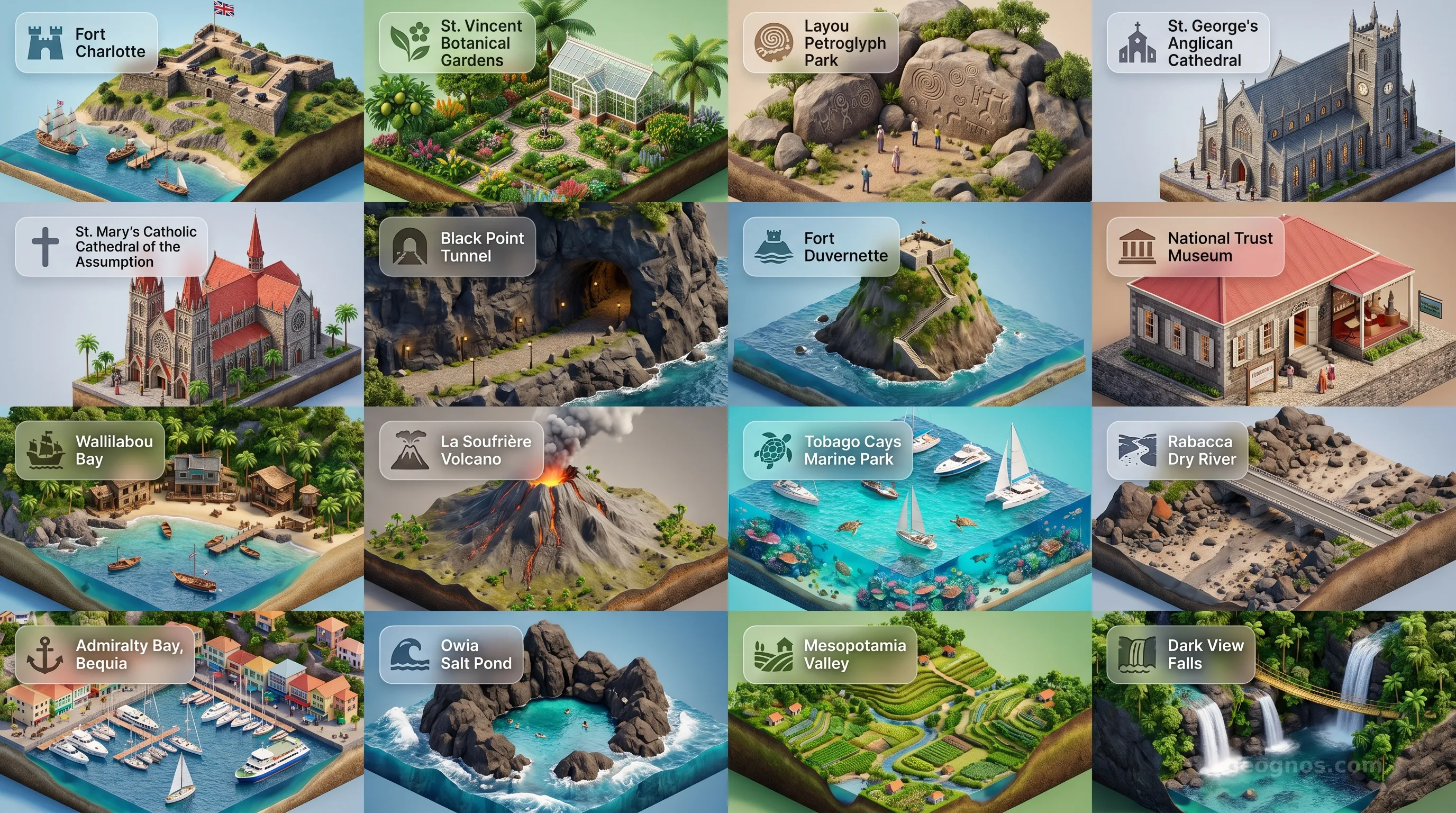
Perched 600 feet above the bay, Fort Charlotte is an essential study in British colonial military architecture. Constructed in 1806, it uniquely faces inland to defend against Carib attacks rather than naval assaults. Visitors are rewarded with panoramic views of Kingstown and the Grenadines. The site houses a small museum depicting the history of the Black Caribs (Garifuna). The best time to visit is during the dry season (December to May). Tip: Hire a local guide at the entrance for an in-depth narrative of the island's turbulent colonial past.
Oldest Botanical Gardens in the Western Hemisphere
Established in 1765, these gardens are a living library of tropical flora and agricultural history. They were originally created to cultivate medicinal plants and improve the local economy. Famously, Captain Bligh introduced breadfruit to the island here in 1793 after the mutiny on the HMS Bounty. It is also home to the Nicholas Wildlife Aviary, which protects the vulnerable St. Vincent Parrot. Visit between December and May for optimal weather. Tip: Look out for a descendant of the original breadfruit tree, still thriving today.
Pre-Columbian Rock Carvings
The Layou Petroglyphs offer a fascinating glimpse into the lives of the indigenous Arawak and Carib peoples long before European contact. The rock carvings date back to 300-600 AD and are considered some of the most accessible and best-preserved pre-Columbian artifacts in the Caribbean. For students of archaeology and history, the enigmatic symbols provide essential context for understanding early Amerindian civilization. Open year-round, but access is easiest in the dry season to avoid slippery rocks. Tip: Combine this trip with a visit to the nearby Rutland Vale estate ruins.
Georgian Architectural Masterpiece
Located in the heart of Kingstown, St. George's Anglican Cathedral is a magnificent testament to early 19th-century colonial architecture. Consecrated in 1820, the church features stunning stained glass windows—including one famously commissioned by Queen Victoria—and an ornate nave. The cathedral's graveyard contains monuments of historically prominent colonial figures. It offers an excellent study in Georgian design adapted for the tropics. Sunday mornings are ideal to experience the cathedral's vibrant community spirit. Tip: Observe the beautiful woodwork inside, crafted by skilled local artisans.
Eclectic Kingstown Cathedral
Built in stages starting in 1823, St. Mary's Cathedral is one of the most architecturally unique structures in the Caribbean. Its design is a striking amalgamation of Moorish, Romanesque, and Byzantine styles, featuring dark brick facades, multiple archways, and a distinct bell tower. For architectural students, it provides a striking contrast to traditional colonial churches. The best time to visit is on a bright morning when sunlight highlights the rich colors of the brickwork. Tip: Explore the serene inner courtyard, which offers a quiet retreat from bustling Kingstown.
19th Century Engineering Marvel
The Black Point Tunnel is a stark reminder of St. Vincent's plantation era. Hand-drilled by slave labor in 1815, the 360-foot tunnel was constructed to transport sugar from the grand estates to the port in Kingstown. Today, it stands as a monument to the endurance and suffering of the enslaved African population. Walking through the dark, volcanic rock tunnel opens up to a rugged black sand beach. Visit year-round. Tip: Bring a flashlight and be cautious of the wet, uneven ground inside the tunnel.
Volcanic Plug Fortress
Perched atop a massive, 195-foot volcanic plug just off the southern coast, Fort Duvernette was built in the late 18th century to defend the former capital of Calliaqua. Visitors must climb 255 steep steps carved directly into the rock to reach the summit, where original cannons still face the sea. The fort offers incredible strategic history and panoramic views of the Grenadines. Accessible via a short water taxi ride from Villa Beach. Visit during the cooler early morning or late afternoon to avoid the intense midday sun. Tip: Wear sturdy footwear for the steep ascent.
Repository of Vincentian Heritage
Housed in the historic Carnegie Building in Kingstown, the National Trust Museum is the premier institution for understanding Vincentian culture. It curates vital artifacts from the pre-Columbian Arawak and Carib eras, alongside colonial history and the vibrant traditions of the Garifuna people. For students of Caribbean history, this museum provides essential, localized narratives often omitted from mainstream texts. Weekdays are the best times to visit for a quiet, educational experience. Tip: Call ahead to check for special temporary exhibitions or guided tours by local historians.
Cinematic and Historic Harbour
Wallilabou Bay effortlessly blends genuine local history with modern pop culture. Historically a bustling anchorage and customs port, it gained international fame as the filming location for Port Royal in the 'Pirates of the Caribbean' movies. Many set pieces and facades remain, making it a fun, immersive stop for tourists. However, it also offers a glimpse into the island's maritime past. Visit during the dry season (December-May). Tip: Stop by the on-site museum detailing the film's production and the bay's pre-cinematic history.
Majestic Active Stratovolcano
Dominating the northern third of St. Vincent, La Soufrière is an active stratovolcano that has profoundly shaped the island's geology, agriculture, and history. Its most recent eruption in 2021 reminded the world of its power. A guided hike to the summit offers intrepid tourists and geology students a dramatic look at volcanic craters, fumaroles, and unique high-altitude flora. The hike is strenuous; attempt it only during the dry season for safety and visibility. Tip: Always hire a certified local guide, as weather conditions at the summit can change rapidly.
Pristine Marine Reserve
Comprising five uninhabited cays surrounded by a massive horseshoe reef, the Tobago Cays Marine Park is the ecological crown jewel of the Grenadines. It is a critical habitat for green sea turtles, colorful reef fish, and extensive coral systems. For marine biology students and eco-tourists, it represents a highly successful model of Caribbean marine conservation and is on the UNESCO tentative list. The dry season offers the best underwater visibility for snorkeling and diving. Tip: Bring an underwater camera and respect the strict 'no touch' conservation rules while snorkeling with the turtles.
Volcanic Ash Riverbed
The Rabacca Dry River is a striking geological feature formed by the 1902 eruption of La Soufrière. The riverbed, filled with volcanic ash and boulders, remains completely dry except during heavy rainfall. Historically, it served as a boundary line separating the indigenous Carib territory in the north from the colonial settlements in the south. It is an excellent site for studying volcanic aftermath and local geography. Best visited in the dry season when the crossing is safe and dry. Tip: Use a 4x4 vehicle if you plan to explore the areas north of the river.
Historic Boatbuilding Hub
Admiralty Bay is the bustling heart of Bequia, offering a deep natural harbor that has anchored ships for centuries. The bay and its main town, Port Elizabeth, are deeply steeped in a rich maritime heritage, particularly traditional wooden boatbuilding and whaling. Students of anthropology will find the island's unique whaling traditions fascinating, as it is one of the few places globally permitted to practice aboriginal subsistence whaling. Visit between December and April for optimal sailing conditions. Tip: Stroll along the Belmont Walkway to discover charming local boutiques and cafes.
Therapeutic Volcanic Pool
Located in the remote northeastern corner of St. Vincent, the Owia Salt Pond is a large tidal pool formed by ancient volcanic lava flows. The volcanic rock formations break the Atlantic waves, continuously filling the pool with crystal-clear seawater. Located near a major Garifuna settlement, the site holds both geographical and cultural significance. It is renowned for its therapeutic waters and peaceful surroundings. Visit during the dry season, as the northern roads can be tricky during heavy rains. Tip: Pack a picnic; the site features well-maintained gazebos and facilities overlooking the ocean.
The Breadbasket of St. Vincent
Known affectionately as the 'Breadbasket' of the island, the Mesopotamia Valley is a lush, spectacularly terraced agricultural region. Characterized by its incredibly rich volcanic soil, the valley is a patchwork quilt of banana, nutmeg, cocoa, and root crop farms. It offers an excellent case study in tropical agriculture and sustainable farming practices. The dramatic drive through the valley provides countless photo opportunities. Visit early morning when the valley is draped in mist. Tip: Stop at the Belmont Lookout for the most iconic panoramic shot of the valley sweeping down to the sea.
Twin Jungle Waterfalls
Nestled in a dense bamboo forest on the leeward coast, Dark View Falls consists of two spectacular consecutive waterfalls cascading down high cliff faces. Reaching the falls involves crossing a historic, picturesque bamboo bridge suspended over the Richmond River. It is a fantastic destination for ecotourism and studying the island's hydrological systems. The pools beneath the falls are safe and refreshing for swimming. The site is accessible year-round, but the falls are most robust in the late wet season. Tip: Wear a swimsuit under your hiking clothes and enjoy a natural hydro-massage beneath the lower falls.