Saint Kitts and Nevis
Top Sights & Landmarks
The Gibraltar of the West Indies
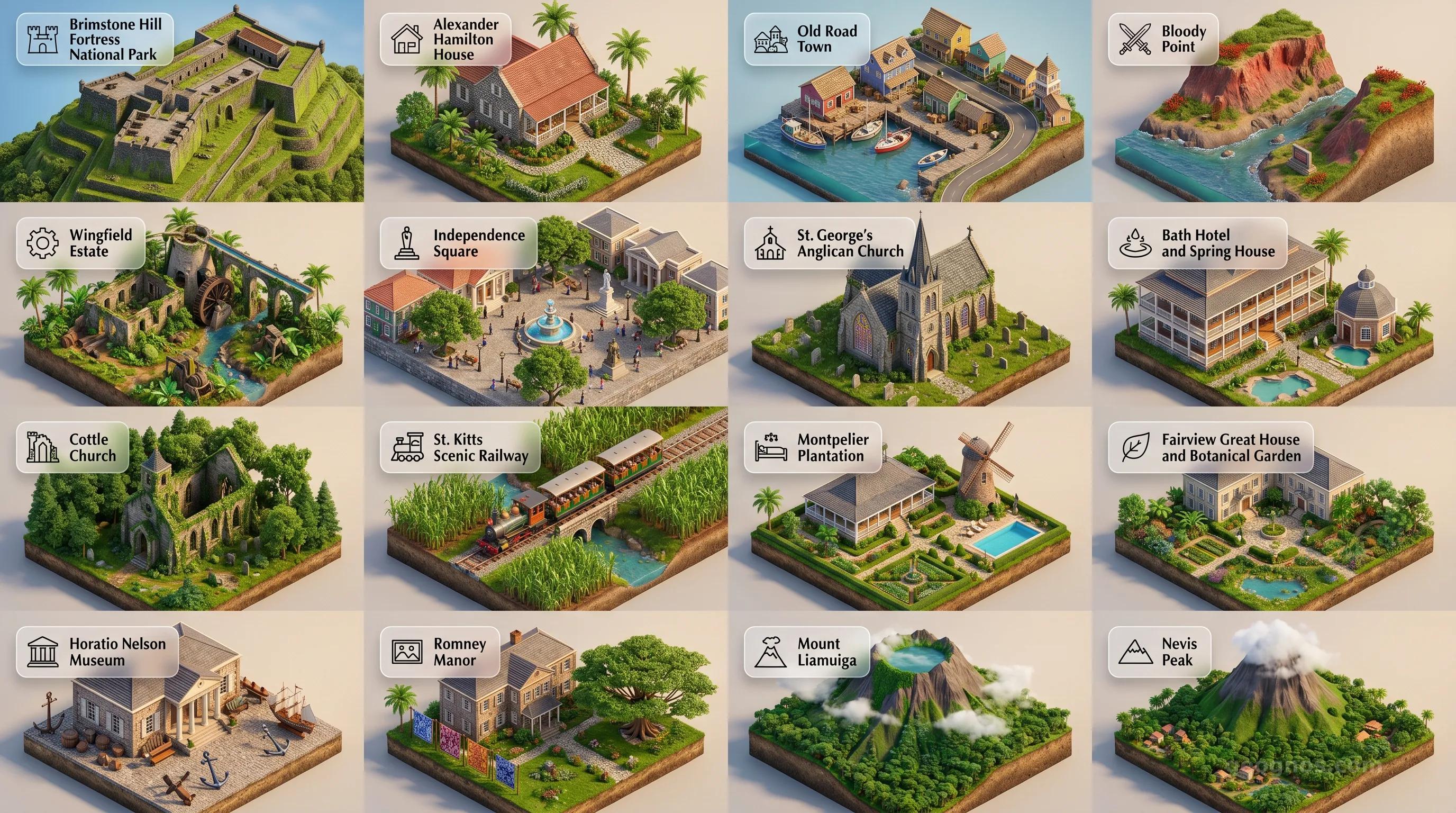
Brimstone Hill Fortress is an outstanding, well-preserved example of 17th- and 18th-century military architecture. Designed by the British and built by African slave labor, it offers profound insights into the colonial arms race, the slave trade, and engineering history. It is a must-study site for understanding the geopolitics of the Caribbean. The best season to visit is between December and April when the weather is dry and cool. Tourist tip: Wear comfortable walking shoes as the climb to the citadel is steep, and allocate at least two hours to explore the extensive grounds and museum.
Birthplace of a US Founding Father
Situated in Charlestown on the island of Nevis, this two-story stone building marks the birthplace and childhood home of Alexander Hamilton. For history and political science students, it provides a fascinating context regarding how the Caribbean sugar economy influenced one of America's key founding fathers. The site also houses the Museum of Nevis History. The best time to visit is from November to May. Tourist tip: Check out the combined ticket option if you plan to visit other heritage sites in Charlestown, and don't miss the detailed exhibit on the island's seismic history.
First British Settlement in the Caribbean
Founded in 1624 by Sir Thomas Warner, Old Road Town holds immense historical importance as the very first permanent British settlement in the Caribbean. Studying this area provides a gateway into understanding the genesis of British colonialism, the sugar trade, and the displacement of indigenous populations in the West Indies. The best season to visit is year-round. Tourist tip: Seek out the ancient Carib petroglyphs carved into volcanic rocks nearby to appreciate the island's pre-Columbian history before colonial arrival.
Site of the 1626 Kalinago Massacre
Bloody Point is the somber site where over 2,000 indigenous Kalinago people were preemptively massacred by joint British and French forces in 1626. For anthropologists and historians, it is a crucial location that underscores the brutal reality of European colonization and the decimation of native Caribbean populations. The best time to visit is during the dry season (January to April). Tourist tip: There is little in the way of grand monuments here; visitors should come with a sense of respect and take the time to read the informational plaques detailing this tragic chapter.
Industrial Archaeology of the Sugar Trade
Wingfield Estate is one of the oldest and longest-running rum and sugar plantations in the Caribbean. Recently excavated, it features remarkably intact remnants of an aqueduct, a rum distillery, and a water-powered sugar mill. It offers unparalleled opportunities for students of industrial archaeology and economics to trace the technological advancements of the colonial sugar industry. The ideal time to visit is December through May. Tourist tip: Access is directly adjacent to Romney Manor; admission to explore the fascinating stone ruins is completely free.
From Slave Market to Symbol of Freedom
Originally named Pall Mall Square, this central plaza in Basseterre was the epicenter of colonial administration and the primary site for slave auctions. Rechristened in 1983 to commemorate the nation's independence, it is a powerful focal point for studying post-colonial transformation and emancipation in the West Indies. The layout resembles the Union Jack. Visit anytime of the year. Tourist tip: It is an excellent spot for a relaxing afternoon stroll; grab a local pastry and sit by the central fountain surrounded by historic Georgian buildings.
A Monument to Syncretic Religious History
This towering Basseterre church has been destroyed and rebuilt multiple times due to fires, earthquakes, and military conflicts. Originally built by the French as a Catholic church before being taken over by the British, its architectural layers are a physical testament to the colonial turf wars that defined the Caribbean. It's a fascinating study in ecclesiastical architecture and resilience. Best visited from December to April. Tourist tip: Respectful, modest attire is required to enter the sanctuary; don't miss the beautiful pipe organ and historical plaques lining the interior walls.
The Caribbean's First Tourist Hotel
Built in 1778 on Nevis, the Bath Hotel was the first tourist hotel in the Caribbean, attracting European elites who came to soak in the therapeutic volcanic hot springs. Studying this site provides unique insights into the 18th-century evolution of leisure, hydrotherapy, and the very beginnings of the Caribbean tourism industry. The best season to visit is December to April. Tourist tip: While the grand hotel itself is primarily used for government offices, visitors can still enjoy a free soak in the restored outdoor thermal spring pools—bring a towel!
A Historic Sanctuary of Equality
Tucked away in the Nevisian jungle, Cottle Church was built in 1824 by John Cottle, a former president of Nevis, so that his family and his enslaved workers could worship together. Because this practice was highly illegal at the time, the church was never consecrated. It stands as a profound historical artifact for studying pre-emancipation social dynamics and underground resistance. Best visited year-round. Tourist tip: The ruins are secluded; renting a car or hiring a knowledgeable local taxi driver is highly recommended to find this peaceful, evocative site.
The Last Railway in the West Indies
Constructed between 1912 and 1926 to transport sugar cane, this narrow-gauge railway has been repurposed to offer a 30-mile loop around St. Kitts. It offers students of economic history a tangible look at the island's transition from a monocrop sugar economy to a tourism-based one. The best time to experience this is from November to April. Tourist tip: This is arguably the most popular excursion for cruise ship passengers, so book your tickets well in advance. Enjoy the complimentary rum punch and local choir singers on board.
Lord Nelson's Historic Wedding Site
Montpelier Plantation on Nevis is historically renowned as the location where British naval hero Lord Horatio Nelson married Fanny Nisbet in 1787. Now operating as a luxury boutique hotel, the remaining colonial structures and lush grounds provide a window into the opulent, yet complex, plantation society of the 18th century. It is an excellent study site for British naval history in the West Indies. Best visited from December to April. Tourist tip: Even if you aren't staying at the hotel, you can book an elegant afternoon tea or dinner to experience the historic ambiance.
Restored French Colonial Grandeur
Built in the early 18th century by the French, Fairview Great House provides one of the best-preserved examples of colonial domestic architecture in St. Kitts. Studying the restored dining room, historical bathing room, and original kitchen offers vivid insights into the day-to-day lives of wealthy planters. The surrounding botanical gardens showcase the island's biodiversity. The best time to visit is from November to May. Tourist tip: Participate in the rum tasting or historical cooking classes occasionally offered on-site for a highly interactive experience.
Relics of Britain's Naval Hero
Housing the largest collection of Lord Nelson artifacts in the Americas, this small but dense museum in Nevis explores the life of the famous Admiral and his time stationed in the Leeward Islands. It is an invaluable resource for military historians and students looking to understand the strategic naval dominance of the British Empire in protecting their Caribbean sugar interests. Best visited year-round. Tourist tip: Pair your visit here with a trip to the nearby Montpelier Plantation to get a complete narrative of Nelson's time in Nevis.
Heritage Estate and Artisan Center
Once owned by the ancestors of Thomas Jefferson and later by the Earl of Romney, this 17th-century estate is steeped in complex colonial and ownership history. Today, it is home to Caribelle Batik, making it a vibrant place to study both land ownership evolution and the preservation of traditional textile crafts. The grounds feature an awe-inspiring 400-year-old Saman tree. The best time to visit is December to April. Tourist tip: Watch the artisans apply wax and dye to create beautiful batik fabrics in real-time, making for a perfect, locally-made souvenir.
The Towering Stratovolcano of St. Kitts
Standing at 3,792 feet, Mount Liamuiga is the highest peak in the nation. It provides incredible opportunities for studying Caribbean vulcanology, geomorphology, and endemic cloud forest ecology. The mountain's original name, Liamuiga, means 'fertile land' in the Kalinago language, connecting the geological site deeply to indigenous culture. The best time to hike is during the drier months of January to March. Tourist tip: The hike to the crater rim is physically demanding and often muddy; hiring an experienced local guide is strongly recommended for safety and ecological insight.
The Iconic Heart of Nevis
Nevis Peak is a potentially active 3,232-foot volcano that defines the island's entire topography. For geology and biology students, studying its conical shape, thermal springs at its base, and the dense rainforest covering its slopes offers a textbook example of island arc volcanism and biodiversity. The ideal season to visit is between February and April. Tourist tip: The trail to the summit is extremely rugged and involves scrambling up nearly vertical, muddy slopes using ropes and tree roots. Only attempt if you are highly fit and traveling with a guide.