Micronesia, Federated States of
Top Sights & Landmarks
The Venice of the Pacific
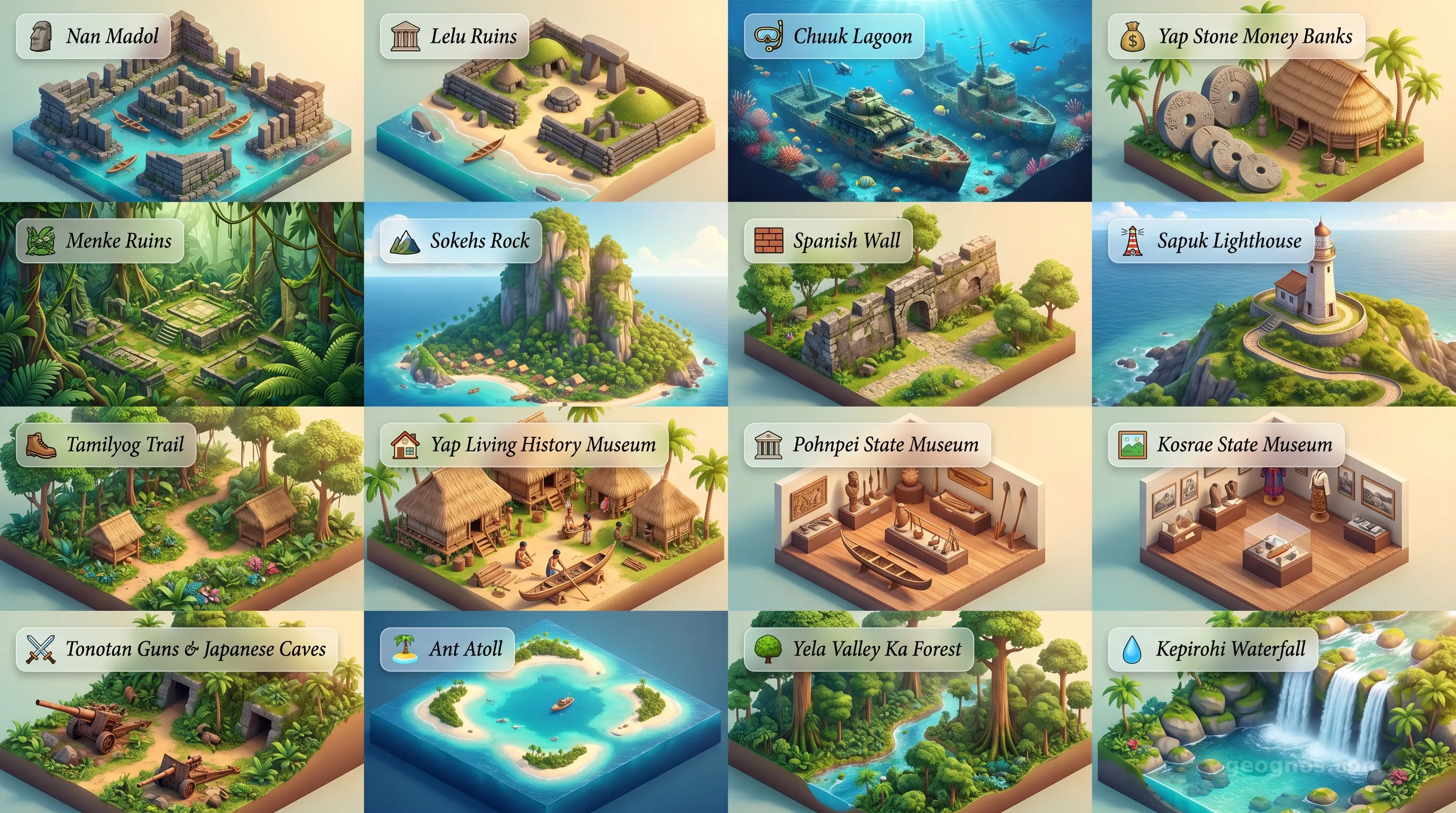
Why visit/study: This ruined city is a marvel of ancient engineering, offering profound insights into the megalithic architecture of early Pacific civilizations. Historical significance: Built between 1200 and 1500 CE, Nan Madol served as the ceremonial and political seat of the Saudeleur Dynasty, comprising nearly 100 artificial basalt islets constructed over a coral reef. Best season to visit: December to April (the dry season) provides clearer skies and calmer waters. Tourist tips: Hire a local guide for cultural context and wear sturdy water shoes, as accessing the ruins often involves wading through shallow tidal waters.
Ancient Basalt Capital of Kosrae
Why visit/study: A fascinating juxtaposition to Nan Madol, Lelu provides a deep dive into Micronesian hierarchical societies and advanced prehistoric construction. Historical significance: Reaching its peak around the 14th to 15th centuries, this was the capital of the island of Kosrae, featuring massive basalt walls, royal tombs, and sacred living compounds for high chiefs. Best season to visit: The drier months from January to April are ideal for exploring the dense jungle paths. Tourist tips: Bring insect repellent and allow at least two hours to wander through the immense, moss-covered basalt structures.
Premier WWII Wreck Diving Site
Why visit/study: Renowned globally as the ultimate wreck-diving destination, it functions as a hauntingly beautiful underwater museum. Historical significance: During WWII, it was the Empire of Japan's main naval base in the South Pacific. In 1944, the US 'Operation Hailstone' sank over 50 Japanese ships and destroyed hundreds of aircraft here, turning the lagoon into a massive graveyard. Best season to visit: December to May offers the best underwater visibility. Tourist tips: Advanced scuba certification is highly recommended to fully appreciate the deep wrecks, though some shallower wrecks and aircraft can be seen via snorkeling.
Ancient Rai Stone Reserves
Why visit/study: Offers a unique look into one of the world's most fascinating indigenous economic systems, featuring giant carved limestone discs. Historical significance: These 'Rai' stones were quarried in Palau and transported hundreds of miles by canoe. Their value is determined by their size, history, and the difficulty of acquiring them, rather than simple possession. Best season to visit: November to May for comfortable weather. Tourist tips: Always ask permission from local village chiefs before taking photographs, and never sit or stand on the stone money, as it is deeply disrespectful.
Sacred Temple of Goddess Sinlaku
Why visit/study: Hidden deep within Kosrae's lush interior, this site offers an authentic and rugged archaeological hiking experience. Historical significance: Believed to predate the Lelu Ruins, Menke was the spiritual center for the worship of Sinlaku, the goddess of breadfruit. Best season to visit: January to March when the trails are less muddy. Tourist tips: A guided hike is mandatory due to the dense forest and unmarked trails. Be prepared to cross rivers, and wear long pants to avoid scratches from vegetation.
Historic Volcanic Plug
Why visit/study: A striking basalt outcrop that defines the Pohnpei skyline, offering spectacular panoramic views and lessons in island geology. Historical significance: Sokehs Ridge was the site of the 1910 Sokehs Rebellion against German colonial rule, and it later served as a heavily fortified Japanese anti-aircraft base during WWII. Best season to visit: December to April for better trail conditions and visibility. Tourist tips: The hike is steep and challenging; bring plenty of water, start early in the morning to avoid extreme heat, and explore the WWII guns hidden near the summit.
Remnant of Colonial Pohnpei
Why visit/study: A prominent reminder of Micronesia's complex colonial past right in the heart of Kolonia. Historical significance: Built by the Spanish in 1887, the wall was originally part of Fort Alphonso XIII, constructed to protect the colonial administration from local uprisings. Best season to visit: Year-round, as it is easily accessible within the town. Tourist tips: Combine your visit with a walk through Kolonia town. It's an excellent spot for photography, especially in the late afternoon light, and there is a nearby park perfect for a quick rest.
WWII Japanese Outpost
Why visit/study: An imposing concrete monolith offering a sobering look at WWII Pacific military infrastructure, coupled with incredible ocean views. Historical significance: Built by the Japanese military to guard the strategic northeast pass into Chuuk Lagoon, it features thick concrete walls designed to withstand heavy bombardment. Best season to visit: December to April. Tourist tips: The lighthouse is located on private land, so a small access fee to the local landowners is required. The interior can be dark and overgrown, so bring a flashlight and watch your step.
Ancient Stone Pathway
Why visit/study: This trail offers a beautiful, immersive trek through Yap's rich ecosystems and traditional way of life. Historical significance: For centuries, these stone-paved paths connected Yapese villages, facilitating trade, communication, and social interaction across the island. Best season to visit: November to April, to avoid the heaviest rains making the mossy stones overly slick. Tourist tips: The stone paths can be incredibly slippery when wet. Wear footwear with excellent grip, and respect local customs by not veering off the trail into private village property.
Preserving Micronesian Heritage
Why visit/study: The premier destination for understanding Yapese culture, featuring authentic traditional architecture and live cultural demonstrations. Historical significance: The museum is constructed like a traditional Yapese village, complete with a men's house (Faluw), stone money banks, and indigenous carving areas. Best season to visit: Year-round, but checking local schedules for traditional dance performances enhances the experience. Tourist tips: Be mindful of the local dress code; women should wear skirts that cover their knees (thighs are considered taboo in Yapese culture).
Guardian of FSM Artifacts
Why visit/study: A critical repository of ethnographic and historical data for students and tourists wanting to understand Pohnpeian heritage. Historical significance: Houses extensive collections of artifacts from the Nan Madol excavations, traditional canoes, and exhibits covering the Spanish, German, Japanese, and American administrative eras. Best season to visit: Year-round (indoor activity). Tourist tips: Often called the Lidorkini Museum. Operating hours can be irregular, so it is highly recommended to call ahead or ask your hotel to confirm they are open before visiting.
Archives of the Sleeping Lady
Why visit/study: Essential for context before visiting Lelu or Menke ruins, this museum beautifully details Kosraean history. Historical significance: Features artifacts from the Lelu kingdom, historic photographs of missionary arrivals, and relics from the Japanese WWII occupation. Best season to visit: Year-round. Tourist tips: Located in Tofol, the administrative center. It's small but packed with information; engaging with the curator often leads to fascinating oral history stories you won't find on the placards.
Relics of the Pacific War
Why visit/study: Provides a visceral connection to the land-based defenses of Chuuk Lagoon, perfect for history buffs. Historical significance: The network of caves was carved out by forced labor to house massive coastal defense guns and protect Japanese military personnel from relentless Allied air raids during Operation Hailstone. Best season to visit: December to April. Tourist tips: Requires a hike through dense jungle. A local guide is necessary to find the unmarked caves and to negotiate land access fees with local owners.
Pristine Biosphere Reserve
Why visit/study: A globally recognized model for marine conservation, featuring breathtaking coral reefs and uninhabited pristine beaches. Historical significance: Recognized as a UNESCO Biosphere Reserve, it is owned by a single Pohnpeian family that has strictly protected its incredible biodiversity, banning commercial fishing. Best season to visit: December to May for the calmest seas to make the boat crossing from Pohnpei. Tourist tips: There are no facilities on the atoll. You must book a tour with a certified local operator in Pohnpei, and remember to bring all your own water, food, and sun protection.
Terminalia Carolinensis Sanctuary
Why visit/study: An ecological treasure, this is the last remaining old-growth stand of Ka trees (Terminalia carolinensis) in the world. Historical significance: The area is protected under conservation easements, representing a major triumph in indigenous-led environmental protection in Micronesia. The massive trees have historically been used for crafting traditional canoes. Best season to visit: January to March when the wetlands are slightly more manageable. Tourist tips: Access is primarily by boat followed by a hike. Waterproof boots and strong insect repellent are absolute musts.
Iconic Cascading Falls
Why visit/study: Pohnpei's most famous and photographed waterfall, featuring unique cubic basalt rock formations that the water cascades over. Historical significance: Located en route to Nan Madol, it has long been a refreshing stop for travelers and holds cultural significance in local Pohnpeian legends. Best season to visit: Year-round, but it is most spectacular right after heavy rainfall. Tourist tips: The path is beautifully paved with stones and lined with tropical flowers. A small fee is collected at the entrance. Great spot for a swim, so bring a swimsuit.