Mauritius
Top Sights & Landmarks
Birthplace of the Great Experiment
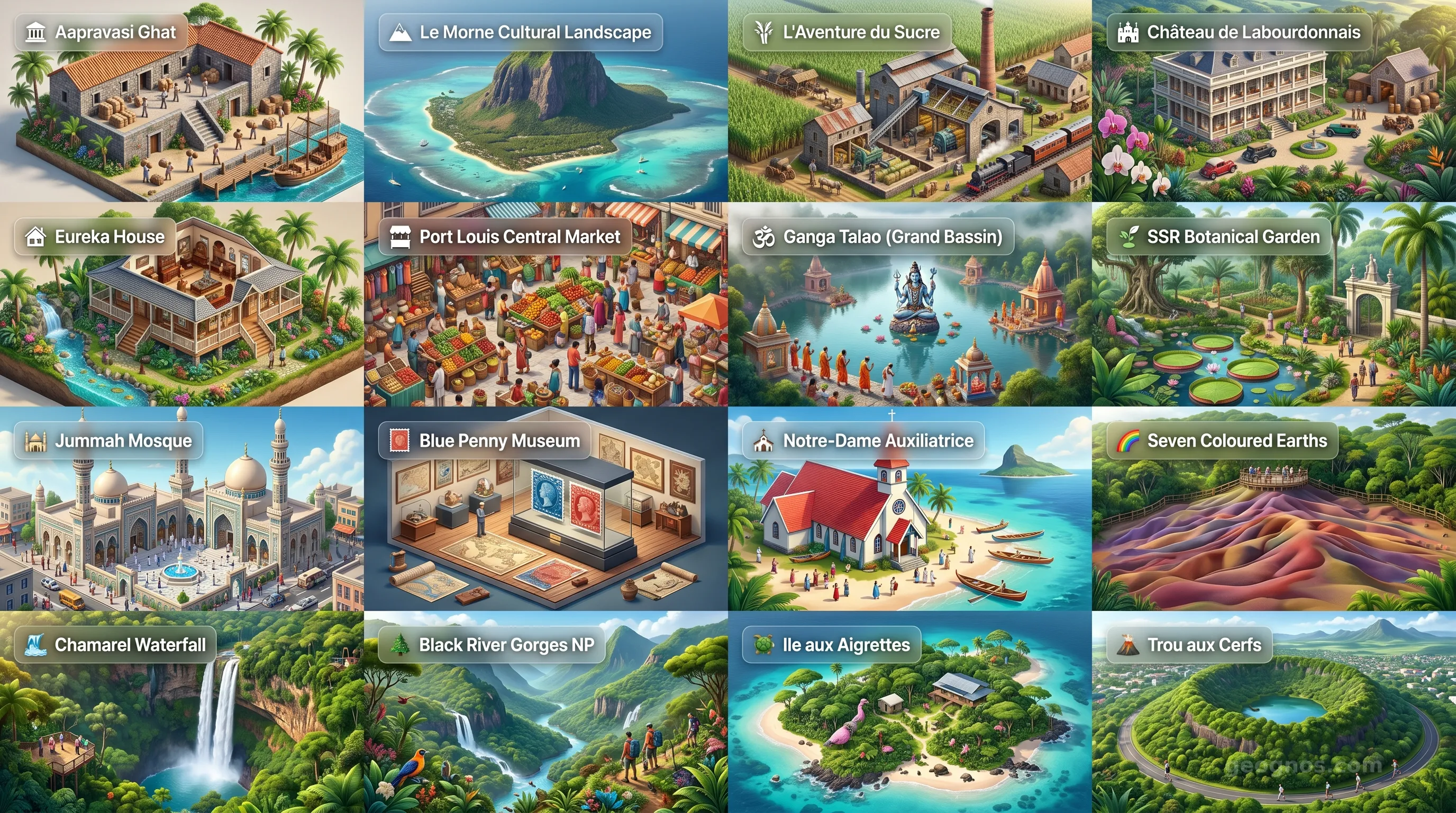
Aapravasi Ghat is of immense historical and cultural significance as the site where the British government initiated the 'Great Experiment' to replace slavery with indentured labor in 1834. Over half a million laborers arrived here from India, shaping the demographic and cultural fabric of modern Mauritius. For students of history and sociology, it offers profound insights into global diaspora and colonial labor systems. The best season to visit is between May and November when the weather in Port Louis is cooler. Tourist tip: Hire a local guide or download the audio guide to fully appreciate the harrowing and hopeful stories etched into the remaining 15% of the original structures.
Symbol of Freedom and Resistance
Le Morne Brabant, a rugged mountain jutting into the Indian Ocean, served as a fortress-like refuge for runaway slaves (maroons) throughout the 18th and early 19th centuries. Protected by isolated, wooded, and almost inaccessible cliffs, the escapees formed small settlements here. Today, it stands as a poignant global symbol of resistance to slavery. It is highly recommended for anthropologists, historians, and hikers. The best time to visit is during the cooler months from June to September. Tourist tip: Undertake the mountain hike early in the morning to avoid the intense midday sun and to secure a local guide, as the upper reaches of the trail require scrambling.
The Sweet History of Mauritius
Housed in a meticulously restored sugar factory, L'Aventure du Sucre is an interactive museum that chronicles the history of sugarcane production, which was the backbone of the Mauritian economy for centuries. The exhibits intricately weave the story of sugar with the island's colonial history, the slave trade, and indentured labor. It is a brilliant study in economic history and industrial archaeology. The museum is an excellent year-round destination. Tourist tip: Conclude your visit with a tasting session of unrefined sugars and locally produced rums at the museum boutique.
Grand 19th-Century Colonial Estate
Built in 1859, the Château de Labourdonnais is a beautifully restored colonial mansion that offers a glimpse into the opulent lifestyle of Mauritian plantation owners in the 19th century. The estate allows students of architecture and history to study Victorian and Neoclassical colonial design alongside the socio-economic dynamics of the plantation era. The grounds feature endemic trees and giant tortoises. It is a fantastic year-round destination. Tourist tip: Do not miss the rum tasting included in the ticket, and enjoy a meal at the estate's highly rated restaurant which infuses tropical flavors with French gastronomy.
Creole Mansion of 109 Doors
Located by the Moka River, Eureka House is one of the largest and most beautifully preserved Creole colonial houses on the island, built in 1830. Famous for having 109 doors and windows to keep the tropical heat at bay, it serves as a masterclass in climate-responsive historical architecture. The museum houses antique furniture, old maps, and historic photographs of Mauritian life. Best visited from May to November for pleasant weather. Tourist tip: After exploring the house, take the short but steep walk down to the Eureka Waterfalls located in the property's lush ravine.
The Vibrant Heartbeat of Port Louis
Operating since the Victorian era, the Central Market is the commercial and cultural epicenter of Port Louis. It is a melting pot of Mauritian society, offering a sensory overload of colorful vegetables, exotic spices, herbal medicines, and local street food like 'dholl puri'. Sociologists and culinary students will find the market a living library of Mauritius's multi-ethnic heritage (Indian, African, Chinese, and French influences). Visit year-round, but early mornings are best to see the market at its most authentic and to beat the heat. Tourist tip: Keep an eye on your belongings in the crowded aisles and haggle politely in the craft section.
Sacred Crater Lake of Shiva
Nestled in the isolated mountain area of the district of Savanne, Ganga Talao is a crater lake considered the most sacred Hindu place in Mauritius. Legend says it is connected to the sacred Ganges river in India. The site is flanked by monumental statues, including a 33-meter tall statue of Lord Shiva, making it a critical site for religious studies and cultural immersion. The best time to visit is in February or March during the Maha Shivaratri festival, when hundreds of thousands of pilgrims walk to the lake. Tourist tip: Dress modestly as this is an active place of worship, and beware of the cheeky wild macaques roaming the area.
Historic Pamplemousses Gardens
Originally a private garden for the French governor in 1735, this is the oldest botanical garden in the Southern Hemisphere. It is globally renowned for its giant Victoria amazonica water lilies and the rare Talipot palm, which blooms only once every 30 to 80 years before dying. Botanists and ecology students will revel in the vast collection of indigenous and exotic plants. Best visited between December and April to see the flora in full bloom. Tourist tip: Hire one of the official guides at the entrance; their botanical knowledge and historical anecdotes bring the garden to life.
Architectural Jewel of Islam in Mauritius
Dating back to the 1850s, the Jummah Mosque in Port Louis is a stunning blend of Moorish, Indian, and Creole architectural styles. Its intricate stucco work, imposing teak doors, and tranquil courtyard built around an ancient badamier (almond) tree make it a sanctuary of peace in the bustling capital. It provides deep insights into the history of Muslim traders and immigrants in Mauritius. Open year-round. Tourist tip: Visitors are welcome outside of prayer times; ensure you are dressed conservatively (shoulders and knees covered) and women should carry a scarf to cover their heads.
Home of the World's Rarest Stamps
Located at the Caudan Waterfront, this museum is dedicated to the history and art of Mauritius. Its centerpiece is the world-renowned 'Post Office' stamps of 1847—the Red Penny and the Blue Penny—which are among the rarest and most valuable stamps globally. The museum also contains beautiful antique maps, sculptures, and exhibits on the legend of Paul and Virginie. A must-visit for philatelists and history buffs. It is an excellent indoor activity year-round. Tourist tip: The original stamps are only illuminated for 10 minutes at a time to preserve them, so check the lighting schedule upon arrival.
The Iconic Red-Roofed Church
Situated at the northernmost tip of the island, this striking church with its vivid red roof juxtaposed against the turquoise ocean is one of the most photographed landmarks in Mauritius. Cap Malheureux (Cape of Bad Luck) is historically significant as the site where British forces landed in 1810 to successfully capture the island from the French. An excellent spot for photography and historical geography. Best visited on clear days year-round. Tourist tip: Attend the lively Sunday mass to experience local community spirit, and take a stroll on the beach for views of the Coin de Mire islet.
A Rainbow of Volcanic Sands
This unique geological phenomenon consists of sand dunes comprising seven distinct colors (red, brown, violet, green, blue, purple, and yellow). The colors are a result of the decomposition of volcanic rock into clay, with different elements cooling at different temperatures. It is a fascinating site for geology students and a mesmerizing visual for tourists. The colors are most vibrant on sunny, clear days, making May to November ideal. Tourist tip: Combine this trip with the nearby Chamarel Waterfall and the curious giant tortoises living in an enclosure right next to the dunes.
The Tallest Waterfall in Mauritius
Plunging over 100 meters down a striking amphitheater of basalt cliffs, the Chamarel Waterfall is the highest single-drop waterfall in Mauritius. The exposed cliff face reveals millions of years of volcanic activity, making it a spectacular outdoor classroom for earth sciences. While it is accessible year-round, the falls are most powerful and dramatic between December and April due to the summer rains. Tourist tip: There are two viewpoints; the upper one is easily accessible by car, but the lower one requires a short hike and offers a far more immersive experience.
Sanctuary of Endemic Biodiversity
Spanning over 6,700 hectares, this national park protects the remnants of Mauritius's indigenous forests. It is a critical study area for conservationists and biologists, offering a chance to see highly endangered endemic species like the Pink Pigeon, Echo Parakeet, and Mauritian Flying Fox. With over 50 km of trails, it is the premier hiking destination on the island. The best season for hiking is the cooler, drier period from June to October. Tourist tip: Start hikes early, bring plenty of water, and map out your trail beforehand as mobile reception can be spotty.
Coral Island Eco-Reserve
Unlike the volcanic mainland, Ile aux Aigrettes is a 27-hectare island formed of coralline limestone. Managed by the Mauritian Wildlife Foundation, it has been restored to resemble the island's coastal ecosystem prior to human arrival. It is an exceptional site to study ecological restoration, featuring free-roaming Aldabra giant tortoises, pink pigeons, and the rare Telfair's skink. Accessible year-round. Tourist tip: Access is strictly via guided eco-tours booked in advance from Pointe Jérôme; fees directly support local conservation efforts.
Dormant Volcano Crater in Curepipe
Trou aux Cerfs is a well-defined dormant volcanic crater located in the central plateau town of Curepipe. Measuring 300 meters in diameter and 85 meters deep, it features a small lake at the bottom and lush pine trees along the rim. It is a brilliant example of a monogenetic volcano for geology enthusiasts. The rim provides a 360-degree panoramic view of the island. Best visited year-round, particularly at sunrise or sunset. Tourist tip: It's a popular spot for locals taking their morning or evening walks, making it a great place to people-watch while enjoying the view.