Laos
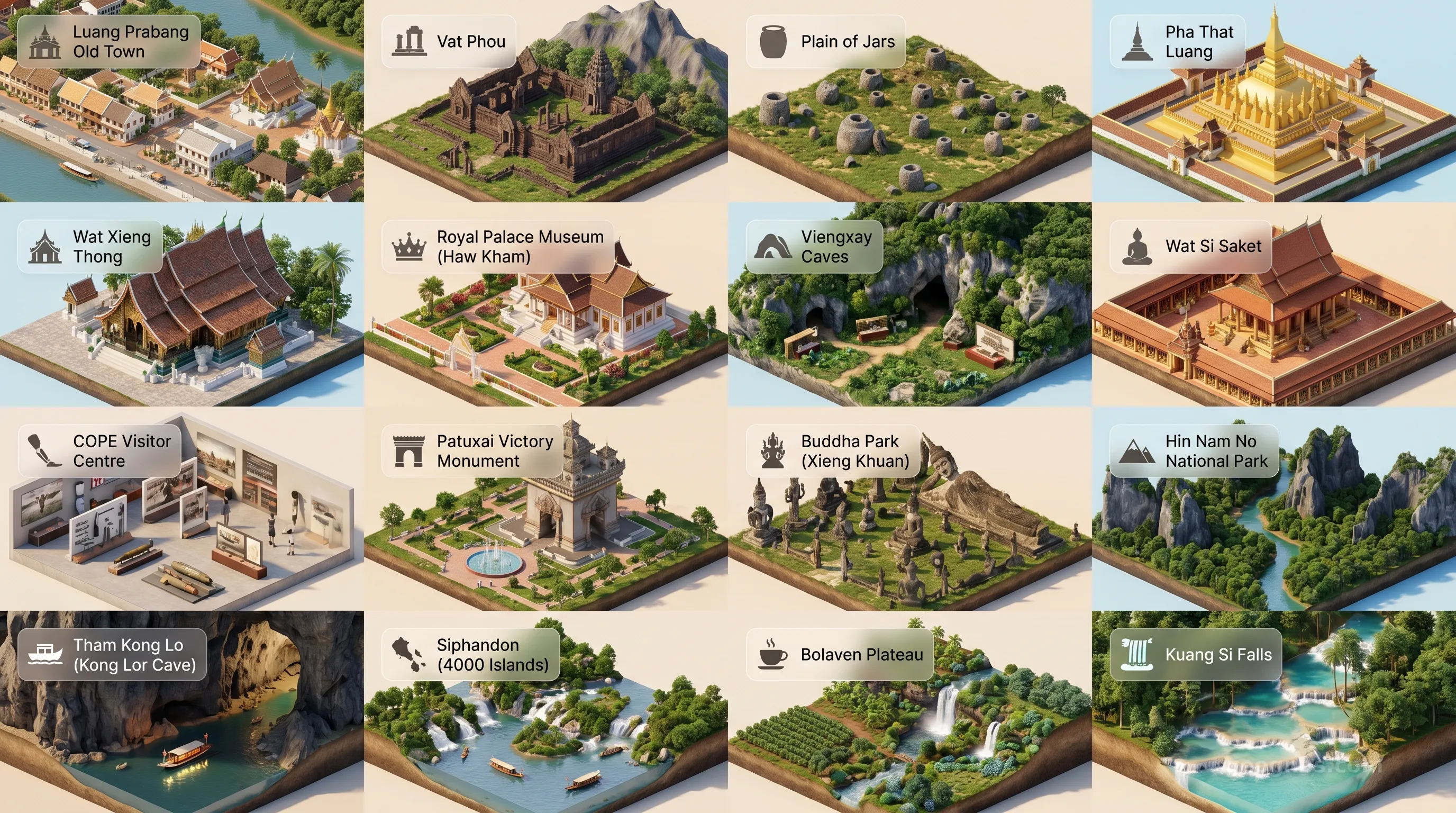
Top Sights & Landmarks
Ancient Royal Capital
An outstanding example of the fusion of traditional Lao architecture with European colonial structures. Ideal for architectural study, it served as the capital of the Lane Xang kingdom for centuries. The best season to visit is November to February. Tourist tip: Wake up at dawn to respectfully observe the traditional Alms Giving Ceremony (Tak Bat).
Ancient Khmer Mountain Temple
This ruined Khmer Hindu temple complex dates from the 5th to 13th centuries, predating Angkor Wat. It offers incredible insights into ancient city planning aligned with nature. The cooler months of November to February are ideal, particularly January/February for the Vat Phou Festival. Tourist tip: Wear comfortable walking shoes, as the stone ascent to the upper sanctuary is steep.
Megalithic Archaeological Landscape
A megalithic archaeological landscape scattered with thousands of massive stone jars dating back to 500 BC. It presents a fascinating study of Iron Age funerary practices. Visit between November and March for dry, cool weather. Tourist tip: Stay strictly within marked paths to ensure safety, as the region still contains unexploded ordnance (UXO).
The Great Sacred Stupa
A towering gold-covered stupa in Vientiane, considered the most important national monument and a pinnacle of Lao Buddhist architecture. Historically, it is believed to enshrine a breastbone relic of the Buddha. Visit in November for the vibrant That Luang Festival. Tourist tip: Dress modestly, covering shoulders and knees before entering the compound.
Temple of the Golden City
Representing the classic Luang Prabang architectural style with sweeping tiered roofs, this is one of Laos' most beautiful monasteries. Historically, it was the site of royal coronations. Visit between November and February. Tourist tip: Do not miss the spectacular 'Tree of Life' glass mosaic adorning the exterior rear wall of the sim.
Former Royal Residence
Constructed in 1904 for King Sisavang Vong during the French colonial era, this museum offers a deep dive into Laos' recent royal history and classical arts. Visit during the dry season (November-February). Tourist tip: Photography is strictly forbidden inside, and bags must be stored in provided lockers; dress conservatively.
Hidden City of the Pathet Lao
An extensive subterranean network that served as the hidden city and headquarters for the Pathet Lao leadership during the Secret War. It is essential for understanding modern Lao political history. October to March is the best time to explore. Tourist tip: Rent the comprehensive audio guide, which features harrowing accounts from survivors.
Vientiane's Oldest Temple
The oldest surviving temple in Vientiane, historically significant for having survived the Siamese sack of 1828. It is famous for its early Bangkok-style architecture. Visit during the dry season (November to April). Tourist tip: Walk along the cloister walls to marvel at over 6,000 tiny terracotta and wooden Buddha images nestled in small niches.
Secret War Legacy Museum
A crucial museum detailing the tragic legacy of the Secret War, focusing on the impact of cluster munitions and the rehabilitation of survivors. It provides profound historical context for modern-day Laos. Accessible year-round. Tourist tip: Watch the poignant documentary screenings and purchase a souvenir to support local prosthetic programs.
Arch of Triumph of Vientiane
A massive triumphal arch in Vientiane blending French Beaux-Arts architecture with intricate traditional Lao mythical motifs. It was built to honor those who fought for independence. Best visited in the late afternoon. Tourist tip: Pay a small fee to climb the stairs to the top for a rewarding panoramic view of the capital city.
Mystical Sculpture Park
A bizarre and fascinating riverside park featuring over 200 massive religious statues, demonstrating a unique syncretism of Hindu and Buddhist iconography created by mystic monk Luang Pu Bunleua Sulilat in 1958. Visit between November and March. Tourist tip: Enter the giant pumpkin structure and climb up three internal levels representing Hell, Earth, and Heaven.
Vast Karst Wilderness
An extraordinary karst geomorphological landscape contiguous with Vietnam's Phong Nha-Ke Bang. Historically, it was traversed by the Ho Chi Minh Trail and holds deep ecological value. The dry season (November-April) is best for accessibility. Tourist tip: Hire a local guide to navigate a boat safely through the massive, spectacular Xe Bang Fai river cave.
Epic Subterranean River Cave
A jaw-dropping 7-kilometer limestone cave through which the Hinboun River flows. It holds cultural significance for locals and provides a study in massive subterranean erosion. Best visited from November to April to avoid monsoon flooding. Tourist tip: Bring a dry bag, a headlamp, and water shoes for the motorized longtail boat ride in the pitch dark.
Mekong River Archipelago
A stunning riverine archipelago where the Mekong River broadens. It contains the historical remnants of the only French colonial railway in Laos, built to bypass impassable waterfalls. Visit from November to January. Tourist tip: Rent a bicycle on Don Khon island and take a boat trip to spot the critically endangered Irrawaddy dolphins.
Coffee Capital and Waterfalls
An elevated region with fertile volcanic soils known for striking waterfalls and its history as the center of French colonial coffee plantations. It is rich in ethnic minority culture. October to January is the prime coffee harvest season. Tourist tip: Rent a motorbike to ride the famous 'Pakse Loop' and be sure to try the locally grown Arabica coffee.
Turquoise Cascades
A spectacular three-tiered cascading waterfall formed over travertine limestone. Steeped in local myths, the falls are a major draw for nature lovers and geographers alike. December to April offers the best vivid turquoise waters. Tourist tip: Stop by the Free the Bears rescue centre located near the entrance to see rehabilitated sun and moon bears.