Gambia, The
Top Sights & Landmarks
Historic Slave Trade Fortress
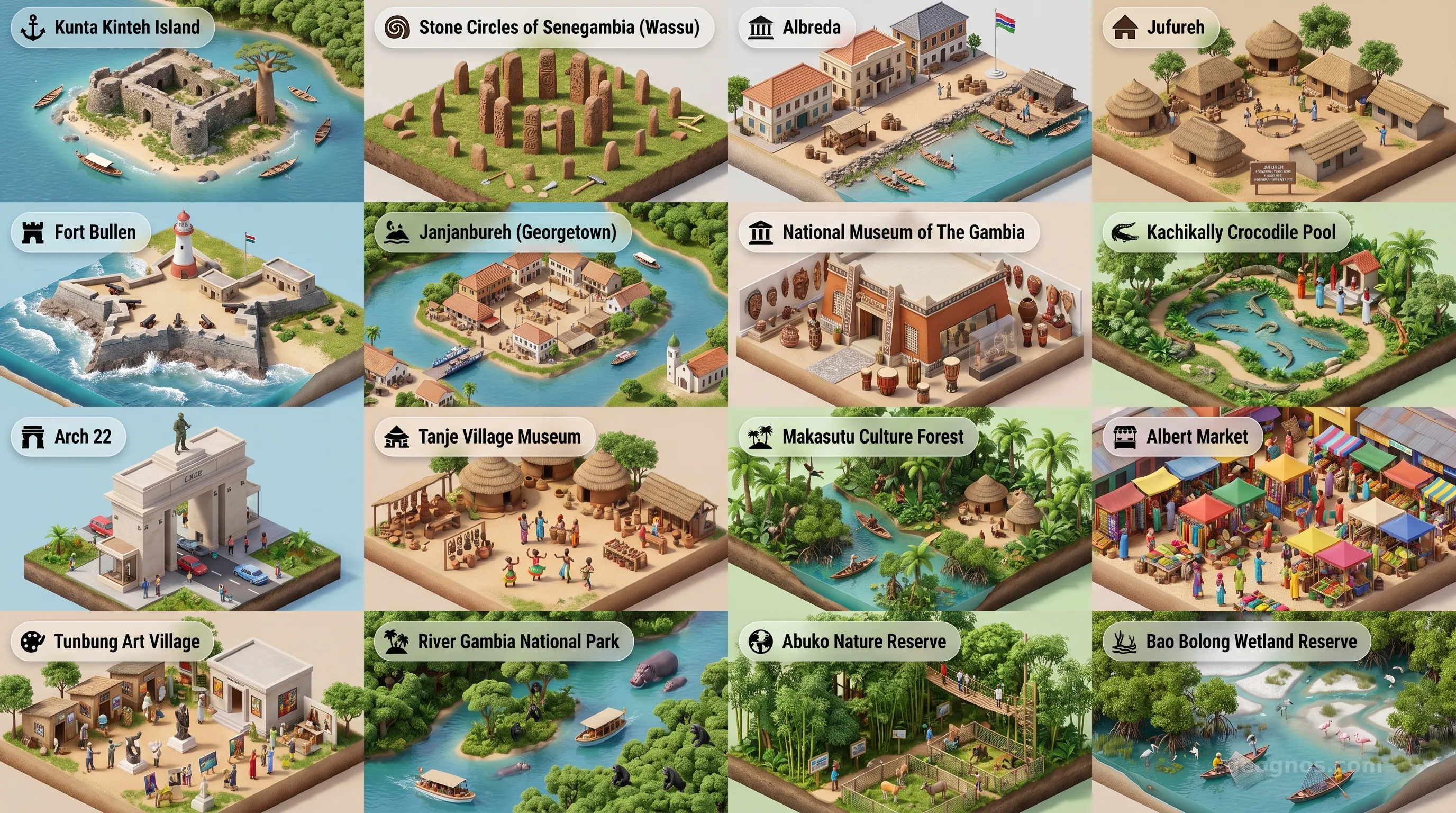
Formerly known as James Island, this UNESCO World Heritage site sits in the middle of the Gambia River. It was a crucial, heavily fortified center for the transatlantic slave trade and provides profound educational value for students of global history. The remaining ruins of the British fort serve as a poignant memorial to the millions of enslaved Africans who passed through. The best time to visit is during the dry season (November to April) when river navigation is calmest. Tourist tip: Combine your visit with nearby Jufureh and Albreda, and hire a local guide for deeper context on the area's complex history.
Ancient Megalithic Wonders
The Wassu Stone Circles are part of the largest concentration of megalithic complexes in the world, dating back to between the 3rd century BC and 16th century AD. As a UNESCO World Heritage site, it offers an incredible field study opportunity for archaeologists and historians analyzing ancient burial practices and early West African societies. The dry season (November to May) provides the best accessibility and comfortable walking conditions. Tourist tip: Visit the small onsite museum first to understand the geological and spiritual significance of the laterite stones before exploring the main circle.
Former French Trading Post
Albreda is a historic settlement on the north bank of the Gambia River, established by the French in the late 17th century. Together with Kunta Kinteh Island, it played a significant role in the colonial power struggles and the transatlantic slave trade. Today, studying its historic facades and the 'Freedom Flagpole' provides visitors with powerful insights into the era of abolition. The optimal time to visit is from November to April. Tourist tip: Look out for the ruins of the CFAO building, a remnant of historic French mercantile architecture, and be respectful of the local community that still resides amid the ruins.
Ancestral Home of Kunta Kinte
Jufureh gained international fame through Alex Haley's groundbreaking novel 'Roots', identifying it as the ancestral home of Kunta Kinte. Culturally and historically, it is a vital pilgrimage site for the African diaspora and a compelling subject for cultural anthropology students. The village offers a deep dive into Mandinka traditions. The best season for a visit is during the dry season. Tourist tip: Engage respectfully with the Kinte family descendants who still live here, and take time to visit the local slavery exhibition to gain a richer narrative.
Anti-Slavery Fortification
Located at Barra Point, Fort Bullen was built by the British in 1826 with a unique purpose: to thwart the ongoing illegal slave trade by rival European nations along the Gambia River. It stands as a vital monument for students studying the abolitionist movement and 19th-century military architecture. The site offers sweeping views of the river mouth and the capital, Banjul. Visit between November and May to avoid heavy rains. Tourist tip: Catch a local ferry from Banjul to Barra for an authentic local travel experience, but beware of the crowded terminals during rush hours.
Colonial Island Settlement
Formerly known as Georgetown, Janjanbureh is an island town deep inland on the Gambia River. Established in 1832 as a settlement for freed slaves, it is rich in colonial history and fading 19th-century architecture. Students of colonial history will find the remnants of old trading houses and the Commissioner's quarters fascinating. The town is best explored in the dry season when the unpaved roads are easily navigable. Tourist tip: Take a boat tour around the island at dusk to spot hippos and colorful birdlife while soaking in the historic atmosphere.
Repository of Gambian Heritage
Situated in the capital city of Banjul, the National Museum is an essential starting point for any educational tour. It houses an extensive collection of ethnographic, historical, and archaeological artifacts. Students and tourists alike can explore exhibits detailing the nation's journey from prehistoric times, through the colonial era, to independence. The museum is open year-round, making it a great rainy-season activity. Tourist tip: Don't miss the fascinating collection of traditional musical instruments, and pair your visit with a walking tour of Banjul's historic center.
Sacred Healing Waters
Located in Bakau, the Kachikally Crocodile Pool is a culturally significant site deeply rooted in local animist beliefs. The pool is home to dozens of docile crocodiles and is considered a sacred site for fertility and healing by the local population. It offers a unique case study in the intersection of traditional spiritual practices and modern tourism. Visit year-round, but early mornings are best for photography. Tourist tip: It is customary and safe (under the guidance of the caretakers) to stroke a crocodile; also, take time to visit the small adjacent ethnographic museum.
Monument of Independence
Towering 35 meters above the gateway to Banjul, Arch 22 was built to commemorate the military coup of July 22, 1994. Although its political origins are complex, it stands as an architectural icon of modern Gambia. The upper galleries offer a panoramic view of the city, the river, and the surrounding mangroves, making it a favorite for architectural studies and urban photography. Best visited in the clear dry season. Tourist tip: Climb to the top for the best sweeping views of the capital, and check out the small textile and crafts exhibition located inside the arch's pillars.
Living Cultural Village
The Tanje Village Museum is a unique, open-air cultural heritage site designed to preserve and showcase traditional Gambian lifestyles. It features authentically reconstructed round huts and displays indigenous crafts, botany, and artisan techniques. It is highly educational for sociology and anthropology students interested in pre-colonial West African domestic life. The site is beautiful year-round, though dry months are better for outdoor activities. Tourist tip: Try to visit when traditional music and craft-making demonstrations are taking place, and explore the nearby nature trail.
Eco-Tourism Haven
Makasutu is an award-winning eco-tourism reserve encompassing diverse ecosystems including mangroves, savannahs, and dense forests. Founded to protect the environment while promoting local culture, it offers students of environmental science an excellent model of sustainable tourism. Visitors can learn about medicinal plants, local folklore, and wildlife conservation. The dry season is ideal for navigating the forest trails. Tourist tip: Take a traditional dugout canoe (pirogue) ride through the mangroves for a serene wildlife viewing experience, and watch for the resident troops of baboons.
Bustling Urban Bazaar
Located in the heart of Banjul, the Albert Market is the commercial lifeblood of the capital. Operating since the mid-19th century, it is a chaotic, vibrant maze of stalls selling everything from fresh produce and fish to intricate wood carvings and bright West African textiles. For students of economics or cultural studies, it is a masterclass in the informal economy. It is lively year-round. Tourist tip: Prepare to haggle—bargaining is expected here. Keep an eye on your belongings, and venture into the craft section for authentic souvenirs.
Contemporary Art Retreat
Situated near Tujereng, the Tunbung Art Village is a creative sanctuary founded by renowned Gambian artist Etu Ndow. It serves as a living gallery and workspace for contemporary West African artists. Art students will find profound inspiration here, as the village utilizes recycled materials and traditional techniques to create striking modern art. Open year-round, but calling ahead is recommended. Tourist tip: Participate in an art workshop or a gallery tour led by resident artists, and enjoy the tranquil, heavily wooded surroundings which offer a stark contrast to busy tourist areas.
Baboon Island Chimpanzee Sanctuary
Often referred to as Baboon Island, this highly protected national park consists of five islands on the Gambia River. It is famous as the site of the Chimpanzee Rehabilitation Project, initiated in 1979. It is of immense value to biology and primatology students studying wildlife reintroduction and habitat preservation. The dry season (November to May) provides the clearest weather for boat tours. Tourist tip: Visitors cannot set foot on the islands to protect the primates, but eco-boat tours offer incredible, respectful viewing opportunities of chimpanzees, hippos, and crocodiles.
First Wildlife Reserve
Established in 1968, Abuko is The Gambia's first wildlife reserve. Though relatively small, it boasts incredible biodiversity, including rare monkeys, crocodiles, and over 270 bird species. It serves as a vital outdoor classroom for ecology and conservation students. The dense gallery forest provides a stark contrast to the surrounding savannah. Early morning visits during the dry season yield the best wildlife sightings. Tourist tip: Hire an official bird guide at the entrance to help spot the elusive Green Turaco, and spend time observing the primate orphanage within the reserve.
Ramsar Protected Wetlands
Bao Bolong is a vast wetland reserve on the north bank of the Gambia River, designated as a Ramsar Wetland of International Importance. It features complex mangrove ecosystems, salt marshes, and savannahs. For environmental science students, it is an unparalleled location to study estuarine ecology and migratory bird patterns. The best time to visit is from December to March when migratory birds are present. Tourist tip: Access is primarily by boat from the river; arrange a tour from Kiang West or Tendaba Camp for a serene bird-watching excursion.