Timor-Leste
Top Sights & Landmarks
Chronicle of a Nation's Struggle
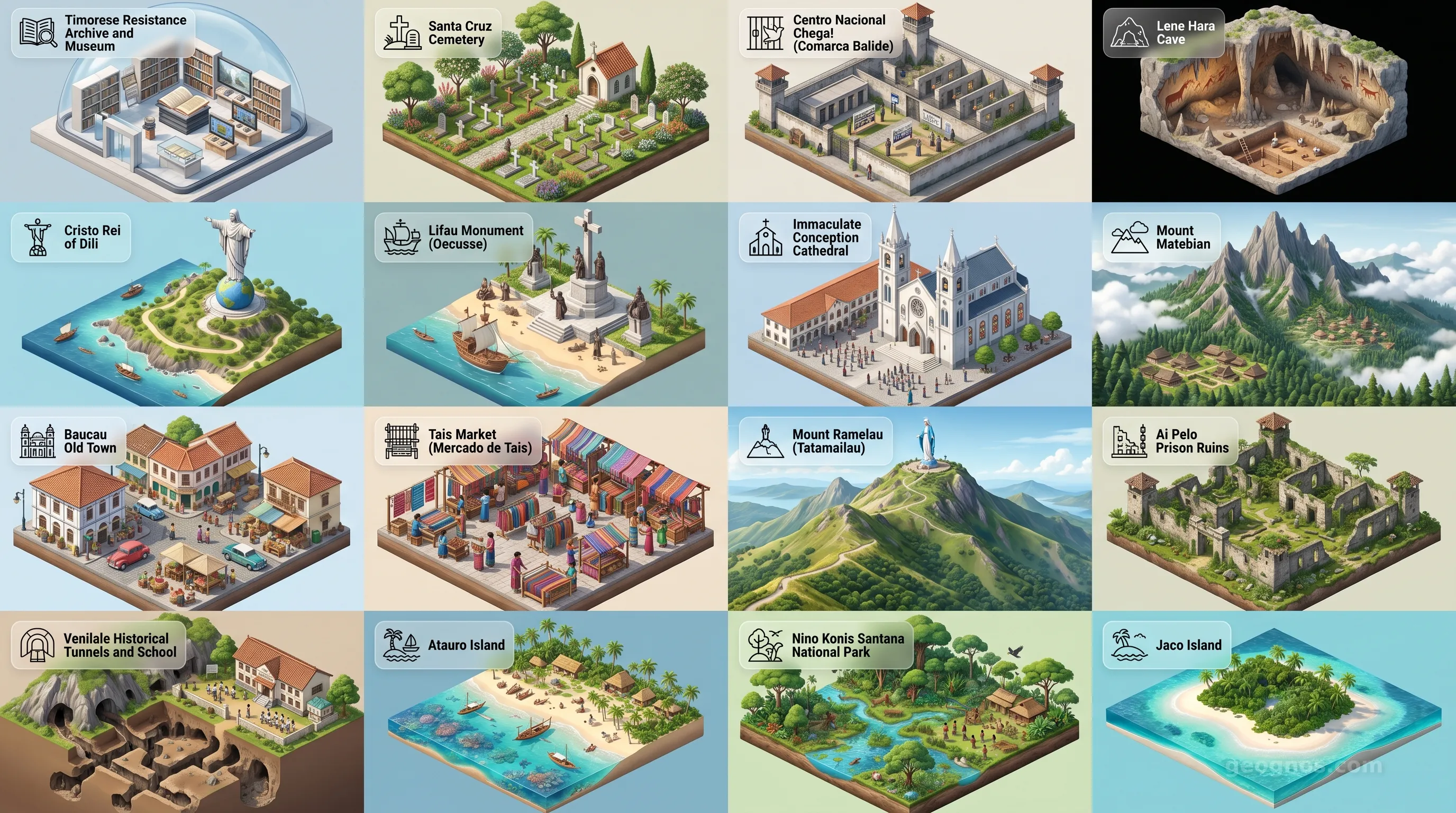
This critically important museum serves as the definitive heart of Timor-Leste's modern identity. It exhaustively documents the 24-year struggle for independence against Indonesian occupation, offering an emotionally resonant and highly educational experience for students of geopolitics and history. Visitors can study original archives, clandestine weapons, and multimedia displays detailing the resilience of the Timorese people. The best time to visit is during the dry season (May to November) when navigating Dili is easiest. Tourist tip: Allocate at least two to three hours to fully absorb the dense, bilingual exhibits; taking a guided tour can provide deeper context.
Ground Zero of Timorese Independence
Santa Cruz Cemetery is the solemn site of the November 12, 1991 massacre, where over 250 pro-independence demonstrators were killed by Indonesian troops. Because the tragedy was captured on film and smuggled out to the world, it marked a major turning point in international awareness of Timor-Leste's plight. It is an essential study site for human rights and modern history. The cemetery can be visited year-round. Tourist tip: Maintain a highly respectful demeanor. Visiting in the early morning offers a quieter, cooler atmosphere for reflection, and November 12th features poignant memorial ceremonies.
Monument to Truth and Reconciliation
Housed in the former Portuguese-built Comarca Balide Prison, this institution is now a powerful memorial and exhibition center dedicated to human rights, truth, and reconciliation following the Indonesian occupation. The preserved solitary confinement cells and prisoner graffiti offer a harrowing but vital educational experience on the consequences of conflict and the power of restorative justice. Best visited year-round. Tourist tip: The exhibition is deeply moving but can be distressing; it is highly recommended to speak with the staff, many of whom are survivors, to gain profound personal insights.
Ancient Canvas of Early Humanity
Lene Hara Cave is a remarkable archaeological site at the eastern tip of the country, containing rock art and artifacts dating back over 30,000 years. It provides unparalleled evidence of human migration through Wallacea to Australia. For anthropology and archaeology students, it is an absolute must-visit to study ancient maritime populations. The dry season (August to October) is the best time to visit due to rough access roads. Tourist tip: Accessing the cave requires an off-road vehicle and a local guide; combine this trip with a visit to the nearby Nino Konis Santana National Park.
Iconic Copper Christ Overlooking Dili
Standing 27 meters tall atop the Fatucama peninsula, this towering statue of Jesus Christ was controversially gifted by the Indonesian government in 1996 but has since been reclaimed as a beloved symbol of an independent, deeply Catholic Timor-Leste. Climbing the 500+ steps offers visitors a chance to study the intersection of religion, politics, and culture, while rewarding them with sweeping views of the coastline. The best time to hike up is at sunrise or sunset to avoid the midday heat. Tourist tip: Bring plenty of water and stay to enjoy the pristine, secluded beaches located just behind the statue.
Birthplace of Portuguese Timor
Located in the Oecusse exclave, the Lifau Monument marks the exact spot where Portuguese Dominican friars first landed in 1515, initiating over four centuries of colonial influence. The striking bronze replica of a Portuguese caravel provides a tangible starting point for studying the region's complex colonial history and the spread of Catholicism in Asia. The dry season is ideal for travel to this remote exclave. Tourist tip: Reaching Oecusse requires a ferry ride from Dili or crossing the Indonesian border, so secure multiple-entry visas if traveling overland.
Spiritual Center of Southeast Asia's Catholic Nation
As the largest cathedral in Southeast Asia, Dili's Immaculate Conception Cathedral is a massive, modern architectural landmark that underscores the deep-seated Catholic faith of the Timorese people. Inaugurated by Pope John Paul II in 1989, it holds immense historical significance regarding the role the Church played in protecting the local populace during the occupation. It is an excellent site for sociologists and religious scholars. Visit anytime, though Sunday mass is incredibly vibrant. Tourist tip: Dress modestly and check mass schedules if you wish to hear hymns sung in the local Tetum language.
The Mountain of Souls
Known as the 'Mountain of Souls' in local animist traditions, Mount Matebian is Timor-Leste's second-highest peak. It holds profound historical significance as a major stronghold for FALINTIL resistance fighters, who hid in its intricate cave systems while enduring intense aerial bombardments. It is an exceptional destination for students of military history and those interested in indigenous animist beliefs. Hiking is best done in the dry season (June to September). Tourist tip: The climb is strenuous and takes several hours; hiring a local guide from the nearby villages is essential for both navigation and cultural respect.
A Window into Colonial Grandeur
Baucau, the country's second-largest city, features a meticulously preserved Old Town that cascades down a steep hillside. Its pastel-colored Portuguese colonial architecture, notably the stunning Pousada de Baucau and the old municipal market ruins, serves as a living museum of early 20th-century colonial design. Architecture and history students will find the blend of European and tropical styles fascinating. Best visited between May and October. Tourist tip: Enjoy a meal at the historic Pousada, and take a short walk down to the pristine, white-sand beaches at Osolata.
The Heartbeat of Timorese Weaving
The Tais Market in Dili is the premier destination to witness the creation and commerce of 'Tais'—the traditional handwoven textiles of Timor-Leste. These colorful fabrics are deeply embedded in the nation's cultural rituals, from marriages to funerals, making this market an invaluable spot for cultural anthropology and art students. Visitors can interact directly with the weavers year-round. Tourist tip: Bargaining is acceptable but keep it respectful; buying directly from the women supports local artisan communities and preserves an endangered craft.
The Summit of Timor-Leste
Standing at 2,963 meters, Mount Ramelau is the highest peak in Timor-Leste and a site of profound spiritual significance. Crowned by a pristine white statue of the Virgin Mary, it is the focal point for an annual Catholic pilgrimage. The hike offers incredible ecological diversity and unparalleled panoramic views that stretch across the island to the sea on both sides. The dry season (May to October) is the only safe time to climb. Tourist tip: Start the trek from the village of Hato-Builico around 3:00 AM to catch the spectacular sunrise; warm clothing is vital as temperatures near the summit drop drastically.
Shadows of Colonial Punishment
Located dramatically along the northern coast west of Dili, the ruins of the 19th-century Ai Pelo Prison serve as a stark reminder of the Portuguese penal system. Originally built to house political prisoners and ordinary criminals, the crumbling neoclassical arches against the backdrop of the turquoise sea make for compelling historical study and photography. It can be visited year-round. Tourist tip: There are limited facilities on-site, so bring your own water and snacks; it makes for an excellent stop on a coastal road trip toward Liquiçá.
A Convergence of Empires
The highland town of Venilale offers a unique juxtaposition of history. It features the beautifully restored Escola do Reino de Venilale, a striking example of Portuguese colonial architecture, alongside a network of nearby subterranean tunnels built by forced local labor during the World War II Japanese occupation. It is a brilliant micro-study of 20th-century imperial conflicts. The climate here is cooler and pleasant year-round. Tourist tip: Hire a local youth guide to navigate the Japanese tunnels safely; bring a reliable flashlight as the tunnels are completely dark.
The World's Most Biodiverse Reefs
Just a short boat ride from Dili, Atauro Island has been scientifically recognized as possessing the most biodiverse coral reefs on Earth. Culturally, it is famous for the 'Wawata Topu', a unique community of female spear-fishers. For students of marine biology and sustainable eco-tourism, Atauro is an unparalleled living laboratory. The dry season (May to November) offers the clearest water visibility. Tourist tip: Book accommodations in advance at local eco-lodges, and do not miss the Saturday local market in Beloi to experience the island's vibrant local life.
Timor's First National Park
Encompassing the easternmost part of the country, this vast national park protects vital terrestrial and marine ecosystems. Named after a legendary resistance hero, the park blends wildlife conservation with profound cultural heritage, housing sacred animist sites and endangered bird species like the Yellow-crested Cockatoo. It is an extraordinary site for environmental sciences and ornithology. Visit during the dry season to ensure roads are passable. Tourist tip: Infrastructure is highly rudimentary; self-sufficiency (food, camping gear, 4WD vehicle) and coordination with local park rangers in Tutuala are necessary.
The Sacred Uninhabited Paradise
Jaco Island is a tiny, pristine coral island situated at the extreme eastern tip of Timor-Leste. Considered highly sacred by the local Fataluku people, permanent human habitation is strictly forbidden. The result is an untouched natural wonder with powder-white sand and crystalline waters teeming with sea turtles and reef sharks. It is a stellar example of indigenous conservation practices. The best time to visit is May to October. Tourist tip: You must hire a local fisherman from Valu Beach to ferry you across the narrow strait; remember to bring all your trash back with you out of respect for the sacred land.