Palau
Top Sights & Landmarks
Iconic Limestone Archipelago
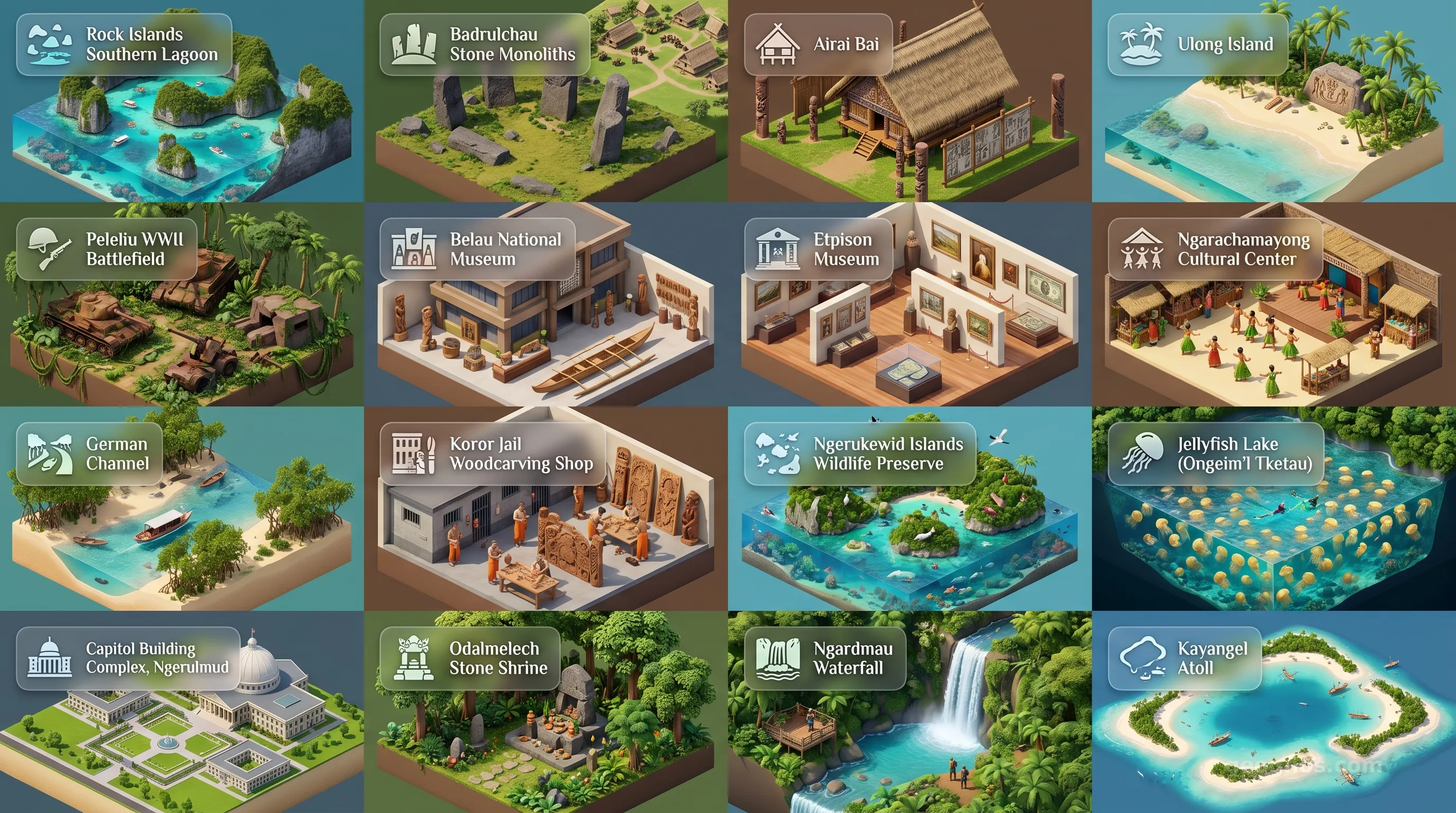
The crown jewel of Palau, this labyrinth of over 300 mushroom-shaped limestone islands is a must-visit for its breathtaking beauty and ecological importance. Historically and culturally significant, the islands harbor ancient village remains, burial caves, and rock art dating back thousands of years, offering anthropologists a window into early Micronesian settlement. For students of marine biology, the lagoon boasts some of the world's most diverse coral reefs. The best season to visit is during the dry months from November to April when the water is exceptionally clear. Tourist tip: Book a multi-day guided kayak tour to explore hidden marine lakes and secluded beaches respectfully.
The Easter Island of Micronesia
Located in the northern state of Ngarchelong, Badrulchau is Palau's most significant and mysterious archaeological site. It features 52 massive basalt megaliths, some with carved faces, which legend says were placed by gods to support a massive traditional meeting house (Bai). Studying this site provides deep insights into ancient Palauan chiefdoms and prehistoric engineering, as the stones weigh several tons and were transported from distant quarries. The dry season (December to March) is ideal for visiting, as the grassy hillside can get slippery in the rain. Tourist tip: Hire a local guide to hear the fascinating oral legends surrounding the site's creation.
Oldest Surviving Traditional Meeting House
With over 200 years of history, the Airai Bai is the oldest existing traditional men's meeting house in Palau. Constructed entirely without nails using local woods and thatched roofing, its vibrant painted facades depict Palauan legends, social hierarchies, and historical events. It is an invaluable site for architecture and anthropology students studying indigenous Pacific construction techniques and societal structures. The site is accessible year-round. Tourist tip: Visitors must observe strict cultural protocols; ensure your shoulders and knees are covered, and never walk directly across the stone pathways reserved for chiefs.
Ancient Rock Art and First Contact Site
Ulong Island is steeply steeped in history, best known as the site where the English Captain Henry Wilson shipwrecked in 1783, initiating the first sustained contact between Palauans and Europeans. High on the cliffs, visitors can view ancient red ochre rock paintings that date back thousands of years. It is a premier location for studying early Pacific navigation and colonial-era contact history. The best time to visit is from November to April to ensure calm waters for the boat ride and subsequent hike. Tourist tip: After hiking to see the rock art, relax on Ulong Beach, widely considered one of Palau's most picturesque white-sand beaches.
Historic WWII Pacific Theater Site
The island of Peleliu was the site of one of the bloodiest and most drawn-out battles of the Pacific Theater in World War II. Today, the jungle is still strewn with rusting tanks, zero fighter planes, pillboxes, and artillery shells. It is an incredibly poignant site for historians and students of modern warfare, showcasing the harsh realities of the Pacific conflict. The Peleliu WWII Memorial Museum offers excellent context. Visiting is best during the dry season (December to April) to navigate the jungle trails comfortably. Tourist tip: Do not wander off the marked paths, as unexploded ordnance still exists in the deep jungle.
Oldest Museum in Micronesia
Established in 1955, the Belau National Museum in Koror is a vibrant repository of Palauan history, art, and culture. Its exhibits range from prehistoric artifacts and traditional life to the eras of Spanish, German, Japanese, and American administration. It is an essential starting point for students and tourists seeking to understand Palau's complex colonial history and enduring indigenous identity. The museum is a great indoor activity year-round, particularly during the rainy season (July to October). Tourist tip: Don't miss the traditional Bai (meeting house) reconstructed on the museum grounds, and visit the gift shop for authentic local crafts.
Deep Dive into Palauan Heritage
A private museum donated by the late President Ngiratkel Etpison, this visually stunning facility houses an extensive collection of Palauan and Micronesian artifacts, including rare traditional money (udoud), navigation charts, and antique maps. It serves as an excellent educational hub for those studying the intricacies of Palauan socio-economic systems and matriarchal lineage. It is open year-round. Tourist tip: The top floor functions as an art gallery and souvenir shop where you can purchase high-quality storyboards and jewelry, making it a perfect final stop before leaving Koror.
The Heart of Living Palauan Culture
Designed to resemble a traditional Bai, this modern cultural center was established by the women of Palau to preserve and promote local heritage. It hosts cultural exhibitions, traditional dance performances, and weaving workshops. For anthropology students, it offers a living, breathing look at how Palauans are actively maintaining their traditions in a modernizing world. It is highly accessible year-round. Tourist tip: Check the local schedule in advance; visiting during a scheduled cultural performance or traditional weaving demonstration offers the most enriching experience.
Historic Waterway and Manta Ray Hub
Excavated in the early 1900s during the German colonial period to transport phosphate mined from Angaur, this artificial channel is a major historical and ecological landmark. Today, it is world-renowned for marine biology studies and diving, as the nutrient-rich currents attract giant manta rays and reef sharks. It demonstrates the intersection of colonial industrial history and modern ecological conservation. Best visited from January to April for optimal manta ray sightings. Tourist tip: You don't need to be a scuba diver to enjoy this; snorkelers can often see mantas feeding at the surface near the mouth of the channel.
Unique Rehabilitation Art Program
An unusual but highly significant cultural stop, the Koror Jail houses a renowned woodcarving program where inmates craft intricate 'storyboards'—wooden carvings depicting traditional Palauan myths and legends. Historically, these carvings decorated the beams of Bais, but the practice was adapted into portable art by Japanese folklorist Hisakatsu Hijikata in the 1930s. Studying this craft offers insight into cultural adaptation and penal rehabilitation. Open year-round. Tourist tip: Buying a storyboard here directly supports the rehabilitation program; remember to ask for a printed translation of the legend depicted on your board.
The Pristine Seventy Islands
Also known as the Seventy Islands, this preserve was established in 1956 and is completely off-limits to humans to protect nesting sea turtles, seabirds, and fragile coral ecosystems. It is a vital case study in extreme environmental conservation and untouched biodiversity. While you cannot physically step foot on or boat through the islands, they are historically significant as Palau's oldest protected area. The dry season (November to May) provides the clearest skies for viewing. Tourist tip: Since entry is forbidden, the only way to view this spectacular natural maze is by booking a scenic flight from Koror.
Lake of the Golden Medusas
Isolated from the ocean for thousands of years, this marine lake is filled with millions of golden jellyfish that have lost their sting due to a lack of predators. For evolutionary biologists and nature lovers, it is a phenomenal study in isolation and adaptation. Historically, it is the most famous of Palau's marine lakes. The best season is during sunny months (December to April) when the jellyfish migrate across the lake following the sun. Tourist tip: Scuba diving is strictly prohibited to protect the fragile jellyfish and avoid the toxic hydrogen sulfide layer at the bottom; snorkeling is the only way to experience this.
The Micro-Capitol in the Jungle
Located in the state of Melekeok, Ngerulmud is the capital of Palau and features a stunning Capitol Complex that looks remarkably like the US Capitol building, but set against an empty, lush tropical jungle. It is a fascinating subject for political science students studying post-colonial governance and the architectural expression of sovereignty in micro-states. The site is accessible year-round. Tourist tip: Rent a car in Koror and drive across the Babeldaob island on the Compact Road; the complex is breathtaking at sunset when it is beautifully illuminated.
Ancient Stone Faces of Melekeok
Deep in the jungle of Melekeok lies the Odalmelech shrine, featuring large ancient stone monoliths carved with humanoid faces. Odalmelech was believed to be a powerful traditional god of the region. This site is vital for archaeologists and cultural historians piecing together the spiritual practices and territorial histories of pre-contact Palau. It remains an active site of local reverence. Best visited during the dry season to avoid muddy jungle trails. Tourist tip: As this is a sacred and somewhat hidden site, it is highly recommended to arrange a visit with a local guide from Melekeok state.
Palau's Tallest Waterfall
Flowing from Palau's highest peak, Mount Ngerchelchuus, Ngardmau Waterfall is the country's largest cascade. Woven deeply into local mythology, it is said to represent the body of a giant eel. The hike to the falls passes through remnants of Japanese colonial bauxite mining operations, making it interesting for both naturalists and history buffs. The wet season (May to October) ensures the waterfall is at its most thunderous, though the trail can be slippery. Tourist tip: Bring sturdy water shoes for the river crossings, and enjoy a refreshing swim in the natural plunge pools at the base.
Palau's Northernmost Coral Atoll
Kayangel is Palau's only coral atoll, completely lacking the limestone rock formations found in the rest of the country. It offers a glimpse into a highly traditional, laid-back Palauan island lifestyle, powered heavily by solar energy. It is an excellent destination for sociologists and environmentalists studying sustainable living and the impacts of climate change on low-lying atolls. Accessible only during the dry season (December to May) due to the rough open-ocean boat crossing required. Tourist tip: Pack out whatever you pack in, and bring plenty of reef-safe sunscreen, as shade is limited on the pristine sandbars.