Madagascar
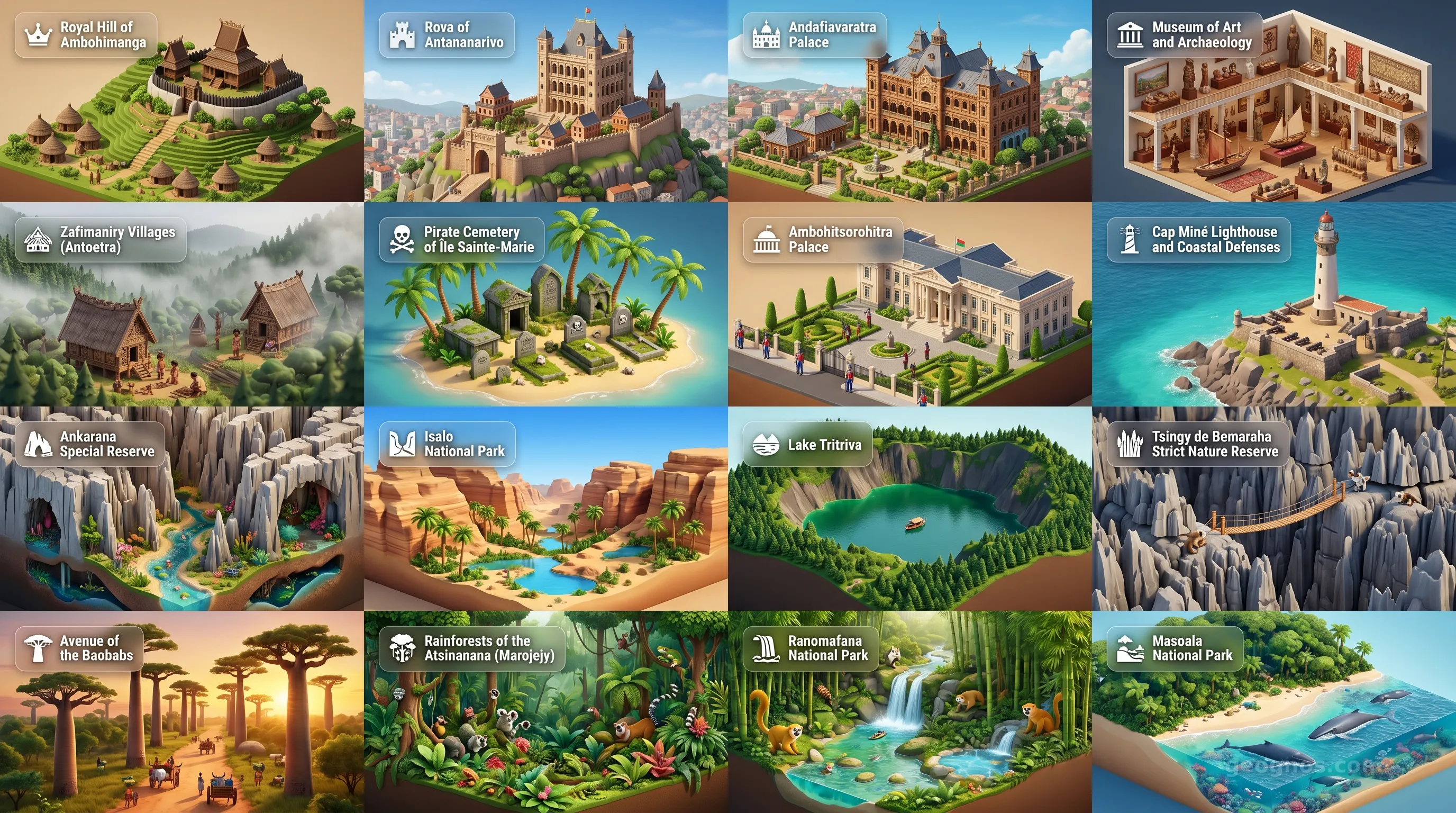
Top Sights & Landmarks
Cradle of the Merina Dynasty
The spiritual and historic heart of the pre-colonial Kingdom of Madagascar, this fortified royal city was the capital of the Merina dynasty. It is an exceptional place for students of history and anthropology to study traditional Malagasy spiritual beliefs, social structures, and ancient architecture. The site features royal palaces, sacred enclosures, and royal tombs. The best time to visit is during the dry season from May to October. Tourist Tip: Hire a local guide to fully understand the intricate system of 'fady' (cultural taboos) and the deep reverence the Malagasy people still hold for this sacred site.
The Queen's Palace
Perched on the highest point of Antananarivo, the Rova was the center of government for the Merina monarchs from the 17th century. Despite a devastating fire in 1995, careful restorations have brought its stunning stone facades and royal chapels back to life. It offers profound insights into Madagascar's imperial history and the modernization efforts of its 19th-century queens. The cooler months (May to September) offer the most pleasant weather for exploring. Tourist Tip: Visit late in the afternoon to witness a breathtaking sunset over the sprawling capital city below.
Prime Minister's Residence
Located just a short walk from the Rova, this striking pink baroque palace was the residence of Prime Minister Rainilaiarivony, who effectively ruled Madagascar in the late 19th century by marrying three successive queens. Today, it serves as a museum housing precious artifacts, royal portraits, and furniture rescued from the 1995 Rova fire. It provides a crucial lens into the political intrigue of the island's pre-colonial era. The dry season is ideal for a visit. Tourist Tip: Combine this with a tour of the Rova, and look out for the fascinating crown jewels and royal garments on display.
Gateway to Malagasy Origins
Operated by the University of Antananarivo, this museum in the Isoraka district is the premier institution for studying the deep history, ethnography, and archaeology of Madagascar. It traces the island's human settlement from early Austronesian and African arrivals to modern times, making it indispensable for students of anthropology. It features ancient pottery, traditional talismans, and archaeological finds from across the island. Open year-round. Tourist Tip: Check with the university schedule, as the museum sometimes offers specialized lectures and temporary exhibitions.
The Last Woodcrafters
Hidden in the remote, misty highlands south of Ambositra, the Zafimaniry villages represent the last remaining repository of traditional Malagasy woodcraft culture, recognized as UNESCO Intangible Cultural Heritage. Every wooden surface in these villages—from window shutters to tools—is elaborately carved with geometric motifs that convey complex social and spiritual meanings. Best visited between May and October to avoid torrential rains. Tourist Tip: Access requires a physically demanding hike from Antoetra; bring sturdy hiking boots and consider staying in a homestay to support the local economy.
18th Century Buccaneer Haven
Île Sainte-Marie was a notorious haven for pirates in the 17th and 18th centuries, including legends like Captain Kidd and Thomas Tew. The Pirate Cemetery, overlooking a serene bay, features weathered gravestones adorned with skulls and crossbones. It is a fascinating site for history buffs studying Indian Ocean maritime trade and the golden age of piracy. The best time to visit is from August to October, aligning with the spectacular humpback whale migration. Tourist Tip: The cemetery is reached via a narrow coastal path and causeway; timing your visit with low tide makes access much easier.
Presidential Architecture
Constructed between 1890 and 1892, this grand building in Antananarivo originally served as the residence of the French governor before becoming a Malagasy presidential palace. Its French Renaissance architecture is visually striking and deeply intertwined with both Madagascar's colonial history and its modern political upheavals, including the 2009 crisis. While the interior is closed to the public, the exterior is a must-see for architecture and political history students. Best viewed year-round. Tourist Tip: Security is incredibly tight; you may take photos of the building from a distance, but avoid taking close-ups of the military guards.
Relics of Colonial Seapower
Guarding the entrance to the vast Diego Suarez Bay in the far north, Cap Miné features a historic lighthouse alongside abandoned French colonial artillery batteries and defense bunkers from the 19th and early 20th centuries. It is an excellent field trip for students of military history and maritime engineering. The site offers sweeping views of the turquoise Indian Ocean. Best visited from April to November. Tourist Tip: Combine this with a hike along the coastal path to the beautiful Orangea Beach, but pack plenty of water as the area is arid.
Sacred Caves and Limestone Pinnacles
Ankarana is famous for its dramatic 'tsingy' limestone karst formations, but it holds equal cultural weight as the sanctuary of the Antakarana royal family, whose ancestors are buried in the reserve's extensive, fossil-rich cave systems. Students of geology, paleontology, and cultural anthropology will find this site unparalleled. The dry season (April-November) is critical, as rains make the terrain impassable. Tourist Tip: Bring a strong headlamp for exploring the bat-filled grottos, and respect local customs—do not wear red clothing, as it is considered 'fady' (taboo) in this royal domain.
The Jurassic Oasis
Known as Madagascar's Grand Canyon, Isalo features sprawling Jurassic sandstone massifs carved by wind and water. Historically and culturally, the sheer cliff faces hold immense significance as the sacred burial grounds of the semi-nomadic Bara people. It is a dual study in dramatic arid-zone geology and traditional Malagasy funerary rites. The best time to visit is from April to October. Tourist Tip: Embark on the hike to the 'Piscine Naturelle' (Natural Pool), a stunning, palm-fringed oasis perfect for a refreshing swim after a long trek.
The Sacred Volcanic Lake
Resting in the cone of a dormant volcano near Antsirabe, Lake Tritriva is an intensely deep, opaque green body of water steeped in Malagasy folklore. According to legend, two young lovers, Rabeniomby and Ravolahy, drowned themselves here when their families forbade their marriage. Today, intertwined trees on the shore are said to represent their spirits. It is fascinating for volcanologists and students of oral traditions. Best visited from April to November. Tourist Tip: Swimming in the lake is strictly forbidden out of respect for local spiritual beliefs.
The Forest of Stone
This awe-inspiring labyrinth of jagged, needle-like limestone pinnacles is one of the world's most extreme landscapes. Formed over millions of years by groundwater carving into uplifted seabeds, it is an unparalleled natural laboratory for evolutionary biologists and geologists, harboring rare, deeply isolated species. Access is strictly seasonal, only open during the dry months from June to November. Tourist Tip: The 'Grand Tsingy' circuit involves climbing via ferrata and crossing dramatic suspension bridges; a good level of physical fitness and lack of vertigo is highly recommended.
The Giants of Morondava
A striking dirt road lined with ancient Grandidier's baobabs, some over 800 years old. These massive trees are an enduring cultural symbol of Madagascar and a stark reminder of environmental changes, as they are the last survivors of a dense tropical forest cleared for agriculture. An essential stop for botany students and photographers alike. The dry season guarantees road accessibility. Tourist Tip: Visit at sunrise or sunset for the most magical lighting and fewer midday crowds, and try the local baobab fruit juice sold by nearby vendors.
Evolutionary Wonderland
Comprising six national parks on the island's eastern flank, these ancient rainforests are critical to understanding Madagascar's geological separation from Gondwana. They are home to a staggering density of endemic flora and fauna, including extremely rare lemur species. Biologists and ecologists consider this a globally vital research site. The months of September to December offer the best balance of warmth and manageable rain. Tourist Tip: Trekking in Marojejy is steep and physically demanding; hiring porters and a knowledgeable local guide is essential for reaching the pristine upper camps.
The Golden Lemur's Haven
A misty, mountainous rainforest that achieved global fame in 1986 with the discovery of the critically endangered golden bamboo lemur. It is a premier hub for primatologists, ecologists, and conservation students, featuring a cutting-edge research station (Centre ValBio). The park is highly accessible compared to other Malagasy rainforests. The best wildlife viewing is from September to December. Tourist Tip: Do not miss the guided night walks conducted along the road just outside the park boundaries, which offer incredible sightings of chameleons, frogs, and mouse lemurs.
Where the Rainforest Meets the Sea
Covering a massive peninsula in the northeast, Masoala is Madagascar's largest protected area. It offers a rare continuous ecosystem stretching from dense primary rainforest down to untouched coastal mangroves and coral reefs. It is the ultimate destination for students of comprehensive ecosystem dynamics and marine biology. The prime visiting season is from September to December. Tourist Tip: Access is primarily by boat from Maroantsetra; prepare for true wilderness camping, as infrastructure is beautifully minimal.