Holy See (Vatican City)
Top Sights & Landmarks
The Spiritual Center of the Catholic Church
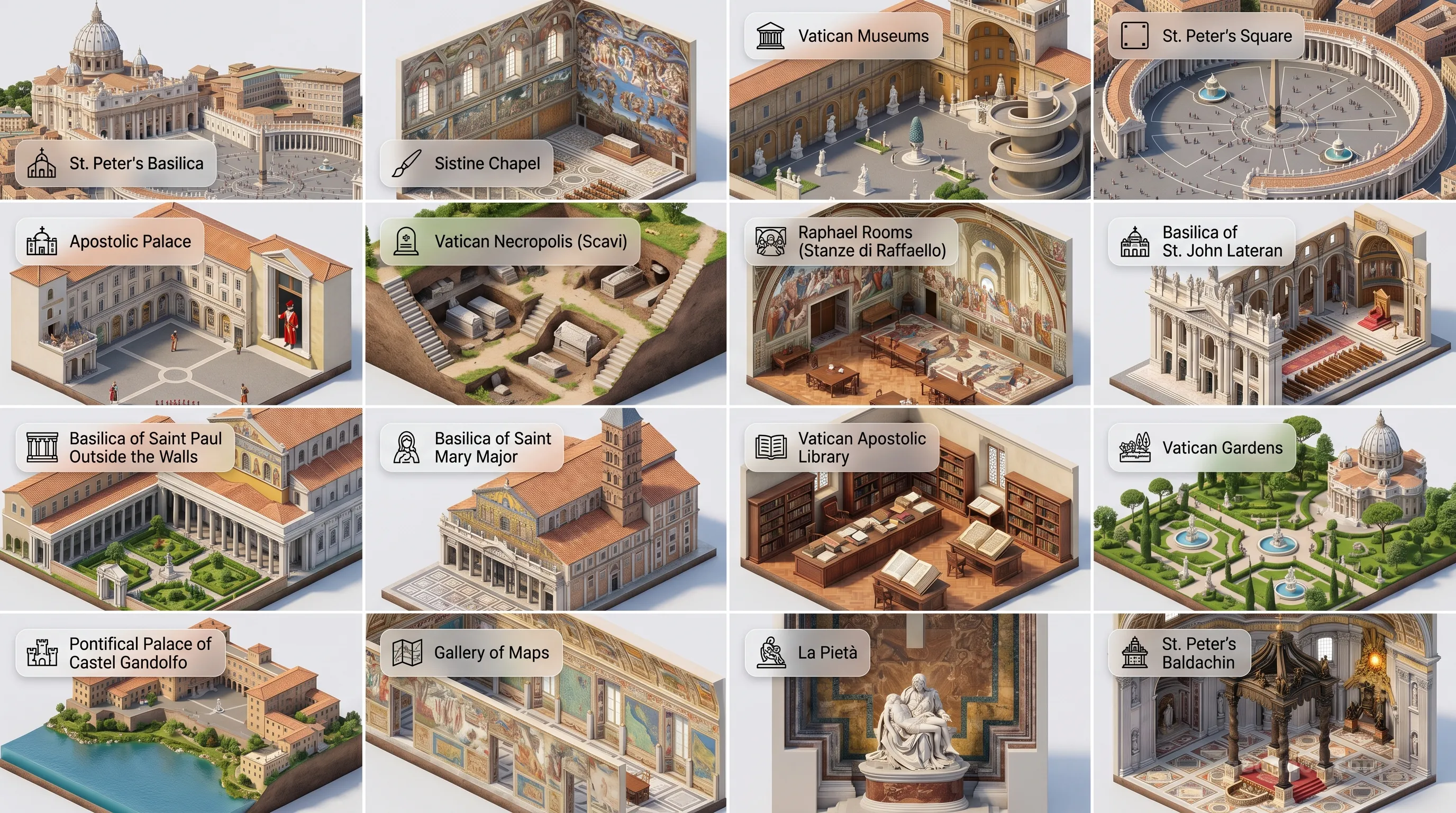
Renowned as the largest church in the world and a masterpiece of Renaissance architecture, St. Peter's Basilica is the spiritual center of the Catholic Church. Designed by titans like Michelangelo, Bramante, and Bernini, it holds immense historical significance as the burial site of Saint Peter. Students of art and architecture will marvel at its colossal proportions and intricate detailing. Spring and autumn are the best seasons to visit for milder weather. Tip: Arrive before 8:00 AM to avoid massive security lines and ensure a quiet, contemplative experience.
Michelangelo's Fresco Masterpiece
The Sistine Chapel is globally celebrated for Michelangelo's breathtaking ceiling frescoes and 'The Last Judgment.' Historically, it serves as the site of the Papal conclave, where new popes are elected. Art and theology students flock here to study the peak of High Renaissance art and complex biblical narratives. It is best visited in late fall or winter to avoid peak summer crowds. Tip: Photography is strictly prohibited, and visitors must maintain silence. Booking a VIP early-access tour is highly recommended for a less crowded viewing.
Centuries of Art and History
Housing an immense collection of art and historical artifacts amassed by the Catholic Church over centuries, the Vatican Museums stretch across 54 galleries. Its unparalleled collection includes classical sculptures and Renaissance masterpieces. Historians and artists can spend weeks studying the intricate evolution of Western art here. The shoulder seasons of April and October offer the best balance of weather and smaller crowds. Tip: Purchase skip-the-line tickets well in advance online, and allocate at least four hours to do the immense collection justice.
Bernini's Grand Colonnade
Designed by Gian Lorenzo Bernini in the 17th century, St. Peter's Square is an architectural marvel characterized by its massive Doric colonnades that symbolically embrace visitors in the 'maternal arms of Mother Church.' It is the gathering place for papal audiences and major liturgical events. Urban planning students will appreciate its masterful manipulation of perspective and symmetry. Spring and autumn offer pleasant weather for exploring the open square. Tip: Attend the Wednesday Papal Audience if you wish to see the Pope, but secure free tickets in advance.
The Papal Residence
The Apostolic Palace is the official residence of the Pope, comprising papal apartments, administrative offices, and private chapels. Though only specific sections are open to the public, its historical footprint as the seat of the Holy See's governance is unmatched. Studying its architecture provides profound insights into the evolution of papal power and Renaissance expansion. Visit year-round, as the accessible parts are mostly indoors. Tip: Look up at the top floor on Sundays at noon; the Pope traditionally leads the Angelus prayer from the window of his study.
The Tomb of Saint Peter
Located deep beneath St. Peter's Basilica, the Vatican Necropolis is an ancient Roman burial ground. Its incredible historical significance stems from housing the venerated Tomb of Saint Peter, unearthed during mid-20th-century excavations. Archaeology and theology students will find this underground city of mausoleums endlessly fascinating. The climate-controlled environment makes it perfect to visit any time of year. Tip: Only 250 visitors are permitted daily to preserve the site. You must apply for tickets months in advance via the Excavations Office directly.
Masterclass in Renaissance Humanism
Commissioned by Pope Julius II, these four rooms within the Apostolic Palace feature magnificent frescoes by Raphael and his workshop. They rival the Sistine Chapel in their artistic importance, showcasing iconic works like 'The School of Athens,' which bridges classical philosophy and Christian theology. Art history students consider this a masterclass in perspective and Renaissance humanism. Visit during winter months for a slightly more peaceful experience. Tip: The rooms are near the end of the Vatican Museums route, so pace yourself to ensure you have enough energy.
The Cathedral of Rome
Though physically located in Rome, this extraterritorial property is the cathedral church of Rome and the official ecclesiastical seat of the Pope. As the oldest and highest ranking of the four major papal basilicas, it holds supreme historical importance. Its stunning Baroque facade and colossal statues of the apostles are a must-study for architecture enthusiasts. Spring is an ideal time to visit. Tip: Because it is outside the Vatican walls, it often experiences fewer tourist crowds; don't miss the adjacent Scala Sancta (Holy Stairs).
Monument over Saint Paul's Tomb
Another extraterritorial Holy See property, this massive basilica was founded by Emperor Constantine I over the burial place of Paul the Apostle. Following a devastating fire in 1823, it was masterfully reconstructed to mirror its original grand, early-Christian design. Historians value its magnificent mosaics and the chronological portraits of all the popes lining the nave. Visit in autumn for a serene atmosphere. Tip: The cloister is widely considered one of the most beautiful in Rome; pay the small extra fee to explore its twisted, mosaic-inlaid columns.
The Largest Marian Church
As the largest Catholic Marian church in Rome, this extraterritorial basilica seamlessly blends varying architectural styles, from its 5th-century core to its imposing Baroque facade. It retains its original Roman basilica floor plan and houses breathtaking 5th-century mosaics depicting the life of the Virgin Mary. Scholars of religious history and ancient architecture will find it remarkable. It is a stunning visit year-round. Tip: If visiting on August 5th, you can witness the 'Miracle of the Snows' celebration, where white rose petals are dropped from the ceiling.
A Treasure Trove of Knowledge
One of the oldest and most significant research libraries in the world, the Vatican Library houses over a million printed books and tens of thousands of historical manuscripts. Established in the 15th century, it is an unparalleled resource for researchers, historians, and scholars studying theology, law, and science. The library's reading rooms are accessible only to qualified scholars year-round. Tip: While general tourists cannot browse the reading rooms, breathtaking digitized manuscripts can be viewed online, and some of its greatest treasures are displayed in the Vatican Museums.
The Papal Retreat
Covering over half of Vatican City's territory, the Vatican Gardens have provided a quiet place for papal meditation and rest since 1279. This meticulously manicured landscape features fountains, sculptures, and diverse flora, representing a beautiful intersection of nature, art, and faith. Botany and landscape architecture students will appreciate the historical English, French, and Italian garden styles. Spring is arguably the best time to visit when the flowers are in full bloom. Tip: Access is strictly by guided tour; book a minibus or walking tour well in advance.
The Papal Summer Residence
Perched above Lake Albano, this extraterritorial property served as the traditional summer residence for popes for centuries before Pope Francis opened it to the public as a museum. Its rich history and stunning terraced gardens offer a unique glimpse into papal leisure and diplomacy. Students of architecture will admire the 17th-century designs by Carlo Maderno. Summer is an excellent time to visit to escape Rome's heat. Tip: You can book a direct train ticket from the Vatican railway station to Castel Gandolfo for a seamless day trip.
A 16th-Century Geographical Marvel
Located within the Vatican Museums, the Gallery of Maps is a breathtaking 120-meter-long corridor adorned with topographical maps of Italy, painted based on drawings by friar and geographer Ignazio Danti in the late 16th century. It is a vital study site for cartography and history students, showcasing the geographical knowledge of the Renaissance era. Late fall and winter offer fewer crowds. Tip: Look up at the spectacular vaulted ceiling, which is intricately stuccoed and frescoed, rivaling the map-covered walls in sheer beauty.
Michelangelo's Marble Masterpiece
Housed inside St. Peter's Basilica, La Pietà is a world-renowned Renaissance sculpture by Michelangelo, depicting the Virgin Mary cradling the dead body of Jesus. Carved from a single block of Carrara marble when the artist was only 24, it is a pinnacle of sculptural achievement. Art students study its delicate drapery, emotional resonance, and anatomical precision. It can be viewed year-round. Tip: The sculpture is now protected by bulletproof glass following a 1972 attack; bring a camera with a good zoom lens to capture its intricate details.
Bernini's Bronze Canopy
Standing at the center of St. Peter's Basilica beneath the grand dome, this colossal bronze canopy was crafted by Gian Lorenzo Bernini. Marking the burial site of St. Peter, its twisting Solomonic columns perfectly bridge the gap between human scale and the basilica's overwhelming architecture. It is a masterpiece of Baroque design and crucial for architectural studies. Year-round access is available during basilica opening hours. Tip: Look closely at the base of the columns, where a sequence of carvings depicts a woman in childbirth, a fascinating hidden detail by Bernini.